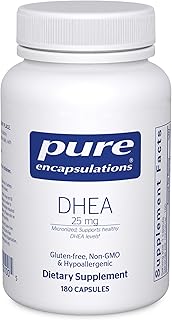
Affiliate disclosure: As an Amazon Associate, this site earns from qualifying purchases linked in this article.
People over 60 are the population most studied in DHEA research, largely because circulating DHEA and DHEA-S levels have typically dropped 70-80% from their mid-20s peak by this age — a pattern often called adrenopause. That makes this age group the most logical place to look for restoration effects, and it is also where the largest, best-controlled trials have been run. The results are more mixed than the “anti-aging hormone” framing common in supplement marketing suggests.
The Largest Trial: Modest Results at Best
The most rigorous study is a two-year, placebo-controlled, double-blind trial of DHEA in elderly men and women with low baseline DHEA-S. It found DHEA replacement had no detectable effect on body composition, physical performance, insulin action, or quality of life. Bone mineral density showed only a minimal and inconsistent improvement — far smaller than what established osteoporosis medications achieve[1]. The study authors concluded there was no evidence that DHEA is an effective antiaging supplement, and argued against its use for that specific purpose.
Where Effects Were More Consistently Observed
The DAWN trial, a one-year, placebo-controlled study of 50 mg/day DHEA in 225 healthy adults aged 55-85, found that DHEA reliably restored serum DHEA and DHEA-S to young-adult concentrations, and increased testosterone, estradiol, and IGF-1 in women (though not men) receiving DHEA[2]. A separate one-to-two-year trial that paired DHEA with vitamin D and calcium found spine bone density improved meaningfully in women (1.8% at year one, 3.6% by year two) but not in men[3].
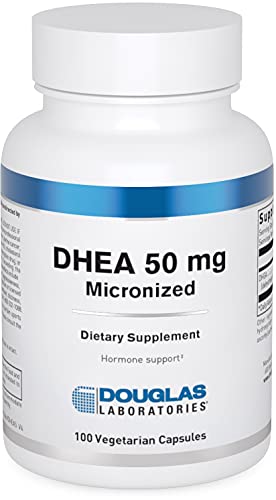
A meta-analysis of placebo-controlled trials in elderly men found DHEA supplementation was associated with a small but statistically significant reduction in fat mass, dependent on how much DHEA converted into active androgens or estrogens in each individual — but found no significant effect on lipid metabolism, glycemic control, bone health, sexual function, or quality of life[4]. A parallel meta-analysis in elderly women examined testosterone and body mass index specifically, and found that DHEA significantly raised testosterone concentrations and modestly lowered BMI, again a narrow set of effects rather than broad restoration[5].
A Consistent Pattern: Sex Differences
Across nearly every trial in this population, women show more measurable hormonal and bone-related response to DHEA than men do — likely because men already produce meaningful testosterone from the testes, while women rely more heavily on adrenal DHEA as a precursor to their sex hormones after menopause. This is a genuinely useful pattern to know going in: a man over 60 supplementing DHEA for anti-aging reasons has less trial evidence supporting a measurable benefit than a woman in the same age range supplementing for bone density or hormone-related symptoms.


What This Means in Practice
For adults over 60, DHEA supplementation is best approached as a targeted intervention for specific, monitored outcomes (bone density in women, confirmed low DHEA-S with symptoms) rather than a general anti-aging strategy. Given the inconsistent effects and the hormone-sensitive nature of DHEA’s downstream conversion, working with a physician who can order baseline labs and track outcomes over the one-to-two-year window these trials suggest is necessary is the most evidence-aligned approach.

References
- DHEA in elderly women and DHEA or testosterone in elderly men. New England Journal of Medicine, 2006
- Effect of dehydroepiandrosterone supplementation on bone mineral density, bone markers, and body composition in older adults: the DAWN trial. Osteoporosis International, 2008
- Dehydroepiandrosterone replacement therapy in older adults: 1- and 2-y effects on bone. American Journal of Clinical Nutrition, 2009
- Dehydroepiandrosterone supplementation in elderly men: a meta-analysis study of placebo-controlled trials. Journal of Clinical Endocrinology and Metabolism, 2013
- Impact of dehydroepiandrosterone (DHEA) supplementation on testosterone concentrations and BMI in elderly women: A meta-analysis of randomized controlled trials. Complementary Therapies in Medicine, 2020
These statements have not been evaluated by the Food and Drug Administration. This information is not intended to diagnose, treat, cure, or prevent any disease. Content is for informational purposes only and is not medical advice; consult a qualified healthcare provider before starting any supplement. As an Amazon Associate we earn from qualifying purchases.