Affiliate disclosure: As an Amazon Associate, this site earns from qualifying purchases linked in this article.
Navigating health options during midlife and menopause often involves understanding various compounds, and dehydroepiandrosterone (DHEA) is one that frequently comes up. DHEA is a naturally occurring steroid hormone that the body can convert into other sex hormones, such as estrogens and androgens [1]. However, not all DHEA products are the same, particularly when comparing an FDA-approved prescription option with over-the-counter supplements.
This article aims to clarify the distinctions between FDA-approved prasterone, a specific form of DHEA, and the wide array of DHEA supplements available without a prescription. Understanding these differences can help women make informed decisions in consultation with their healthcare providers.
What is DHEA?
DHEA, or dehydroepiandrosterone, is a steroid hormone produced primarily by the adrenal glands, but also in smaller amounts by the ovaries and brain. It serves as a precursor, meaning it can be converted into other steroid hormones, including estrogens and androgens, within various peripheral tissues through a process known as intracrinology [1]. This local conversion is significant, especially after menopause when ovarian hormone production declines [1].
The concept of intracrinology highlights that many tissues have the ability to produce and utilize sex steroids locally, rather than relying solely on hormones circulating from the gonads [2][1]. This localized hormone production can be important for maintaining tissue function, even when systemic hormone levels are low.
Introducing Prasterone: A Specific DHEA Formulation
Prasterone is a synthetic form of DHEA that is specifically formulated for certain medical applications. It is chemically identical to the DHEA produced naturally by the body [3]. Unlike general DHEA supplements, prasterone has undergone rigorous testing and has received approval from the U.S. Food and Drug Administration (FDA) for specific uses.

The FDA-approved prasterone product is available as a vaginal insert and is prescribed to help manage symptoms of genitourinary syndrome of menopause (GSM) [4][5]. GSM encompasses a range of symptoms affecting the vulva, vagina, and lower urinary tract, often related to declining estrogen levels during menopause [4]. These symptoms can include vaginal dryness, irritation, painful intercourse, and urinary urgency [4].
How FDA-Approved Prasterone Works for GSM
When administered as a vaginal insert, prasterone is absorbed locally into the vaginal tissues. Once absorbed, it is converted into active estrogens and androgens directly within the vaginal cells [5]. This local conversion helps to rejuvenate the vaginal tissue by enhancing cell maturation, increasing superficial and intermediate cells, and reducing parabasal cells [5]. It also helps to normalize vaginal pH [5].

The benefit of this localized action is that it can address GSM symptoms directly at the site of concern, with minimal systemic absorption of the converted hormones [5]. This localized effect is a key characteristic that differentiates FDA-approved prasterone from orally ingested DHEA supplements, which are designed for systemic absorption and broader effects throughout the body.
Over-the-Counter DHEA Supplements: Considerations
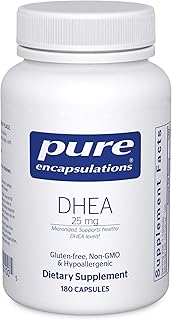
A wide variety of DHEA supplements are available over-the-counter (OTC) without a prescription. These products come in various forms, including oral capsules, creams, and sublingual tablets. Unlike FDA-approved prasterone, OTC DHEA supplements are not regulated by the FDA in the same way as prescription medications. This means that their manufacturing processes, purity, potency, and even the accuracy of their ingredient labels may not be as consistently monitored [6].

The dosage and formulation of OTC DHEA can vary significantly between brands, and there is less certainty about the actual amount of DHEA delivered or its bioavailability. When taken orally, DHEA is absorbed systemically and can lead to increases in circulating levels of various sex hormones, including testosterone and estrogens [1]. The long-term effects and safety profile of various doses of OTC DHEA, especially when used systemically, are not as comprehensively studied or regulated as prescription medications. For example, a systematic review on compounded bioidentical hormone therapy (cBHT), which can include DHEA, noted a lack of robust evidence for long-term safety and efficacy from randomized controlled trials [6].
Key Differences Summarized
The primary distinction between FDA-approved prasterone and OTC DHEA lies in their regulatory status, intended use, and mechanism of action. FDA-approved prasterone is a prescription medication, specifically a vaginal insert, approved for the management of genitourinary syndrome of menopause [4][5]. Its action is localized to the vaginal tissues, with minimal systemic hormone conversion [5]. This localized delivery minimizes systemic exposure to converted hormones.
In contrast, OTC DHEA supplements are not FDA-approved for specific medical conditions and are not subject to the same stringent regulatory oversight regarding purity, potency, and manufacturing standards. When taken orally, OTC DHEA is absorbed systemically and can influence overall hormone levels [1]. The effects of OTC DHEA can be more widespread and less targeted than the localized action of vaginal prasterone. The lack of standardized regulation for OTC supplements means that the consistency and reliability of these products can vary considerably, making it challenging to predict their effects or ensure their safety.


References
- All sex steroids are made intracellularly in peripheral tissues by the mechanisms of intracrinology after menopause. The Journal of steroid biochemistry and molecular biology, 2015
- The importance of targeting intracrinology in prostate cancer management. World journal of urology, 2019
- Prasterone. American journal of health-system pharmacy : AJHP : official journal of the American Society of Health-System Pharmacists, 2006
- Genitourinary Syndrome of Menopause. Journal of midwifery & women’s health, 2021
- An overview of dehydroepiandrosterone (EM-760) as a treatment option for genitourinary syndrome of menopause. Expert opinion on pharmacotherapy, 2020
- Safety and efficacy of compounded bioidentical hormone therapy (cBHT) in perimenopausal and postmenopausal women: a systematic review and meta-analysis of randomized controlled trials. Menopause (New York, N.Y.), 2022
These statements have not been evaluated by the Food and Drug Administration. This information is not intended to diagnose, treat, cure, or prevent any disease. Content is for informational purposes only and is not medical advice; consult a qualified healthcare provider before starting any supplement. As an Amazon Associate we earn from qualifying purchases.