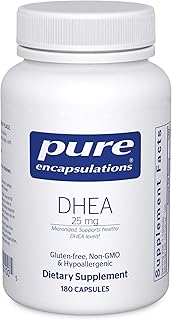
Affiliate disclosure: As an Amazon Associate, this site earns from qualifying purchases linked in this article.
While DHEA (dehydroepiandrosterone) is often discussed in the context of perimenopause, its potential influence on women’s health may extend into other areas. This article explores some of these additional areas, providing an evidence-based overview of DHEA’s potential benefits for women.
It’s important to approach information about DHEA with a careful and balanced perspective. Research continues to evolve, and individual responses to DHEA can vary. This content is for informational purposes only and does not constitute medical advice.
DHEA and Genitourinary Syndrome of Menopause (GSM)
One notable area where DHEA has shown potential is in addressing Genitourinary Syndrome of Menopause (GSM), formerly known as vulvovaginal atrophy [1][2]. GSM is a common condition experienced by women during and after menopause, characterized by a collection of symptoms and physical signs related to changes in the labia, clitoris, vestibule, vagina, urethra, and bladder [3][1]. These changes are primarily due to declining estrogen levels [2].
Symptoms of GSM can include vaginal dryness, irritation, burning, and painful intercourse (dyspareunia) [3][1]. DHEA, when administered vaginally, has been recognized as an option for managing these symptoms [3][4]. Vaginal DHEA is converted into estrogens and androgens within the vaginal cells, which can help improve the integrity and function of the vaginal tissue without significantly increasing systemic hormone levels [5][6].
The North American Menopause Society (NAMS) and the International Society for the Study of Vulvovaginal Disease (ISSVD) both acknowledge vaginal DHEA as a therapeutic option for GSM [3][4]. This localized approach can offer relief from discomfort and improve the quality of life for many postmenopausal women.
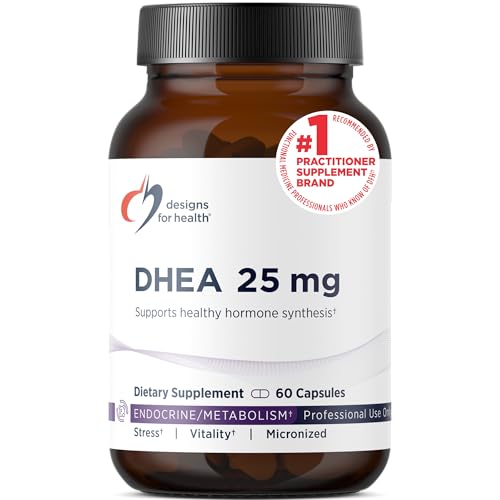
DHEA and Ovarian Response in Fertility
Beyond menopausal symptoms, DHEA has garnered attention in the field of reproductive health, particularly concerning diminished ovarian reserve (DOR) and outcomes in assisted reproductive technologies (ART) like in vitro fertilization (IVF). Diminished ovarian reserve refers to a reduction in the quantity or quality of oocytes (eggs) [7].
Some research suggests that DHEA supplementation may have a role in improving ovarian response in women undergoing IVF/ICSI (intracytoplasmic sperm injection) with DOR [7]. A systematic review and meta-analysis of randomized controlled trials indicated that DHEA administration might be associated with an increase in the number of retrieved oocytes and clinical pregnancy rates in women with DOR undergoing ART [7]. However, the evidence strength for this application can be moderate, and individual results can vary [7].
The European Society of Human Reproduction and Embryology (ESHRE) guidelines on ovarian stimulation for IVF/ICSI mention DHEA as a potential adjuvant treatment, particularly for poor responders, but note that the evidence for its routine use to improve live birth rates is not yet conclusive [8]. This area remains an active field of study, and clinicians typically evaluate DHEA use in fertility on a case-by-case basis.

DHEA and General Well-being in Older Women
DHEA is a precursor hormone produced by the adrenal glands, and its levels naturally decline with age [9][10]. This decline has led to interest in DHEA’s potential role in maintaining general well-being and mitigating some aspects of aging in older individuals, including women [9].
The adrenal androgens, including DHEA, are involved in various physiological processes. Some preclinical and clinical studies have explored the potential ‘anti-aging’ effects of DHEA, examining its influence on parameters such as bone density, body composition, skin health, and mood [9][10]. However, the direct and consistent benefits of DHEA supplementation for these broader ‘anti-aging’ effects in healthy older women are still under investigation and may not be as robust or universally observed as some other applications [10].
While DHEA has been explored for its potential to support various aspects of health as women age, it is crucial to recognize that research is ongoing. The exact mechanisms and the extent of DHEA’s beneficial effects in diverse populations of older women require further clarification [9].

References
- The genitourinary syndrome of menopause. Menopause (New York, N.Y.), 2021
- Genitourinary syndrome of menopause: an overview of clinical manifestations, pathophysiology, etiology, evaluation, and management. American journal of obstetrics and gynecology, 2016
- The 2020 genitourinary syndrome of menopause position statement of The North American Menopause Society. Menopause (New York, N.Y.), 2020
- Management of postmenopausal vulvovaginal atrophy: recommendations of the International Society for the Study of Vulvovaginal Disease. Gynecological endocrinology : the official journal of the International Society of Gynecological Endocrinology, 2021
- Should Dehydroepiandrosterone Be Administered to Women?. The Journal of clinical endocrinology and metabolism, 2022
- DHEA replacement for postmenopausal women: placebo or panacea?. Climacteric : the journal of the International Menopause Society, 2015
- Therapeutic management in women with a diminished ovarian reserve: a systematic review and meta-analysis of randomized controlled trials. Fertility and sterility, 2025
- ESHRE guideline: ovarian stimulation for IVF/ICSI(†). Human reproduction open, 2020
- Anti-aging effects of the adrenal androgens dehydroepiandrosterone and dehydroepiandrosterone sulfate: mechanisms of action and beneficial effects in older people. Endocrine journal, 2026
- Dehydroepiandrosterone (DHEA): hypes and hopes. Drugs, 2014
These statements have not been evaluated by the Food and Drug Administration. This information is not intended to diagnose, treat, cure, or prevent any disease. Content is for informational purposes only and is not medical advice; consult a qualified healthcare provider before starting any supplement. As an Amazon Associate we earn from qualifying purchases.