Affiliate disclosure: As an Amazon Associate, this site earns from qualifying purchases linked in this article.
Vitamin C is often grouped with hormone-support stacks for its antioxidant properties, and DHEA supplementation is sometimes marketed alongside it on the assumption the two work synergistically against oxidative stress. As with omega-3, there is no controlled trial testing DHEA and vitamin C together — the honest picture has to be built from what is known about each independently.
Vitamin C’s Antioxidant Role Is More Complex Than It Sounds
Vitamin C is best known as an antioxidant that scavenges free radicals, but a detailed pharmacological review points out it has a lesser-known “second face”: under certain conditions, particularly at high concentrations or in the presence of free metal ions, ascorbate can act as a pro-oxidant rather than a protective one[1]. This matters for anyone assuming that more vitamin C automatically means more antioxidant protection — the relationship is dose- and context-dependent, not simply linear.
DHEA and Oxidative Stress
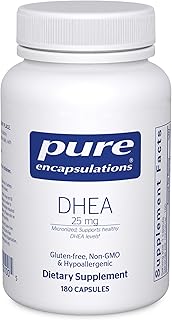
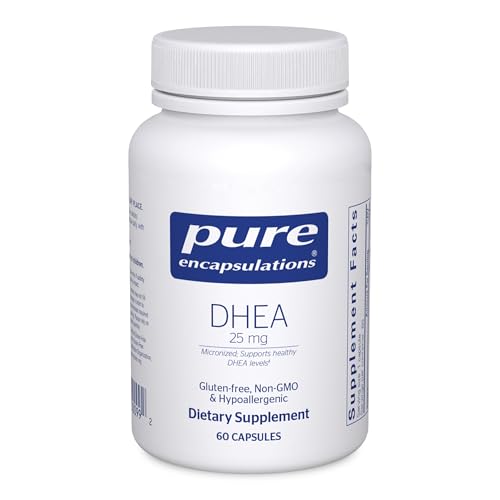
DHEA itself has been studied for its relationship to oxidative stress and aging, with some research suggesting DHEA and its metabolites may have their own antioxidant-adjacent effects on cellular aging pathways, independent of any added vitamin C. This is an active but still-developing area of research, and the mechanisms are not fully mapped out in humans.

General Antioxidant Supplementation Research
A broader review of antioxidant supplementation in the context of physical stress notes that the body already runs an elaborate, self-regulating antioxidant defense system — enzymes like catalase, superoxide dismutase, and glutathione peroxidase, plus dietary antioxidants including vitamins A, E, and C — and that whether supplemental antioxidants meaningfully add to this system in already well-nourished people remains unclear[2]. This is a useful caution against assuming that stacking additional antioxidant compounds produces a proportional benefit.

What the Independent Evidence Supports
There is no direct evidence that vitamin C enhances or interferes with DHEA’s effects, and no controlled research testing the combination specifically. Both have independent value — vitamin C for general antioxidant and immune support, DHEA for its hormonal effects — but anyone taking them together should not expect a proven synergistic effect beyond what each does on its own. As always, real bloodwork and a conversation with a healthcare provider are more useful than assuming a stacking benefit that has not been tested.

Where the Adrenal Connection Comes From
There is a real biochemical link behind the pairing, and it is worth stating precisely because it is routinely overstated. The adrenal gland is among the organs with the highest concentration of vitamin C in the body, and ascorbate acts as a cofactor in both catecholamine biosynthesis in the medulla and steroidogenesis in the cortex[3]. Animal work using mice lacking the ascorbic acid transporter SVCT2 showed depleted adrenal catecholamine stores and reduced plasma corticosterone, which confirms the cofactor role is not merely theoretical.
What that evidence supports is that vitamin C is required for normal adrenal function. What it does not support is the much larger inference usually built on top of it, that supplemental vitamin C in an already well-nourished person increases adrenal steroid output, or specifically raises DHEA. A cofactor being necessary does not make more of it better once the requirement is met, and no human trial has shown vitamin C supplementation raising DHEA or DHEA-S.
What Actually Raises DHEA-S
For comparison, the intervention that does reliably move DHEA-S in controlled human research is DHEA itself. A year of 50 mg daily oral DHEA restored a youthful DHEA-S concentration in healthy adults aged 60 to 79[4]. That is the benchmark any claimed indirect booster has to be measured against, and no antioxidant has been shown to come close to it.
This is the practical reason to be sceptical of stack marketing that positions vitamin C as a DHEA support nutrient. The framing borrows credibility from a genuine physiological fact and then applies it to a claim that fact does not reach.
Where the Combination Is Still Reasonable
None of this makes taking both a bad idea. Vitamin C has its own well-established roles, and anyone who is genuinely low in it will benefit from correcting that, adrenal cofactor function included. The point is only that the benefit is the ordinary one, not a hormonal amplification of whatever DHEA is doing.
If you take both, ordinary sensible dosing applies: vitamin C in the range obtainable from a normal supplement or a fruit-heavy diet rather than the multi-gram doses where the pro-oxidant behaviour described above becomes relevant, and DHEA at whatever dose has been established with bloodwork. Expect two separate effects, not a combined one.
References
- Two Faces of Vitamin C-Antioxidative and Pro-Oxidative Agent. Nutrients, 2020
- Oxidative stress, exercise, and antioxidant supplementation. Toxicology, 2003
- Vitamin C is an important cofactor for both adrenal cortex and adrenal medulla. Endocrine Research, 2004
- Dehydroepiandrosterone (DHEA), DHEA sulfate, and aging: contribution of the DHEAge Study to a sociobiomedical issue. Proceedings of the National Academy of Sciences, 2000
These statements have not been evaluated by the Food and Drug Administration. This information is not intended to diagnose, treat, cure, or prevent any disease. Content is for informational purposes only and is not medical advice; consult a qualified healthcare provider before starting any supplement. As an Amazon Associate we earn from qualifying purchases.