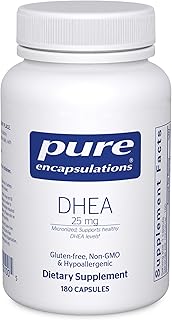
Affiliate disclosure: As an Amazon Associate, this site earns from qualifying purchases linked in this article.
Omega-3 fatty acids (EPA and DHA) are among the most widely used supplements for general health, and it is natural to wonder whether pairing them with DHEA offers any added benefit. The direct research here is limited: there is no published trial designed specifically to test DHEA plus omega-3 as a combined intervention. What exists is data on how omega-3 supplementation affects DHEA-related hormone markers in specific populations, which is a narrower question but still informative.
What the PCOS Research Found
A systematic review and meta-analysis of 10 randomized controlled trials (610 participants) examined omega-3 polyunsaturated fatty acid supplementation in women with polycystic ovary syndrome. It found that omega-3 supplementation significantly improved several inflammatory and hormonal markers — C-reactive protein, malondialdehyde, luteinizing hormone, total testosterone, and sex hormone-binding globulin — but did not significantly change DHEA-sulfate, free androgen index, or FSH levels[1]. The takeaway from the best available evidence is that omega-3 supplementation does not appear to meaningfully move DHEA-S levels one way or the other, even though it affects other related hormones.
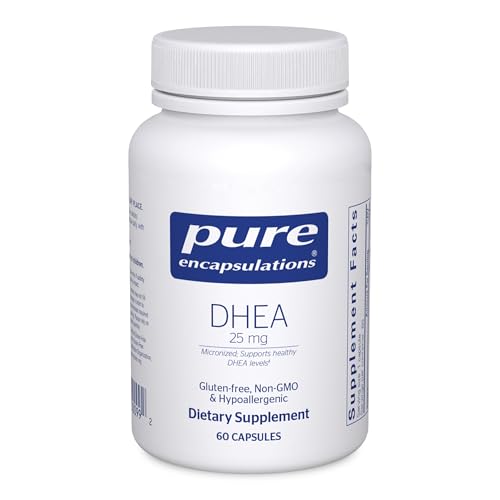
Where Omega-3 Independently Helps
Omega-3’s better-established benefits are anti-inflammatory: they are widely studied for cardiovascular markers, triglycerides, and inflammatory signaling, independent of any interaction with DHEA. Since DHEA supplementation itself has been studied in populations with elevated inflammatory markers — for example, a trial in older adults found DHEA replacement reduced inflammatory cytokines IL-6 and TNF-alpha alongside improving glucose tolerance — there is a plausible (though untested) rationale that both compounds could support an anti-inflammatory diet strategy from different angles, even without a proven direct interaction.
Where That Leaves the Pairing
There is currently no evidence that omega-3 fatty acids enhance or interfere with DHEA’s effects, and no evidence they meaningfully change DHEA-S blood levels based on the best-controlled study available. Both are reasonable additions to a general wellness routine on their own merits, but anyone expecting omega-3 to specifically boost DHEA’s hormonal effects should be aware that the existing research does not support that expectation. As with any combination, checking with a healthcare provider is worthwhile, particularly for anyone on blood thinners, since high-dose omega-3 can mildly affect clotting.



Why DHEA-S Is Difficult to Move With Nutrition
The null result on DHEA-S is less surprising once you look at what does move it. DHEA-S reflects adrenal steroid output and the sulfation of DHEA, and the interventions consistently shown to raise it in controlled trials are DHEA itself, not nutrients acting upstream. In the DHEAge study, 50 mg of daily oral DHEA restored a “young” DHEA-S concentration in healthy adults aged 60 to 79 across a year of dosing[2]. A two-year trial produced a comparable picture, with DHEA-S rising by a median of roughly 3.4 to 3.8 micrograms per millilitre relative to placebo in men and women respectively[3].
Omega-3 fatty acids work through a different set of levers, largely inflammatory signalling and lipid handling. Expecting them to raise an adrenal steroid pool is asking a nutrient to do something outside its known mechanism, which is roughly what the PCOS meta-analysis found when it looked.
Reading That PCOS Result Correctly
One caveat matters when applying the meta-analysis outside its own population. Women with polycystic ovary syndrome frequently have elevated androgens, so a trial in that group is testing whether omega-3 brings a high DHEA-S down, not whether it brings a low one up. A null result in the first direction is informative but does not automatically transfer to a woman in her fifties whose DHEA-S has declined with age.
That said, nothing in the wider literature suggests omega-3 raises DHEA-S in anyone else either. The honest position is that the best-controlled evidence shows no effect in the population where it has actually been measured, and no evidence at all in the population most likely to be asking the question.
Practical Notes If You Take Both
Both DHEA and fish oil are fat-soluble, so taking them with a meal containing some dietary fat is a reasonable default for both. Because DHEA research protocols generally dose in the morning to align with the body’s own daily rhythm, morning DHEA with breakfast and omega-3 at whichever meal is largest is a workable pattern that requires no special coordination.
The one interaction worth actually watching is not with DHEA at all. High-dose omega-3 can mildly affect clotting, which matters for anyone on anticoagulants or approaching a scheduled procedure. That is a conversation to have with a prescriber, and it is independent of whatever else is in the stack.

What Would Change This Answer
A trial that randomised people with age-related low DHEA-S to DHEA alone, omega-3 alone, both, and placebo, and measured DHEA-S alongside inflammatory markers, would settle the question. Nothing of that design exists. Until it does, the reasonable framing is that these are two supplements with separate, independently supported rationales that happen to be taken by the same people, not a combination with a demonstrated combined effect.
References
- Efficacy of omega-3 polyunsaturated fatty acids on hormones, oxidative stress, and inflammatory parameters among polycystic ovary syndrome: a systematic review and meta-analysis. Annals of Palliative Medicine, 2021
- Dehydroepiandrosterone (DHEA), DHEA sulfate, and aging: contribution of the DHEAge Study to a sociobiomedical issue. Proceedings of the National Academy of Sciences, 2000
- DHEA in elderly women and DHEA or testosterone in elderly men. The New England Journal of Medicine, 2006
These statements have not been evaluated by the Food and Drug Administration. This information is not intended to diagnose, treat, cure, or prevent any disease. Content is for informational purposes only and is not medical advice; consult a qualified healthcare provider before starting any supplement. As an Amazon Associate we earn from qualifying purchases.