Affiliate disclosure: As an Amazon Associate, this site earns from qualifying purchases linked in this article.
Magnesium is one of the most commonly recommended companion minerals for hormone-focused supplement stacks, and DHEA is frequently included in that conversation. The actual evidence for magnesium changing DHEA levels is thinner than the popular framing suggests, though magnesium’s broader role in the body gives it a defensible place in a stack for other reasons.
Magnesium’s Role in Steroid Hormone Pathways
Magnesium is a cofactor in more than 300 enzymatic reactions, and a review focused specifically on magnesium and testosterone physiology in men describes experimental work in which magnesium administration increased activity of steroidogenic enzymes (delta-5-3-beta-hydroxysteroid dehydrogenase and 17-beta-hydroxysteroid dehydrogenase) and raised serum testosterone in animal models[1]. This establishes biological plausibility for magnesium influencing steroid hormone production generally, but it is animal and mechanistic evidence, not a human trial measuring DHEA specifically.
What the Human Data on DHEA Specifically Shows
The most directly relevant human trial is a 10-week, placebo-controlled study in 64 women with polycystic ovary syndrome, comparing 250 mg/day magnesium oxide against placebo. It found no significant effect of magnesium supplementation on DHEA-sulfate levels (p=0.51), testosterone (p=0.27), hirsutism, or sleep quality compared with placebo[2]. In other words, in the one controlled trial that actually measured DHEA-S as an outcome, magnesium alone did not move it. A separate trial combining magnesium with melatonin did find a significant reduction in testosterone, suggesting any hormonal effect of magnesium in this context may depend on what it is paired with and the population studied — and a PCOS cohort trying to lower elevated androgens is a different situation from someone supplementing DHEA to raise levels that have declined with age.

Why People Stack Them Anyway
Magnesium’s better-supported roles — supporting sleep quality, muscle relaxation, and nervous system regulation — are a reasonable independent justification for including it alongside DHEA, particularly for anyone taking DHEA in the morning and magnesium (often as glycinate, which is gentler on digestion) in the evening. The rationale here is complementary lifestyle support rather than a proven synergistic effect on DHEA levels themselves.


Dosing and Safety Notes
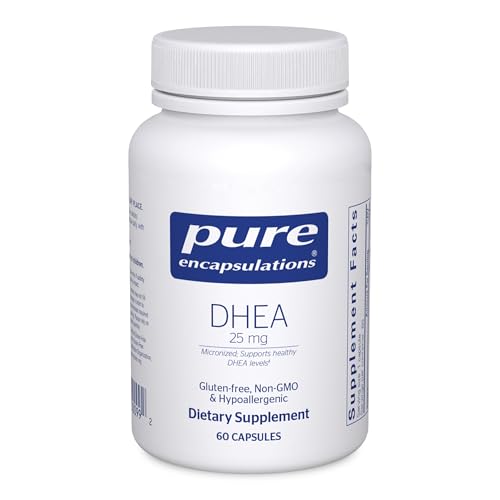
Typical magnesium doses in the trials above ranged from 250 mg/day; excess magnesium intake, particularly from oxide or citrate forms, can cause gastrointestinal upset. DHEA itself is best kept conservative (commonly 25-50 mg/day) since higher doses have been associated with acne, irritability, and insomnia. Neither supplement requires the other to work, and anyone combining them for a specific hormonal goal should track relevant bloodwork rather than assuming a stacking effect.
What the Comparison Class Looks Like
It helps to put magnesium’s null result next to what a positive result on DHEA-S actually looks like. In the DHEAge study, 50 mg of daily oral DHEA over a year restored a youthful DHEA-S concentration in adults aged 60 to 79[3], and a two-year trial recorded DHEA-S rising by a median of roughly 3.4 to 3.8 micrograms per millilitre against placebo[4]. Those are unambiguous, large, repeatedly replicated shifts.
Against that benchmark, a supplement that produces a p-value of 0.51 on the same marker is not producing a small effect that a bigger trial might detect. It is producing nothing measurable. That distinction is worth making explicitly, because “more research is needed” is often used to keep a claim alive after it has already been tested.
Why the Animal Data Does Not Carry Over
The steroidogenic-enzyme finding in animal models is real, and it is also the part most likely to be misread. Experimental work of that kind typically involves magnesium administration in animals that are magnesium-depleted or dosed well beyond dietary equivalence, which tests whether the mineral is necessary for the pathway, not whether adding more to a replete human increases output.
That distinction, cofactor sufficiency versus dose-dependent enhancement, explains most of the gap between the mechanistic literature and the human trial. It is the same pattern that shows up with other cofactor nutrients: correcting a deficiency changes things, and adding surplus on top of sufficiency generally does not.
A Defensible Way to Use Both
If you want a version of this stack that does not depend on an unproven interaction, the framing is simply two supplements with separate jobs. DHEA is being taken for a specific hormonal reason, ideally one anchored to a DHEA-S measurement. Magnesium is being taken for sleep, muscle or general adequacy, which is where its own evidence actually is.
Practically that means judging each on its own endpoint. If magnesium is for sleep, sleep is the thing to track; the DHEA-S number is not evidence for or against it. Keeping the two evaluations separate is what stops a stack from becoming a set of supplements nobody can tell the effect of.

References
- The Interplay between Magnesium and Testosterone in Modulating Physical Function in Men. International Journal of Endocrinology, 2014
- The effects of magnesium supplementation on abnormal uterine bleeding, alopecia, quality of life, and acne in women with polycystic ovary syndrome: a randomized clinical trial. Reproductive Biology and Endocrinology, 2022
- Dehydroepiandrosterone (DHEA), DHEA sulfate, and aging: contribution of the DHEAge Study to a sociobiomedical issue. Proceedings of the National Academy of Sciences, 2000
- DHEA in elderly women and DHEA or testosterone in elderly men. The New England Journal of Medicine, 2006
These statements have not been evaluated by the Food and Drug Administration. This information is not intended to diagnose, treat, cure, or prevent any disease. Content is for informational purposes only and is not medical advice; consult a qualified healthcare provider before starting any supplement. As an Amazon Associate we earn from qualifying purchases.