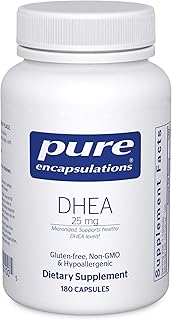
Affiliate disclosure: As an Amazon Associate, this site earns from qualifying purchases linked in this article.
Perimenopause is a transitional phase for women, often marked by fluctuating hormone levels that can bring about a variety of changes, including alterations in hair health. Many women experience thinning hair or increased hair shedding during this time, leading to questions about potential contributing factors.
Dehydroepiandrosterone (DHEA) is a hormone produced by the adrenal glands, and its levels naturally decline with age [1]. Given its role as a precursor to other hormones, including estrogens and androgens, there’s interest in how DHEA levels might relate to hair changes experienced during perimenopause, particularly concerning hair loss.
Understanding Hair Loss in Perimenopause
Hair loss during perimenopause is a common concern, often presenting as female-pattern hair loss (FPHL), characterized by a diffuse thinning of hair over the scalp, while the frontal hairline is often preserved [2][3]. This type of hair loss is influenced by a combination of genetic predisposition and hormonal factors [2].
The hormonal landscape of perimenopause is complex, involving fluctuations in estrogen, progesterone, and androgen levels. While estrogen is generally considered beneficial for hair growth, declining levels during perimenopause may contribute to hair thinning [2]. Androgens, on the other hand, can play a more nuanced role. In genetically susceptible individuals, androgens can miniaturize hair follicles on the scalp, leading to thinner, shorter hairs [2].
It’s important to recognize that hair loss can also be influenced by other factors beyond hormones, such as nutritional deficiencies, stress, certain medications, and underlying medical conditions [4]. A comprehensive evaluation by a healthcare provider is often recommended to determine the specific cause of hair loss.
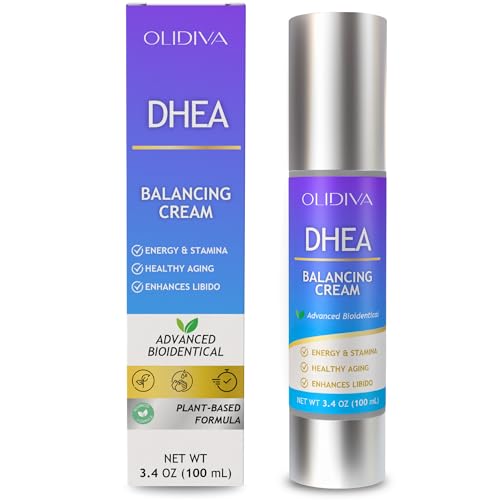
DHEA: A Precursor Hormone
DHEA is often referred to as a ‘parent hormone’ because it can be converted into other steroid hormones, including androgens (like testosterone) and estrogens [1]. Its levels typically peak in early adulthood and then gradually decline with age [5][1]. This age-related decline in DHEA coincides with the perimenopausal period for many women.
While DHEA itself is not a direct androgen, its conversion into androgens in various tissues is relevant. The balance of these conversions can vary among individuals and within different tissues of the body. Understanding this metabolic pathway is crucial when considering DHEA’s potential impact on androgen-sensitive tissues like hair follicles.
The Complex Relationship Between DHEA, Androgens, and Hair
The connection between DHEA, its conversion to androgens, and hair loss in perimenopause is not straightforward and is an area of ongoing research. Some theories suggest that an imbalance in androgen levels, potentially influenced by DHEA metabolism, could contribute to hair thinning in susceptible individuals during perimenopause. If DHEA is converted to androgens in significant amounts within the hair follicle, it theoretically could exacerbate androgen-sensitive hair loss, such as FPHL [2].
However, the precise impact of DHEA supplementation on scalp hair in perimenopausal women is not yet fully understood and the evidence is limited. While DHEA can influence androgen levels, the extent to which this translates to adverse effects on hair in perimenopausal women specifically experiencing hair loss needs further investigation.
Conversely, some studies explore DHEA’s potential benefits in other areas, but its direct role in improving or worsening perimenopausal hair loss specifically has not been definitively established with strong evidence. The overall hormonal milieu and individual genetic factors are likely to play significant roles.

DHEA Supplementation and Hair: What the Evidence Suggests
Currently, there is limited direct evidence specifically linking DHEA supplementation to either improvement or worsening of hair loss in perimenopausal women. While DHEA can serve as a precursor to androgens, the overall effect on hair follicles can be complex and depends on many individual factors, including enzyme activity within the hair follicle itself [1].
It is important to note that DHEA is sometimes discussed in relation to its broader pharmacological effects [1], but specific, high-quality studies focusing on DHEA supplementation and its impact on perimenopausal hair loss are scarce. Research on DHEA has explored various areas, including its association with mortality [6], Alzheimer’s disease [7], and even breast cancer [8], but direct, robust evidence for its role in perimenopausal hair loss remains limited.
For women experiencing hair loss, established options include topical minoxidil, oral minoxidil [9], and anti-androgens, depending on the diagnosis [2]. These approaches have more extensive research supporting their use for female-pattern hair loss.

References
- Dehydroepiandrosterone (DHEA): Pharmacological Effects and Potential Therapeutic Application. Mini reviews in medicinal chemistry, 2023
- Female-pattern hair loss: therapeutic update. Anais brasileiros de dermatologia, 2023
- Female pattern hair loss: A comprehensive review. Dermatologic therapy, 2020
- Hair Loss: Diagnosis and Treatment. American family physician, 2024
- [Dehydroepiandrosterone (DHEA)–youth hormone?]. Wiadomosci lekarskie (Warsaw, Poland : 1960), 2001
- DHEA and mortality: what is the nature of the association?. The Journal of steroid biochemistry and molecular biology, 2015
- Dehydroepiandrosterone (DHEA) and its Sulphate (DHEAS) in Alzheimer’s Disease. Current Alzheimer research, 2020
- Dehydroepiandrosterone (DHEA) in relation to breast cancer. Vitamins and hormones, 2025
- Oral minoxidil treatment for hair loss: A review of efficacy and safety. Journal of the American Academy of Dermatology, 2021
These statements have not been evaluated by the Food and Drug Administration. This information is not intended to diagnose, treat, cure, or prevent any disease. Content is for informational purposes only and is not medical advice; consult a qualified healthcare provider before starting any supplement. As an Amazon Associate we earn from qualifying purchases.