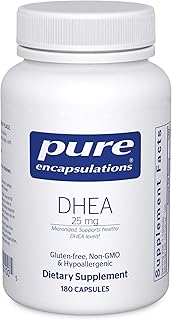
Affiliate disclosure: As an Amazon Associate, this site earns from qualifying purchases linked in this article.
Perimenopause is a significant life stage for women, marked by fluctuating hormone levels that can impact various aspects of health, including the cardiovascular system. As interest in DHEA (dehydroepiandrosterone) as a supplemental option grows, it’s important to carefully examine the available evidence regarding its potential influence on heart health during this transitional period.
This article provides an evidence-based overview of what is currently understood about DHEA and cardiovascular health in women navigating perimenopause. We will explore potential associations and discuss important safety considerations, drawing solely from published research.
Understanding DHEA and Its Role in the Body
DHEA is a steroid hormone produced primarily by the adrenal glands, and it is a precursor to other hormones, including estrogens and androgens. Levels of DHEA naturally decline with age. In perimenopause, these fluctuating hormone levels can contribute to various physiological changes, making the role of endogenous hormones and potential supplementation a topic of interest.
The precise mechanisms through which DHEA might influence cardiovascular health are complex and involve its conversion into other sex hormones, which are known to play a role in vascular function and lipid metabolism. Research continues to explore these intricate pathways.
DHEA and Coronary Heart Disease Risk in Women
Some research has investigated the relationship between endogenous DHEA levels and coronary heart disease (CHD). Early studies suggested a potential protective role for DHEA/DHEAS in coronary heart disease [1]. However, the overall picture is nuanced. A meta-analysis of prospective studies found that higher levels of endogenous DHEA-S (dehydroepiandrosterone sulfate, a stable form of DHEA) were associated with a lower risk of CHD in postmenopausal women [2].

Further research has also explored DHEA-S levels in relation to cardiovascular disease mortality. One study found that lower DHEA-S levels were associated with increased cardiovascular disease mortality in postmenopausal women, particularly those with existing ischemic heart disease [3]. This suggests that maintaining adequate DHEA-S levels might be relevant for cardiovascular outcomes, especially in women already at higher risk.
DHEA and Pulmonary Arterial Hypertension
Pulmonary arterial hypertension (PAH) is a serious condition affecting the blood vessels in the lungs. Emerging evidence indicates that sex hormones play a role in PAH, with sex differences observed in its prevalence and progression [4]. Specifically, lower DHEA-S levels have been associated with PAH. A study found that lower DHEA-S levels predicted disease and worse outcomes in postmenopausal women with various forms of PAH, including idiopathic, connective tissue disease-associated, and congenital heart disease-associated PAH [5].
This suggests a potential connection between DHEA levels and the risk or severity of PAH in women. However, it’s important to note that these findings relate to endogenous DHEA-S levels and do not directly address the effects of DHEA supplementation on PAH.
Potential Risks and Safety Considerations for DHEA Use
While some studies suggest potential associations between endogenous DHEA levels and cardiovascular health, the safety and efficacy of DHEA supplementation, particularly in perimenopause, require careful consideration. The North American Menopause Society (NAMS) has issued position statements on hormone therapy, which provide guidance on the use of various hormonal interventions [6].
It’s crucial to be aware that DHEA can have effects on other organ systems. For instance, research on perimenopausal rats indicated that multiple doses of DHEA could impact the liver [7]. While animal studies do not directly translate to human outcomes, they highlight the need for caution and further research into potential systemic effects.
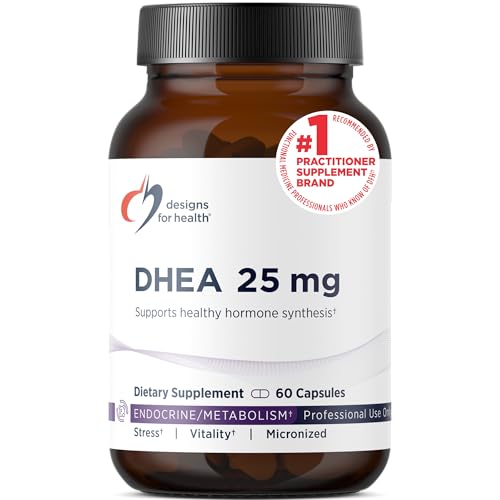
Additionally, DHEA is a precursor hormone, meaning it can be converted into estrogens and androgens, which can have various effects throughout the body. The optimal dosage, long-term safety, and specific cardiovascular impacts of DHEA supplementation in perimenopausal women are still areas requiring more extensive and rigorous human clinical trials. Unmonitored use may lead to unintended hormonal imbalances.
Allostatic Load and Hormonal Changes in Perimenopause
Perimenopause can be a period of increased stress and physiological changes, contributing to what is known as allostatic load—the ‘wear and tear’ on the body from chronic stress. Hormonal fluctuations during perimenopause can contribute to this load [8]. While not directly about DHEA supplementation, understanding the broader context of hormonal shifts and their impact on overall health, including cardiovascular health, is important.
For example, research has explored the relationship between daily spiritual experiences and allostatic load trajectories in midlife African American women, highlighting the multifaceted factors influencing health during this life stage [9]. Furthermore, an in vitro model has implicated steroid metabolic and proinflammatory genes in perimenopausal depression, illustrating the complex interplay of hormones and inflammation [10]. These studies underscore the complexity of perimenopausal health and the need for a holistic approach, rather than focusing solely on one hormone.

References
- Do DHEA/DHEAS play a protective role in coronary heart disease?. Physiological research, 2000
- Endogenous sex hormone levels and coronary heart disease risk in postmenopausal women: A meta-analysis of prospective studies. European journal of preventive cardiology, 2017
- DHEA-S levels and cardiovascular disease mortality in postmenopausal women: results from the National Institutes of Health–National Heart, Lung, and Blood Institute (NHLBI)-sponsored Women’s Ischemia Syndrome Evaluation (WISE). The Journal of clinical endocrinology and metabolism, 2010
- Pulmonary arterial hypertension: Sex matters. British journal of pharmacology, 2024
- Lower DHEA-S levels predict disease and worse outcomes in post-menopausal women with idiopathic, connective tissue disease- and congenital heart disease-associated pulmonary arterial hypertension. The European respiratory journal, 2018
- The 2022 hormone therapy position statement of The North American Menopause Society. Menopause (New York, N.Y.), 2022
- Effect of dehydroepiandrosterone on the liver of perimenopausal rat: multiple doses study. Ultrastructural pathology, 2018
- Allostatic Load in Perimenopausal Women With Migraine. Frontiers in neurology, 2021
- Daily spiritual experiences and allostatic load trajectories: a longitudinal study of midlife African American women. Menopause (New York, N.Y.), 2024
- In vitro model of perimenopausal depression implicates steroid metabolic and proinflammatory genes. Molecular psychiatry, 2021
These statements have not been evaluated by the Food and Drug Administration. This information is not intended to diagnose, treat, cure, or prevent any disease. Content is for informational purposes only and is not medical advice; consult a qualified healthcare provider before starting any supplement. As an Amazon Associate we earn from qualifying purchases.