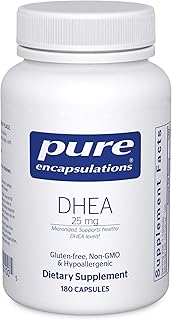
Affiliate disclosure: As an Amazon Associate, this site earns from qualifying purchases linked in this article.
For women navigating late perimenopause, the discussion around fertility can be complex. While awareness of age-related fertility decline is increasing, some individuals may still be exploring options to support their reproductive goals during this transitional phase [1].
Dehydroepiandrosterone (DHEA) is a hormone produced naturally by the body that has garnered interest for various potential applications. Its role in fertility, particularly for women in later reproductive years, is an area of ongoing discussion with limited but emerging evidence.
Understanding DHEA’s Role in the Body
DHEA is a steroid hormone that serves as a precursor to other hormones, including androgens and estrogens [2]. It is the most abundant circulating steroid hormone in humans [2]. Levels of DHEA naturally decline with age, leading some to refer to it in historical contexts as a ‘youth hormone’ [3].
Beyond its role as a precursor, DHEA has been investigated for various pharmacological effects [2]. Research has explored its associations with conditions like Alzheimer’s disease [4], its relationship with physical exercise and doping [5], and its potential connections to mortality [6] and breast cancer [7].
Perimenopause and Fertility: The Shifting Landscape
Perimenopause is the transitional phase leading up to menopause, characterized by hormonal fluctuations and irregular menstrual cycles. During this time, ovarian reserve naturally diminishes, and the quality of oocytes (eggs) may decline [1]. These physiological changes contribute to a natural decrease in fertility potential.
While some women may still conceive spontaneously during perimenopause, the likelihood decreases significantly with advancing age. Understanding fertility awareness-based methods can provide insights into a woman’s reproductive cycle, but they do not alter the underlying biological changes associated with age [8][9].
DHEA and Fertility: What the Emerging Evidence Suggests
The application of DHEA in the context of fertility, particularly for women in late perimenopause, is considered a niche area with limited evidence. While DHEA is a precursor to sex hormones, its direct impact on improving fertility outcomes in perimenopausal women is not extensively established through robust, large-scale studies.
Some smaller studies and clinical observations have explored DHEA supplementation in specific fertility contexts, such as in women undergoing assisted reproductive technologies (ART) with diminished ovarian reserve. The hypothesis is that DHEA, by influencing the hormonal environment, might potentially support follicular development or oocyte quality. However, these are often exploratory findings, and the evidence regarding DHEA’s specific benefits for fertility in late perimenopause remains limited and requires further rigorous investigation [2].
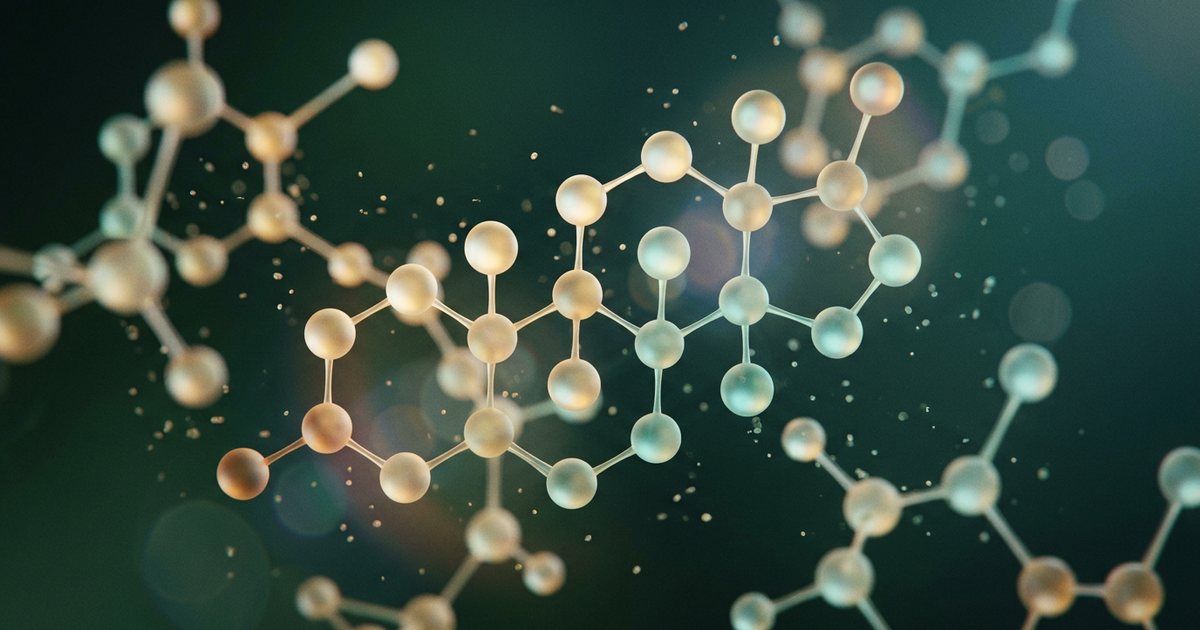
Niche Application: Who Might Consider DHEA for Fertility?
Given the limited evidence, DHEA for fertility in late perimenopause is generally considered a niche application. It may be explored by individuals who are actively trying to conceive during this phase and are seeking to optimize their reproductive health, often in consultation with fertility specialists.
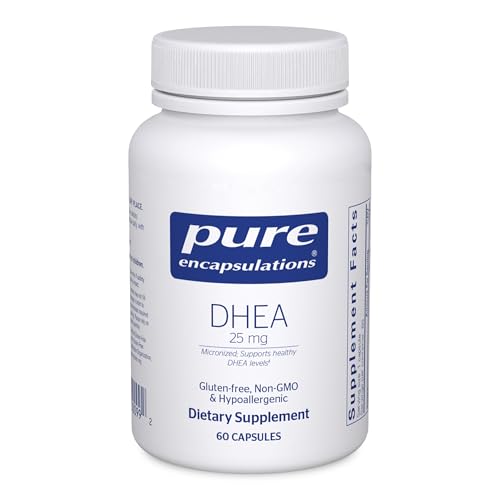
It’s important to understand that DHEA is not a universal solution for age-related fertility decline. The biological realities of diminishing ovarian reserve and oocyte quality in perimenopause mean that any potential benefits from DHEA would likely be modest and highly individual. Its use would typically be considered as part of a broader, individualized approach to fertility support, not as a standalone intervention.
Important Considerations and Future Research
While DHEA has various pharmacological effects and is a precursor to sex hormones [2], its precise mechanisms and effectiveness for improving fertility in late perimenopause are not fully understood. More comprehensive, well-designed clinical trials are needed to clarify any potential benefits, optimal dosages, and long-term safety profiles in this specific population.
Women considering DHEA for fertility support during perimenopause should engage in thorough discussions with their healthcare providers, particularly fertility specialists. This ensures that all potential options are weighed, realistic expectations are set, and any individual health considerations are taken into account.

References
- Knowledge of age-related fertility decline in women: A systematic review. European journal of obstetrics, gynecology, and reproductive biology, 2018
- Dehydroepiandrosterone (DHEA): Pharmacological Effects and Potential Therapeutic Application. Mini reviews in medicinal chemistry, 2023
- [Dehydroepiandrosterone (DHEA)–youth hormone?]. Wiadomosci lekarskie (Warsaw, Poland : 1960), 2001
- Dehydroepiandrosterone (DHEA) and its Sulphate (DHEAS) in Alzheimer’s Disease. Current Alzheimer research, 2020
- DHEA, physical exercise and doping. The Journal of steroid biochemistry and molecular biology, 2015
- DHEA and mortality: what is the nature of the association?. The Journal of steroid biochemistry and molecular biology, 2015
- Dehydroepiandrosterone (DHEA) in relation to breast cancer. Vitamins and hormones, 2025
- Fertility awareness-based methods of family planning. Best practice & research. Clinical obstetrics & gynaecology, 2020
- [Fertility Awareness Based Methods]. Therapeutische Umschau. Revue therapeutique, 2022
These statements have not been evaluated by the Food and Drug Administration. This information is not intended to diagnose, treat, cure, or prevent any disease. Content is for informational purposes only and is not medical advice; consult a qualified healthcare provider before starting any supplement. As an Amazon Associate we earn from qualifying purchases.