Affiliate disclosure: As an Amazon Associate, this site earns from qualifying purchases linked in this article.
Mayo Clinic advises avoiding DHEA supplementation and specifically warns that high or long-term doses might raise the risk of hormone-sensitive cancers, including prostate and breast cancer[1]. Anyone with a personal or family history of hormone-sensitive cancer should not use DHEA without direct physician guidance.
- Mayo Clinic takes a notably cautious stance, advising against DHEA use given its steroid-hormone effects[1]
- DHEA can raise androgen levels, causing acne, hair loss, and — in men — gynecomastia (male breast tissue growth) via estrogen conversion[2]
- Long-term or high-dose use may raise the risk of hormone-sensitive cancers, a serious concern flagged by multiple sources[1][3]
- Many DHEA products don’t reliably contain what their label claims, a real product-quality complaint independent of the hormone itself[4]
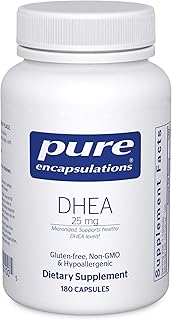
DHEA (dehydroepiandrosterone) is marketed as an anti-aging and hormone-balancing supplement, but it’s fundamentally a steroid hormone precursor — and the negative-review picture reflects that directly, with real hormonal and cancer-risk concerns rather than mild digestive complaints.
Mayo Clinic’s Notably Cautious Position
Unlike most supplements covered in this comparison series, Mayo Clinic takes an unusually direct stance: it advises avoiding DHEA supplementation, noting it’s a hormone whose use might raise androgen levels and produce a steroid effect[1]. This is a stronger caution than the typical “consult your doctor” framing given to most over-the-counter supplements.
Hormonal Side Effects
Common side effects include acne, increased hair growth, and sexual problems[2]. More specifically, negative side effects most frequently reported, oily skin, acne, and hair loss, are described as immediately reversible with a lower dose or discontinuation[3]. In men, high doses can elevate hormone levels enough to increase prostate-related concerns, and DHEA’s conversion into estrogen and estradiol can cause gynecomastia (male breast tissue growth)[2]. In women, breast tenderness or irregular menstrual cycles are reported[2].
The Cancer Risk Warning Deserves Direct Treatment
This is the most serious concern in the research: taking high doses of DHEA, or using it long-term, might raise the risk of hormone-sensitive cancers such as prostate and breast cancer, and Mayo Clinic states those with a hormone-sensitive cancer should not use DHEA[1]. Independent sources echo this, noting DHEA can be converted to estrogen and testosterone in the body, with the theoretical potential to stimulate growth of existing hormone-sensitive tumors[3].

Rare but Serious Reported Effects
Beyond hormonal changes, serious (though rare) side effects reported include hallucinations or psychosis[2]. Related hormone-therapy databases also document rarer risks including gallbladder disease, increased triglycerides that can lead to pancreatitis, and rare cases of ovarian and breast cancer[4].
Product Quality Is Its Own Complaint
Beyond biological effects, there’s a documented reliability problem: many DHEA products do not necessarily contain what their label claims, making careful selection of reputable, third-party-tested products a real necessity rather than an afterthought[3].

Absorption Issues
Some formulations face a separate bioavailability complaint: DHEA is poorly absorbed when taken orally, due to its lipophilic nature and first-pass liver metabolism, which can significantly reduce how much actually reaches the bloodstream[3] — meaning inconsistent effects between products may partly reflect real formulation differences, not just individual response.

FAQ
Does DHEA increase cancer risk?
High doses or long-term use may raise the risk of hormone-sensitive cancers according to Mayo Clinic and other sources — anyone with a hormone-sensitive cancer history should avoid DHEA[1][3].
What are the most common DHEA side effects?
Acne, oily skin, hair loss, and hormonal changes, generally reversible by lowering the dose or stopping use[2][3].
Can DHEA cause breast tissue growth in men?
Yes — via its conversion to estrogen, DHEA can cause gynecomastia in men at higher doses[2].

References
- Mayo Clinic. DHEA. www.mayoclinic.org/drugs-supplements-dhea/art…
- WebMD. DHEA: Overview, Uses, Side Effects, Precautions, Interactions, Dosing and Reviews. www.webmd.com/vitamins/ai/ingredientmono-331/…
- SiPhox Health / Center for Human Reproduction. What are the side effects of DHEA supplements?. siphoxhealth.com/articles/what-are-the-side-e…
- Drugs.com. DHEA Side Effects: Common, Severe, Long Term. www.drugs.com/sfx/dhea-side-effects.html…
These statements have not been evaluated by the Food and Drug Administration. This information is not intended to diagnose, treat, cure, or prevent any disease. Content is for informational purposes only and is not medical advice; consult a qualified healthcare provider before starting any supplement. As an Amazon Associate we earn from qualifying purchases.