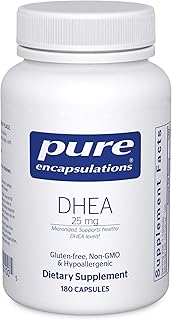
As women approach and navigate perimenopause and menopause, a myriad of changes can impact their quality of life. Diminished energy, decreased libido, and uncomfortable vaginal dryness are common complaints, often stemming from declining hormone levels. For many, the search for effective, evidence-based solutions leads to questions about dehydroepiandrosterone (DHEA), a naturally occurring steroid hormone precursor.
Understanding the role of DHEA, its potential benefits, and importantly, its risks, is crucial. This comprehensive guide will dissect the science behind DHEA supplementation, focusing on its application for women aged 45-60, and provide a clinically precise framework for evaluating the best DHEA supplements available in 2026.
DHEAHub may earn a commission from qualifying purchases made through affiliate links in this article. This does not influence our editorial content or product recommendations.
Understanding DHEA: A Prohormone Primer
Dehydroepiandrosterone (DHEA) is the most abundant circulating steroid hormone in the human body. Produced primarily by the adrenal glands, with smaller amounts from the gonads and brain, DHEA serves as a precursor to androgens (like testosterone) and estrogens (like estradiol).
DHEA levels naturally peak in early adulthood and progressively decline with age, a phenomenon often referred to as “adrenopause.” This decline coincides with the onset of perimenopausal and menopausal symptoms, prompting interest in DHEA supplementation to potentially mitigate these effects.
Mechanisms of Action: How DHEA Works
DHEA itself is weakly androgenic, but its primary biological function is as a prohormone. It is converted intracellularly into more potent androgens and estrogens through a series of enzymatic steps, a process known as intracrinology.
This localized conversion means that DHEA can exert tissue-specific hormonal effects without significantly increasing systemic levels of these hormones. This mechanism is particularly relevant for conditions like vaginal atrophy, where local application of DHEA can provide targeted relief.
DHEA for Perimenopausal and Menopausal Symptoms: Evidence and Efficacy
Research on DHEA supplementation for menopausal symptoms presents a complex picture, with varying degrees of evidence for different applications. It is crucial to distinguish between oral DHEA supplementation, which is unregulated, and FDA-approved DHEA products for specific indications.
DHEA and Vaginal Health: A Targeted Approach
One of the most robust areas of DHEA research concerns its efficacy for vulvovaginal atrophy (VVA) and vaginal dryness, a common and distressing symptom of menopause. The FDA has approved a specific DHEA vaginal insert (prasterone) for the treatment of moderate to severe dyspareunia (painful intercourse) due to menopause.
Clinical trials have demonstrated that intravaginal DHEA significantly improves symptoms of vaginal atrophy, including dryness, irritation, and dyspareunia. This is attributed to the localized conversion of DHEA into estrogens within vaginal tissues, promoting epithelial proliferation, maturation, and increased lubrication, without substantial systemic hormone absorption.

DHEA and Libido/Sexual Function in Women
For women experiencing decreased libido, particularly those with hypoactive sexual desire disorder (HSDD), DHEA has shown some promise, though evidence is less consistent than for VVA. Some studies suggest that DHEA supplementation may improve sexual desire, arousal, and orgasm in postmenopausal women.
The proposed mechanism involves DHEA’s conversion to testosterone, which plays a critical role in female sexual function. However, the optimal dosage and duration of treatment, as well as the specific subgroups of women most likely to benefit, require further clarification.
DHEA for Energy and Mood
While some women report improved energy levels and mood with DHEA supplementation, the scientific evidence supporting these claims is largely inconclusive or conflicting. Meta-analyses and larger controlled trials have generally not found a significant effect of oral DHEA on mood, well-being, or fatigue in healthy postmenopausal women[1][2].
Any perceived benefits might be highly individual or related to improvements in other symptoms, such as sexual function. It is important for individuals to manage expectations and rely on robust evidence for these indications.
DHEA and Bone Mineral Density
Given DHEA’s role as a precursor to sex hormones, there has been interest in its potential to improve bone mineral density (BMD) in postmenopausal women, who are at increased risk for osteoporosis. Some studies have shown a modest positive effect on BMD, particularly in the lumbar spine and femoral neck[3][4].
However, DHEA is not currently considered a primary treatment for osteoporosis. Its effects on bone density are generally less pronounced than conventional hormone replacement therapy (HRT) or bisphosphonates, and further research is needed to determine its clinical utility in this context.
Safety and Risks: Prioritizing Patient Well-being
DHEA is a prohormone, and its supplementation is not without risks. Because it can convert to testosterone and estrogen, it carries the potential for hormone-related side effects. Leading with safety and medical oversight is paramount.
Potential Side Effects of DHEA
Side effects are typically dose-dependent and include androgenic effects such as acne, oily skin, hair loss (androgenic alopecia), and hirsutism (unwanted hair growth on the face or body). Estrogenic effects, though less common with oral DHEA, could theoretically include breast tenderness or menstrual irregularities in perimenopausal women.
Other potential side effects include mood changes, insomnia, and gastrointestinal upset. Women with pre-existing hormone-sensitive conditions, such as breast or prostate cancer, should strictly avoid DHEA due to its conversion to estrogens and androgens.
Drug Interactions and Contraindications
DHEA can interact with various medications, including blood thinners, anticonvulsants, and medications for diabetes or heart conditions. It should not be used concurrently with hormone replacement therapy (HRT) unless specifically directed and monitored by a physician, as it can alter hormone levels.

Contraindications include pregnancy, breastfeeding, hormone-sensitive cancers (breast, ovarian, uterine, prostate), liver disease, and certain psychiatric disorders. A thorough medical evaluation and discussion with a healthcare provider are essential before initiating DHEA supplementation.
The Importance of Medical Supervision and Purity
Due to its hormonal activity, DHEA supplementation should always be undertaken under the guidance and supervision of a qualified healthcare professional. This includes baseline hormone testing (e.g., DHEA-S, testosterone, estrogen) and regular monitoring to assess efficacy and potential side effects.
Furthermore, because oral DHEA is sold as a dietary supplement, it is not subject to the same rigorous FDA regulation as prescription drugs. This means product purity, potency, and label accuracy can vary significantly[5][6]. Choosing a reputable manufacturer is critical.
Selecting the Best DHEA Supplements in 2026
When considering DHEA supplementation, particularly for oral use, several factors contribute to product quality and safety. While we cannot recommend specific brands or URLs due to the evolving market and regulatory landscape, we can guide you on what to look for.
Key Considerations for Oral DHEA Supplements
| Factor | Description for 2026 Selection |
|---|---|
| Third-Party Testing | Prioritize brands that undergo independent third-party testing for purity, potency, and absence of contaminants (heavy metals, microbes). Look for certifications from organizations like NSF International, USP, or ConsumerLab. |
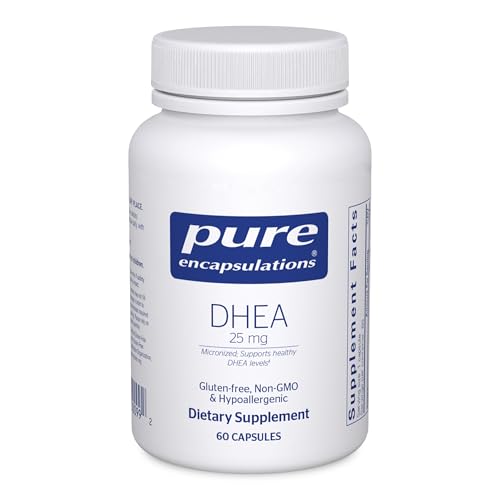
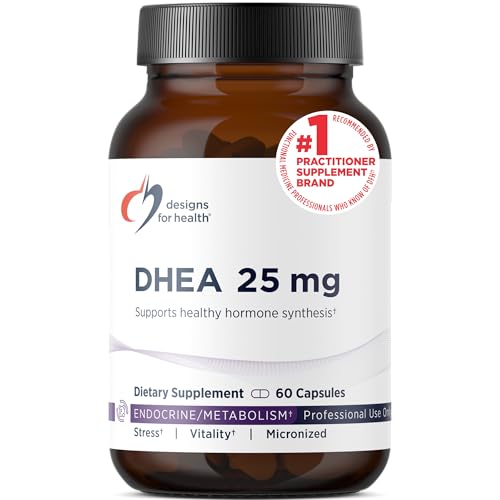
| Dosage and Form | DHEA is typically available in capsules ranging from 5 mg to 100 mg. Most studies showing benefits for women use dosages between 25 mg and 50 mg daily. Start low and titrate under medical supervision. Micronized DHEA may offer improved absorption. |
| Manufacturing Standards | Choose products manufactured in facilities that adhere to current Good Manufacturing Practices (cGMP). This ensures consistent quality control and safety standards. |
| Transparency | Reputable manufacturers provide clear labeling of ingredients, dosage, and contact information. Avoid proprietary blends that do not disclose individual ingredient amounts. |
| Source Material | DHEA is typically synthesized from plant sterols (e.g., wild yam or soy). Ensure the product specifies that the DHEA itself is bio-identical and not merely “wild yam extract” which does not contain DHEA. |
Vaginal DHEA: Prescription vs. Over-the-Counter
For vaginal dryness and dyspareunia, the FDA-approved prasterone (Intrarosa) is a prescription-only DHEA vaginal insert. This product has undergone rigorous clinical trials and meets stringent safety and efficacy standards.
While some over-the-counter DHEA creams or suppositories exist, they lack the same regulatory oversight and scientific validation as prescription prasterone. Their efficacy and safety profiles are not well-established, and their DHEA content and absorption can be highly variable.
Navigating Affiliate Opportunities: What to Look For
When searching for DHEA supplements on platforms like Amazon, focus your search on specific quality indicators rather than just price. Look for products that clearly state “third-party tested DHEA,” or “cGMP certified DHEA.”
Additionally, search for “micronized DHEA” if you are advised by your physician that this form might be beneficial for absorption. Always review customer feedback for consistent patterns related to quality and side effects, but remember that individual experiences vary greatly.
Conclusion
DHEA holds a unique position in the landscape of perimenopausal and menopausal health. Its role as a prohormone means it can offer targeted relief for specific symptoms, most notably vulvovaginal atrophy, with an FDA-approved prescription option available.
For other indications like energy, mood, or general hormonal balance, the evidence for oral DHEA is less compelling and requires careful consideration of risks versus benefits. The decision to use DHEA, whether oral or topical, must always be made in consultation with a healthcare provider, ensuring comprehensive monitoring and personalized care.
Frequently Asked Questions (FAQ)
What is the difference between oral DHEA and DHEA vaginal inserts?
Oral DHEA is a dietary supplement that circulates systemically and is converted into various hormones throughout the body. DHEA vaginal inserts, like prescription prasterone, deliver DHEA directly to vaginal tissues, providing localized hormonal effects with minimal systemic absorption, primarily for treating vaginal atrophy.

Can DHEA increase testosterone in women?
Yes, DHEA is a precursor to testosterone. Oral DHEA supplementation can lead to an increase in circulating testosterone levels in women, which may contribute to some of its effects, such as on libido. This conversion is why monitoring is important to avoid excessive androgenic side effects.
Is DHEA safe for long-term use?
The long-term safety of oral DHEA supplementation, particularly at higher doses, is not fully established, and potential risks remain. Long-term use should only be considered under strict medical supervision with regular monitoring of hormone levels and for potential adverse effects.
Are there natural sources of DHEA?
DHEA is produced endogenously in the body. While DHEA supplements are often synthesized from plant compounds like wild yam or soy, these plants themselves do not contain DHEA that the human body can directly convert. Any product claiming “wild yam DHEA” without further processing is misleading.
How quickly can I expect to see results from DHEA?
The timeline for experiencing effects from DHEA can vary. For vaginal symptoms, improvements with prescription vaginal DHEA may be noticed within a few weeks to a few months. For other indications like libido or energy, if benefits occur, they may take several weeks to months of consistent use.
Can DHEA affect my mood?
While some individuals report mood improvements, DHEA’s effect on mood is not consistently supported by robust scientific evidence. Conversely, some individuals may experience mood changes, including irritability or anxiety, particularly at higher doses, due to its hormonal effects.
These statements have not been evaluated by the FDA. This product is not intended to diagnose, treat, cure, or prevent any disease.

References
- Clinical review: The benefits and harms of systemic dehydroepiandrosterone (DHEA) in postmenopausal women with normal adrenal function: a systematic review and meta-analysis. J Clin Endocrinol Metab, 2014
- Should Dehydroepiandrosterone Be Administered to Women?. J Clin Endocrinol Metab, 2022
- Dehydroepiandrosterone replacement therapy in older adults: 1- and 2-y effects on bone. Am J Clin Nutr, 2009
- Increases in bone mineral density in response to oral dehydroepiandrosterone replacement in older adults appear to be mediated by serum estrogens. J Clin Endocrinol Metab, 2008
- Quality control of dehydroepiandrosterone dietary supplement products. JAMA, 1998
- Over-the-Counter “Adrenal Support” Supplements Contain Thyroid and Steroid-Based Adrenal Hormones. Mayo Clin Proc, 2018
These statements have not been evaluated by the Food and Drug Administration. This information is not intended to diagnose, treat, cure, or prevent any disease. Content is for informational purposes only and is not medical advice; consult a qualified healthcare provider before starting any supplement. As an Amazon Associate we earn from qualifying purchases.