As women navigate the perimenopausal and menopausal transition, a constellation of symptoms often arises, ranging from diminished energy and libido to troublesome vaginal dryness. These changes frequently prompt an exploration of hormonal support, and dehydroepiandrosterone (DHEA) emerges as a frequently discussed option. However, DHEA is a potent prohormone, not a benign supplement, and understanding its appropriate dosage, administration, and potential risks is paramount for both efficacy and safety.
This article aims to provide a clinically precise, evidence-based guide to DHEA dosage for women aged 45-60, focusing on its use for energy, libido, vaginal health, and the broader context of hormonal decline, as of 2026. We will differentiate between FDA-approved topical DHEA and oral supplementation, emphasizing safety considerations at every turn.
FTC Affiliate Disclosure: DHEAHub may earn a commission from qualifying purchases made through links in this article, at no extra cost to you. This helps support our research and content creation.
Understanding DHEA: The Prohormone Perspective
DHEA is an endogenous steroid hormone produced primarily by the adrenal glands. It serves as a precursor to androgens (like testosterone) and estrogens (like estradiol), earning its classification as a prohormone. DHEA levels naturally peak in early adulthood and decline progressively with age, a phenomenon often termed adrenopause.
The physiological rationale for DHEA supplementation in perimenopausal and menopausal women is to potentially replenish declining levels and thereby support the downstream production of sex hormones. This mechanism is complex and varies significantly between individuals, influenced by enzyme expression and metabolic pathways.
FDA-Approved DHEA for Vaginal Health: Prasterone (Intravaginal)
It is crucial to differentiate between over-the-counter oral DHEA supplements and FDA-approved prescription prasterone, which is a synthetic form of DHEA. Prasterone is approved for the treatment of moderate to severe dyspareunia (painful intercourse) due to vulvovaginal atrophy (VVA) associated with menopause. This formulation is administered intravaginally.
The localized application of prasterone delivers DHEA directly to vaginal tissues, where it is converted into active sex steroids. This localized action minimizes systemic absorption, thereby reducing the potential for systemic side effects often associated with oral DHEA. The typical dosage for intravaginal prasterone is 6.5 mg administered once daily at bedtime.
Clinical trials have demonstrated the efficacy of intravaginal prasterone in improving symptoms of VVA, including vaginal dryness, irritation, and dyspareunia. This approach offers a targeted therapy for specific menopausal symptoms with a well-established safety profile for its approved indication.
Oral DHEA Supplementation: Dosage Considerations and Evidence
Oral DHEA supplements are not FDA-approved for any medical condition and are regulated as dietary supplements. This distinction means they do not undergo the rigorous testing for safety and efficacy required of prescription medications. Therefore, caution and medical supervision are strongly advised when considering oral DHEA.

General Dosing Principles for Oral DHEA
For oral DHEA supplementation, a “start low and go slow” approach is universally recommended. The optimal dosage is highly individualized and depends on baseline DHEA levels, individual metabolism, and the specific symptoms being addressed. Monitoring DHEA-S (DHEA sulfate) and downstream hormone levels (e.g., testosterone, estradiol) is essential to guide dosage adjustments and assess safety.
Most clinical studies investigating oral DHEA in women have utilized dosages ranging from 25 mg to 50 mg daily. However, some studies have explored lower doses, particularly for specific benefits. Higher doses are generally associated with an increased risk of side effects.
DHEA for Energy and Mood
Some research suggests that DHEA supplementation may positively impact energy levels and mood in certain individuals, particularly those with documented DHEA deficiency[1]. The proposed mechanism involves its conversion to neuroactive steroids and its influence on neurotransmitter systems.
Studies investigating DHEA for these indications typically employ dosages in the range of 25 mg daily. However, evidence remains mixed, and not all women experience significant improvements. A trial duration of at least 6-8 weeks is often needed to assess potential benefits, with ongoing monitoring of hormone levels.
DHEA for Libido and Sexual Function
Declining libido is a common complaint during perimenopause and menopause. DHEA’s role as a precursor to testosterone, a hormone critical for female sexual desire and arousal, provides a plausible mechanism for its potential benefit. Some studies have shown improvements in sexual function, including desire, arousal, and orgasm, with oral DHEA supplementation[2][3].

Dosages commonly explored in research for libido enhancement in women range from 25 mg to 50 mg per day[4]. It is important to note that individual responses vary, and benefits may not be universal. Monitoring for androgenic side effects is particularly important at these dosages.
DHEA for Bone Mineral Density
Some research has explored DHEA’s potential to improve bone mineral density (BMD) in postmenopausal women, given its conversion to estrogens and androgens, which are known to influence bone health[5][2]. While some studies show modest improvements, particularly in the lumbar spine, the evidence is not as robust as for established osteoporosis treatments.
Dosages in BMD studies have varied, often falling within the 25 mg to 50 mg daily range. DHEA should not be considered a primary treatment for osteoporosis and its use for this purpose requires careful consideration and integration with other therapeutic strategies under medical supervision.
When to Take Oral DHEA
There is no universally established “best” time of day to take oral DHEA. Some practitioners suggest taking it in the morning, mimicking the natural diurnal rhythm of adrenal hormone production. Others recommend evening administration, particularly if sleep issues are a concern, though evidence for this specific timing is limited.

Consistency is more important than specific timing. Taking DHEA at the same time each day helps maintain stable hormone levels. It can be taken with or without food, though some individuals may prefer taking it with food to minimize potential gastrointestinal upset.
DHEA Dosage & Cost Calculator
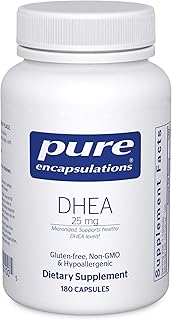
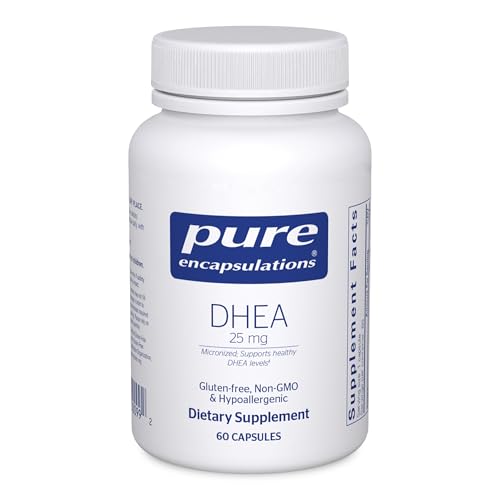
Based on the labeled dose options for Pure Encapsulations DHEA 25mg and the published 180-count bottle at $47.50.
Open the full dosage & cost calculator →
Estimate only – based on the current listed price of the 180-count Pure Encapsulations DHEA 25mg bottle. Actual Amazon price can change; check the live price before buying.
Why no height/weight input? Unlike per-kg supplements (creatine, protein), DHEA has no published bodyweight-adjusted dosing in the research behind it. This calculator doesn't fabricate a per-kg formula that doesn't exist in the literature.
Get Pure Encapsulations DHEA 25mg on Amazon(paid link) As an Amazon Associate we earn from qualifying purchases.
Safety Notes and Potential Risks of Oral DHEA
Given DHEA’s role as a prohormone, its supplementation carries real risks, particularly with unmonitored use. It is imperative to consult with a qualified healthcare provider before initiating DHEA supplementation.
Androgenic Side Effects
As DHEA can convert to testosterone, androgenic side effects are a primary concern, especially at higher doses. These may include acne, oily skin, hirsutism (unwanted hair growth on the face or body), and scalp hair loss. Voice deepening is a less common but irreversible side effect.
Estrogenic Side Effects
DHEA can also convert to estrogens. Potential estrogenic side effects include breast tenderness, bloating, and menstrual irregularities in perimenopausal women. Of particular concern is the potential for DHEA to stimulate estrogen-sensitive tissues, which warrants extreme caution in individuals with a history of breast cancer or other hormone-sensitive cancers.
Other Potential Side Effects and Contraindications
Other reported side effects include headaches, insomnia, mood changes, and palpitations. DHEA is contraindicated in individuals with hormone-sensitive cancers (e.g., breast, ovarian, uterine, prostate), benign prostatic hyperplasia, liver disease, or polycystic ovary syndrome (PCOS).
It can also interact with various medications, including blood thinners, insulin, and certain psychiatric medications. A thorough medical history and medication review are essential prior to DHEA use.
Monitoring DHEA Supplementation
Regular monitoring by a healthcare professional is non-negotiable for anyone taking oral DHEA. This includes:
Baseline and Follow-up Blood Tests: Measurement of DHEA-S levels is crucial to assess baseline status and guide dosage. Subsequent testing should also include testosterone (total and free), estradiol, and potentially other markers like lipid profiles and liver function tests.
Symptom Assessment: Regular evaluation of symptom improvement or worsening, as well as the emergence of any side effects, is vital. Dosage adjustments should be made based on both objective lab results and subjective patient experience.
Comparison: Intravaginal Prasterone vs. Oral DHEA
| Feature | Intravaginal Prasterone (FDA-approved) | Oral DHEA (Dietary Supplement) |
| Regulation | Prescription drug, FDA-approved | Dietary supplement, not FDA-approved |
| Primary Indication | Moderate to severe dyspareunia due to VVA | General hormonal support, energy, libido (off-label) |
| Mechanism | Localized conversion to active steroids in vaginal tissue | Systemic conversion to androgens and estrogens |
| Systemic Absorption | Minimal | Significant |
| Typical Dosage | 6.5 mg daily | 25 mg – 50 mg daily (common in studies) |
| Side Effects | Low systemic risk; some local irritation | Higher risk of systemic androgenic/estrogenic side effects |
| Medical Supervision | Required (prescription) | Strongly recommended (due to prohormone nature) |
Choosing a DHEA Supplement (Affiliate Section)
When considering an oral DHEA supplement, quality and purity are paramount due to the lack of stringent FDA oversight. Readers should look for products that:
Are Third-Party Tested: Search for DHEA supplements that have been independently verified for purity, potency, and absence of contaminants. Certifications from organizations like USP, NSF International, or ConsumerLab.com are indicators of quality assurance.
Specify Dosage Clearly: Ensure the product clearly states the amount of DHEA per capsule or serving. This allows for precise dosing under medical guidance.
Contain Minimal Additives: Opt for products with simple formulations, avoiding unnecessary fillers, artificial colors, or preservatives.
Conclusion
DHEA, whether as FDA-approved intravaginal prasterone or as an oral dietary supplement, offers potential benefits for women experiencing symptoms of hormonal decline. However, its prohormone status necessitates a cautious and informed approach. For vaginal health, prescription prasterone offers a targeted, evidence-based solution with minimal systemic risk.

For oral DHEA supplementation addressing broader symptoms like energy and libido, individualized dosing, starting low at 25 mg daily, and meticulous medical supervision are essential. Regular hormone monitoring and a clear understanding of potential risks, particularly androgenic and estrogenic side effects, are non-negotiable. Always prioritize safety and consult with a qualified healthcare provider.
Frequently Asked Questions (FAQ)
What is the typical starting dose for oral DHEA in women?
A common starting dose for oral DHEA in women is 25 mg per day. However, some healthcare providers may recommend even lower doses, such as 5-10 mg, especially when starting.
How long does it take to see effects from DHEA?
The time to observe effects from DHEA can vary. For some symptoms like energy or mood, it might take 4-8 weeks. For libido or bone health, it could take several months of consistent use.
Can I take DHEA without a doctor’s supervision?
It is strongly advised not to take oral DHEA without medical supervision. DHEA is a prohormone with significant potential side effects and interactions, requiring professional guidance and monitoring.
What are the signs that my DHEA dose might be too high?
Signs of a DHEA dose being too high often include androgenic side effects like acne, oily skin, increased facial hair growth, or scalp hair loss. Estrogenic effects such as breast tenderness or bloating can also occur.
Is topical DHEA cream the same as oral DHEA?
No, topical DHEA creams (especially prescription prasterone) are designed for localized action, primarily for vaginal health, with minimal systemic absorption. Oral DHEA is absorbed systemically and affects the entire body.
Can DHEA interact with other medications?
Yes, DHEA can interact with various medications, including blood thinners, insulin, hormone therapies (estrogen, testosterone), and certain psychiatric drugs. Always inform your doctor about all medications and supplements you are taking.
These statements have not been evaluated by the FDA. This product is not intended to diagnose, treat, cure, or prevent any disease.

References
- Should Dehydroepiandrosterone Be Administered to Women?. J Clin Endocrinol Metab, 2022
- Clinical review: The benefits and harms of systemic dehydroepiandrosterone (DHEA) in postmenopausal women with normal adrenal function: a systematic review and meta-analysis. J Clin Endocrinol Metab, 2014
- Dehydroepiandrosterone for women in the peri- or postmenopausal phase. Cochrane Database Syst Rev, 2015
- Dehydroepiandrosterone replacement therapy in older adults: 1- and 2-y effects on bone. Am J Clin Nutr, 2009
- Increases in bone mineral density in response to oral dehydroepiandrosterone replacement in older adults appear to be mediated by serum estrogens. J Clin Endocrinol Metab, 2008
These statements have not been evaluated by the Food and Drug Administration. This information is not intended to diagnose, treat, cure, or prevent any disease. Content is for informational purposes only and is not medical advice; consult a qualified healthcare provider before starting any supplement. As an Amazon Associate we earn from qualifying purchases.