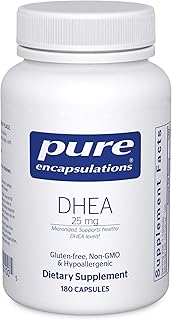
As women approach and navigate perimenopause and menopause, a myriad of physiological changes can arise, often leading to questions about maintaining vitality, energy, and overall well-being. From shifts in mood and energy levels to concerns about libido and vaginal comfort, many seek informed answers and potential strategies to support their health during this significant life stage. One compound that frequently emerges in these discussions is dehydroepiandrosterone, or DHEA.
Understanding what DHEA is, its role in the body, and the current scientific evidence regarding its benefits and risks is crucial for making informed health decisions. This comprehensive article aims to provide a clinically precise, evidence-based overview of DHEA, specifically tailored for women aged 45-60, their physicians, and well-informed patients.
FTC Disclosure: This article may contain affiliate links. If you make a purchase through these links, DHEAHub may earn a commission at no extra cost to you. This helps support our mission to provide evidence-based health information.
What is DHEA? The Body’s Endogenous Prohormone
Dehydroepiandrosterone (DHEA) is a steroid hormone produced primarily by the adrenal glands, with smaller amounts synthesized in the gonads and brain. It is the most abundant circulating steroid hormone in humans. DHEA itself is biologically weak but serves as a crucial precursor, or “prohormone,” in the synthesis pathway for more potent sex hormones, including androgens (like testosterone) and estrogens (like estradiol).
DHEA levels naturally peak in early adulthood and progressively decline with age, a phenomenon often referred to as “adrenopause.” This decline coincides with the onset of perimenopause and menopause in women, leading to interest in DHEA supplementation to potentially counteract age-related hormonal shifts.
DHEA vs. DHEA Sulfate (DHEA-S)
When discussing DHEA, it’s important to distinguish between DHEA and DHEA sulfate (DHEA-S). DHEA is rapidly sulfated in the liver and other tissues to DHEA-S, which is the most abundant steroid in the bloodstream. DHEA-S has a longer half-life than DHEA, making it a more stable and commonly measured marker of adrenal function and DHEA production.
The body can readily convert DHEA-S back to DHEA as needed. Most oral DHEA supplements are formulated as DHEA, which is then converted to DHEA-S after absorption.
The Role of DHEA in Women’s Hormonal Health
DHEA plays a significant role in women’s health, particularly as they age. Before menopause, the ovaries are the primary source of estrogens. However, after menopause, ovarian estrogen production significantly decreases, and the adrenal glands’ production of DHEA becomes a more important source for peripheral conversion into estrogens and androgens.
This peripheral conversion occurs in various tissues, including fat, skin, and brain. The local conversion of DHEA into active sex hormones allows for tissue-specific hormonal effects without necessarily elevating circulating levels of potent estrogens or androgens systemically, a concept known as intracrinology.

DHEA and Testosterone in Women
DHEA is a direct precursor to testosterone in women. While women produce significantly less testosterone than men, testosterone is vital for female health, contributing to libido, bone density, muscle mass, and energy levels. The age-related decline in DHEA contributes to the observed decrease in endogenous testosterone levels in perimenopausal and postmenopausal women.
DHEA and Estrogen in Women
Similarly, DHEA can be converted into estrogens, such as estradiol and estrone. This conversion is particularly relevant in postmenopausal women, where DHEA provides a substrate for estrogen synthesis in peripheral tissues. This mechanism may help mitigate some symptoms associated with estrogen deficiency, such as vaginal dryness.
DHEA: Benefits, Research, and Safety Considerations
The research surrounding DHEA is extensive but often nuanced, with findings varying depending on the population studied, DHEA dosage, and mode of administration. It is crucial to differentiate between FDA-approved topical DHEA for specific conditions and oral DHEA supplements, which are not FDA-regulated for general health claims.
DHEA for Vaginal Dryness and Dyspareunia (FDA-Approved Topical Use)
One of the most robust and clinically significant applications of DHEA in women’s health is for the treatment of vulvovaginal atrophy (VVA), also known as genitourinary syndrome of menopause (GSM). Prasterone, a synthetic form of DHEA, is available as an FDA-approved vaginal insert (e.g., Intrarosa®).
Clinical trials have demonstrated that daily vaginal prasterone significantly improves symptoms of VVA, including vaginal dryness, irritation, and painful intercourse (dyspareunia)[1][2]. The DHEA is converted locally within vaginal cells to active estrogens and androgens, leading to improvements in vaginal tissue integrity, lubrication, and elasticity with minimal systemic absorption of hormones. This localized action minimizes systemic hormonal exposure and associated risks, making it a valuable option for many women.
Oral DHEA for Libido and Sexual Function
Oral DHEA supplementation has been investigated for its potential to improve libido and sexual function in women, particularly those with low DHEA levels or symptoms of hypoactive sexual desire disorder (HSDD). Some studies suggest that oral DHEA may improve sexual desire, arousal, and orgasm frequency in postmenopausal women.

The mechanism is thought to involve increased peripheral conversion of DHEA to testosterone and estrogens, which can enhance sexual response. However, findings are not universally consistent, and the magnitude of benefit can vary. The pooled evidence is weaker than individual trials make it look, and it separates sharply by route. A systematic review and meta-analysis of 23 randomized trials in 1,188 postmenopausal women with normal adrenal function found that systemic DHEA was not associated with a significant improvement in libido or sexual function (standardized mean difference 0.35, 95% CI −0.02 to 0.73, P = .06, I² = 62%)[3]. A Cochrane review of 28 trials in 1,273 menopausal women reached the same place from the other direction: pooled across all routes DHEA slightly improved sexual function (SMD 0.31, 95% CI 0.07 to 0.55), but split by route the oral subgroup showed no effect (SMD 0.11, 95% CI −0.13 to 0.35, P = 0.36) while the intravaginal trial did (SMD 0.42, 95% CI 0.03 to 0.81)[4]. A 2024 systematic review of hormonal treatments for genitourinary syndrome of menopause likewise concluded that vaginal DHEA may improve dryness, dyspareunia and related distress, while systemic DHEA may provide no benefit[5]. No pooled analysis reports a separate desire-or-arousal domain result. The honest summary is that most of the sexual-function benefit attributed to “DHEA” belongs to the vaginal insert rather than the oral capsule.
Oral DHEA for Energy and Mood
Given DHEA’s role as a precursor to sex hormones and its presence in the brain, researchers have explored its impact on energy levels, mood, and cognitive function. Some observational studies and smaller clinical trials have suggested potential benefits for mood and well-being in individuals with DHEA deficiency or adrenal insufficiency.
However, for healthy perimenopausal and postmenopausal women, the evidence for a significant impact of oral DHEA on energy, fatigue, or general mood enhancement is less conclusive. While some individuals report subjective improvements, large-scale, well-controlled trials have not consistently demonstrated robust benefits in these areas. Any reported benefits might be secondary to improvements in other symptoms like sexual function or sleep.
Oral DHEA for Bone Mineral Density
Bone density naturally declines after menopause due to reduced estrogen levels. DHEA’s conversion to both estrogens and androgens has led to investigations into its potential role in bone health. Some studies have shown that oral DHEA supplementation may lead to modest increases in bone mineral density (BMD) in certain populations, particularly in women with low DHEA-S levels.
The two-year trial usually cited here needs reading carefully. In a randomized trial of adults aged 65–75, women taking 50 mg/day of DHEA gained 1.7% of spine bone mineral density over the first year while the placebo group was unchanged — but in year two every participant was switched to open-label DHEA, so there is no placebo comparison beyond twelve months, hip BMD did not change in either group, and all participants also received vitamin D and calcium[6]. A separate 12-month randomized trial found hip and spine gains of 1.1–1.6%, and that effect disappeared once the results were adjusted for the rise in serum estradiol, suggesting the bone signal is an estrogen effect downstream of DHEA rather than an effect of DHEA itself[7]. Pooled across 23 randomized trials, systemic DHEA showed no significant effect on bone mineral density at all[3]. DHEA is not recommended as a first-line treatment for osteoporosis, and its effects on fracture risk have never been tested. Hormone replacement therapy (HRT) and other FDA-approved medications remain the primary interventions for osteoporosis prevention and treatment.
Safety and Risks of DHEA Supplementation
DHEA is a prohormone, meaning it can be converted into potent sex hormones like testosterone and estrogen. This biological activity means DHEA supplementation is not without risks, and safety must be prioritized. Oral DHEA supplements are available over-the-counter in the United States, but this does not imply FDA approval for safety or efficacy.
Potential Side Effects
Side effects from oral DHEA are typically dose-dependent and related to its conversion into androgens and estrogens. Common androgenic side effects include oily skin, acne, increased facial hair (hirsutism), and scalp hair thinning. Estrogenic side effects can include breast tenderness and menstrual irregularities in perimenopausal women.
Less common but serious concerns include potential effects on liver function, lipid profiles, and an unclear impact on hormone-sensitive cancers. Women with a history of breast cancer, ovarian cancer, or uterine cancer, or those with a strong family history of these conditions, should strictly avoid DHEA unless under the direct supervision of an oncologist.
Drug Interactions
DHEA can interact with various medications. It may affect the efficacy of hormone therapies, including estrogen and testosterone. It can also interfere with medications for diabetes, heart disease, blood thinners, and psychiatric conditions. Always consult a healthcare provider before starting DHEA, especially if taking other prescription medications.
Quality Control of Supplements
As an unregulated supplement, the quality and purity of over-the-counter oral DHEA products can vary significantly. Independent analyses have shown that some DHEA supplements contain either much less or much more DHEA than stated on the label, or may contain contaminants[8][9]. Choosing products from reputable manufacturers that undergo third-party testing is essential.

Comparison: Oral DHEA vs. Vaginal DHEA (Prasterone)
Understanding the fundamental differences between oral DHEA supplements and FDA-approved vaginal prasterone is critical for patients and clinicians alike.
| Feature | Oral DHEA Supplement | Vaginal DHEA (Prasterone) |
|---|---|---|
| Regulatory Status | Unregulated dietary supplement (USA) | FDA-approved prescription medication (e.g., Intrarosa®) |
| Administration | Swallowed pill | Vaginal insert |
| Systemic Absorption | Significant systemic absorption, raises circulating DHEA-S, testosterone, and estrogen levels | Minimal systemic absorption; primarily local action within vaginal tissues |
| Primary Indication | Investigated for general well-being, libido, energy (off-label use) | FDA-approved for moderate to severe dyspareunia (painful intercourse) due to menopause |
| Side Effects | Potential for androgenic (acne, hair growth) and estrogenic (breast tenderness) side effects, systemic risks | Rare, typically localized vaginal discharge or spotting; minimal systemic side effects |
| Monitoring | Regular hormone level monitoring and physician supervision strongly recommended due to systemic effects | Less intensive systemic monitoring generally required due to local action, but physician oversight is essential |
Consulting Your Healthcare Provider
Given DHEA’s status as a prohormone with real physiological effects and potential risks, it is imperative to consult with a qualified healthcare provider before considering DHEA supplementation. This is especially true for women aged 45-60 who may have underlying health conditions or be taking other medications.
A physician can assess your individual health status, order appropriate hormone level testing (e.g., DHEA-S, testosterone, estradiol), discuss potential benefits and risks, and monitor for side effects. Self-prescribing DHEA is not recommended due to the potential for adverse effects and drug interactions[10].
Finding Quality DHEA Supplements (Affiliate Section)
For those considering oral DHEA after consultation with a healthcare professional, selecting a high-quality supplement is paramount. Look for brands that adhere to Good Manufacturing Practices (GMP) and ideally, those that undergo third-party testing for purity and potency. While specific product recommendations are outside the scope of this article, here are types of products to consider when searching online:
When searching for DHEA supplements, consider “third-party tested DHEA,” “GMP certified DHEA supplement,” or “micronized DHEA.” These search terms can help identify products from reputable manufacturers committed to quality control.
Conclusion
DHEA is a fascinating and important prohormone with significant implications for women’s health, particularly during perimenopause and postmenopause. While FDA-approved vaginal prasterone offers a safe and effective treatment for vulvovaginal atrophy, the landscape for oral DHEA supplementation is more complex.

Evidence suggests potential benefits for libido and sexual function in some women, but claims regarding energy, mood, and general anti-aging effects are less consistently supported by robust clinical trials. Due to its hormonal activity and potential for side effects, oral DHEA should always be used under the guidance and supervision of a healthcare professional. Informed decision-making, grounded in scientific evidence and personalized medical advice, remains the cornerstone of safe and effective health management.
These statements have not been evaluated by the FDA. This product is not intended to diagnose, treat, cure, or prevent any disease.
Frequently Asked Questions (FAQ)
Q: What is the difference between DHEA and DHEA-S?
A: DHEA is the direct hormone, while DHEA-S (DHEA sulfate) is a sulfated form with a longer half-life, making it the most abundant circulating steroid and a common measure of DHEA levels. The body readily converts between the two.
Q: Can DHEA help with perimenopause symptoms?
A: Vaginal DHEA (prasterone) is FDA-approved for vaginal dryness and painful intercourse. Oral DHEA may offer some benefits for libido, but its efficacy for other perimenopausal symptoms like hot flashes or mood swings is not consistently proven and carries systemic risks.

Q: Is oral DHEA safe for long-term use?
A: The long-term safety of oral DHEA, particularly regarding its impact on hormone-sensitive cancers and cardiovascular health, is not fully established. It should only be used under strict medical supervision with regular monitoring.
Q: What are the main side effects of oral DHEA in women?
A: Common side effects include acne, oily skin, increased facial hair (hirsutism), and scalp hair thinning, due to DHEA’s conversion to testosterone. Breast tenderness and menstrual irregularities can also occur.
Q: How does DHEA affect testosterone levels in women?
A: DHEA serves as a direct precursor to testosterone. Oral DHEA supplementation can increase circulating testosterone levels in women, which is thought to contribute to potential benefits for libido and sexual function.
Q: Should I take DHEA without a doctor’s recommendation?
A: No, it is strongly advised not to take DHEA without consulting a healthcare provider. DHEA is a prohormone and can have significant effects on your body, potentially interacting with medications or exacerbating existing health conditions.

References
- Efficacy of intravaginal dehydroepiandrosterone (DHEA) on moderate to severe dyspareunia and vaginal dryness, symptoms of vulvovaginal atrophy, and of the genitourinary syndrome of menopause. Menopause, 2016
- Efficacy of intravaginal dehydroepiandrosterone (DHEA) for symptomatic women in the peri- or postmenopausal phase. Maturitas, 2018
- Clinical review: The benefits and harms of systemic dehydroepiandrosterone (DHEA) in postmenopausal women with normal adrenal function: a systematic review and meta-analysis. J Clin Endocrinol Metab, 2014
- Dehydroepiandrosterone for women in the peri- or postmenopausal phase. Cochrane Database Syst Rev, 2015
- Hormonal Treatments and Vaginal Moisturizers for Genitourinary Syndrome of Menopause: A Systematic Review. Ann Intern Med, 2024
- Dehydroepiandrosterone replacement therapy in older adults: 1- and 2-y effects on bone. Am J Clin Nutr, 2009
- Increases in bone mineral density in response to oral dehydroepiandrosterone replacement in older adults appear to be mediated by serum estrogens. J Clin Endocrinol Metab, 2008
- Quality control of dehydroepiandrosterone dietary supplement products. JAMA, 1998
- Over-the-Counter “Adrenal Support” Supplements Contain Thyroid and Steroid-Based Adrenal Hormones. Mayo Clin Proc, 2018
- Androgen therapy in women: a reappraisal: an Endocrine Society clinical practice guideline. J Clin Endocrinol Metab, 2014
These statements have not been evaluated by the Food and Drug Administration. This information is not intended to diagnose, treat, cure, or prevent any disease. Content is for informational purposes only and is not medical advice; consult a qualified healthcare provider before starting any supplement. As an Amazon Associate we earn from qualifying purchases.