Affiliate disclosure: As an Amazon Associate, this site earns from qualifying purchases linked in this article.
As women navigate perimenopause, many experience a range of physiological changes, including shifts in hormone levels. These changes can sometimes coincide with alterations in cognitive functions like memory and focus, prompting interest in various approaches to support brain health during this transition.
Among the compounds being explored for their potential role in midlife women‘s health is dehydroepiandrosterone (DHEA). DHEA is a steroid hormone produced by the adrenal glands, and it serves as a precursor to other hormones, including estrogens and androgens [1]. This article will carefully examine the current, albeit limited, evidence regarding DHEA and its potential influence on cognitive function, specifically memory and focus, for women in perimenopause.
Understanding Cognitive Changes in Perimenopause
Perimenopause is a dynamic period marked by fluctuating hormone levels, particularly estrogen. Many women report experiencing subjective changes in their cognitive abilities during this time, often described as ‘brain fog,’ difficulty with word recall, or challenges with concentration.
While these experiences are common, the exact mechanisms linking hormonal shifts to cognitive changes are complex and still under investigation. Research aims to understand how various hormones, including DHEA and its derivatives, might play a role in supporting brain health and cognitive performance during this transitional phase.
DHEA’s Role in the Body and Brain
DHEA is the most abundant circulating steroid hormone in the human body. It is often referred to as a ‘parent hormone’ because it can be converted into more potent sex hormones, such as androgens and estrogens [1]. This conversion means that DHEA supplementation can lead to increased serum levels of both androgens and estrogens [2].
Beyond its role as a precursor, DHEA and its sulfated form, DHEA-S, are also present in the brain. They are considered ‘neurosteroids,’ meaning they are synthesized in the brain and can directly influence neuronal function. Steroid hormones, including DHEA, have been shown to interact with neurotrophic factors like Brain-Derived Neurotrophic Factor (BDNF), which is important for neuronal growth, survival, and plasticity [3]. This suggests a potential, though not fully understood, mechanism through which DHEA could theoretically impact cognitive processes.
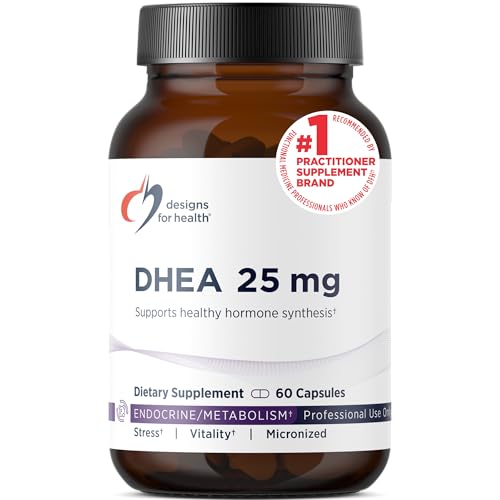
DHEA and Memory: What the Research Suggests
When considering DHEA and memory, the available evidence is limited and often shows mixed results, especially in perimenopausal women. Some studies have explored the effect of DHEA on specific aspects of memory.
For instance, one study investigated the effect of DHEA on recognition memory decision processes and discrimination in postmenopausal women, suggesting a possible influence on these specific cognitive functions [4]. However, another study on postmenopausal women found that while DHEA administration increased serum levels of androgens and estrogens, it did not enhance short-term memory [2]. This highlights the complexity and the need for more targeted research in perimenopausal populations.

It is important to note that much of the research on DHEA and cognitive function has focused on broader populations, such as healthy elderly individuals. Reviews of DHEA supplementation for cognitive function in healthy elderly people have concluded that there is insufficient evidence to support its use for cognitive enhancement [5][6][7].
DHEA and Focus/Attention: Early Findings
Focus and attention are crucial components of overall cognitive function. Research has begun to explore DHEA’s potential impact on these areas, though findings are preliminary.

One study investigated the relationship between DHEA, working memory, and distraction, using behavioral and electrophysiological approaches [8]. While this area of research is promising, more specific studies are needed to understand how DHEA might influence sustained attention or the ability to filter out distractions in perimenopausal women.
Additionally, some research has looked at visual-spatial performance, a cognitive domain that often involves elements of focus and attention. One study suggested that DHEA administration enhanced visual-spatial performance in postmenopausal women [9]. This indicates a potential area for further investigation regarding DHEA’s effects on specific cognitive skills that contribute to overall focus.
Limitations and Future Directions
The evidence base for DHEA’s specific effects on memory and focus in perimenopausal women is limited. Many studies have included postmenopausal women or broader elderly populations, which may not directly reflect the unique hormonal and cognitive landscape of perimenopause. The varying dosages, durations, and forms of DHEA used in studies can also make it challenging to draw definitive conclusions.
Furthermore, cognitive function is multifaceted, and different types of memory (e.g., short-term, long-term, working memory) and aspects of focus (e.g., sustained attention, selective attention) may be influenced differently. Future research needs to be specifically designed to target perimenopausal women, employing standardized methodologies and comprehensive cognitive assessments to clarify DHEA’s potential role in supporting memory and focus during this life stage. The International Menopause Society’s World Congress continues to explore new insights into menopause, including potential therapies [10].

References
- Androgen therapy with dehydroepiandrosterone. World journal of urology, 2003
- Administration of dehydroepiandrosterone (DHEA) increases serum levels of androgens and estrogens but does not enhance short-term memory in post-menopausal women. Brain research, 2012
- Steroid hormones and BDNF. Neuroscience, 2013
- The effect of dehydroepiandrosterone (DHEA) on recognition memory decision processes and discrimination in postmenopausal women. Psychonomic bulletin & review, 2003
- Dehydroepiandrosterone (DHEA) supplementation for cognitive function in healthy elderly people. The Cochrane database of systematic reviews, 2006
- Dehydroepiandrosterone (DHEA) supplementation for cognitive function . The Cochrane database of systematic reviews, 2001. This review was withdrawn by Cochrane in 2007.
- WITHDRAWN: Dehydroepiandrosterone (DHEA) supplementation for cognitive function. The Cochrane database of systematic reviews, 2007
- The relationship between dehydroepiandrosterone (DHEA), working memory and distraction–a behavioral and electrophysiological approach. PloS one, 2014
- Administration of dehydroepiandrosterone (DHEA) enhances visual-spatial performance in postmenopausal women. Behavioral neuroscience, 2011
- State of the art in menopause: current best practice approaches from the IMS World Congress 2024, Melbourne. Climacteric : the journal of the International Menopause Society, 2025
These statements have not been evaluated by the Food and Drug Administration. This information is not intended to diagnose, treat, cure, or prevent any disease. Content is for informational purposes only and is not medical advice; consult a qualified healthcare provider before starting any supplement. As an Amazon Associate we earn from qualifying purchases.