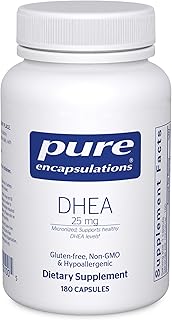
Affiliate disclosure: As an Amazon Associate, this site earns from qualifying purchases linked in this article.
Dehydroepiandrosterone (DHEA) is a hormone produced naturally by the body that can be supplemented. While it may offer some benefits for certain individuals, it’s not suitable for everyone. Understanding specific DHEA contraindications is essential before considering supplementation.
This article provides evidence-based information on who should exercise caution or completely avoid DHEA, particularly for women navigating midlife and menopause. Always consult with a healthcare professional to determine if DHEA is appropriate for your individual health profile.
Individuals with Hormone-Sensitive Cancers
One of the most critical DHEA contraindications involves hormone-sensitive cancers. DHEA is a precursor hormone, meaning the body can convert it into other hormones, including estrogens and androgens [1]. For individuals with cancers that are known to be sensitive to these hormones, such as breast cancer, ovarian cancer, or uterine cancer, DHEA supplementation could potentially stimulate cancer growth or recurrence.
The North American Menopause Society (NAMS) position statement from 2022 advises against the use of systemic hormone therapy, which would include DHEA due to its conversion to estrogens, in women with a history of breast cancer [2]. Similarly, the management of genitourinary syndrome of menopause in breast cancer survivors emphasizes careful consideration of therapies, noting that even local estrogen therapies require caution [3].
An update on hormonal treatments in gynecologic cancer reinforces the need for oncologic safety and explores alternative therapies, noting that hormone therapy in gynecologic cancer remains controversial because of oncologic safety concerns [4]. Because DHEA can directly activate estrogen receptor alpha and stimulate the proliferation of breast cancer cell lines in laboratory studies [5], exogenous hormones, including precursors like DHEA, should be approached with extreme caution in these populations.
Therefore, any woman with a personal history of breast cancer, ovarian cancer, uterine cancer, or any other hormone-sensitive malignancy should strictly avoid DHEA supplementation unless specifically advised and closely monitored by their oncology team. The potential for DHEA to be converted into estrogens and androgens makes it a significant concern in these cases.
Women with a History of Endometriosis or Uterine Fibroids
Endometriosis and uterine fibroids are conditions that are often influenced by estrogen levels. Since DHEA can be converted into estrogens within the body, there is a theoretical concern that DHEA supplementation could potentially exacerbate these conditions. While direct studies specifically linking exogenous DHEA to the worsening of endometriosis or fibroids are limited, the general principle regarding hormone-sensitive conditions applies.

The careful consideration of any hormonal intervention is paramount for women with these conditions. Given that DHEA can increase estrogen levels, individuals with a history of endometriosis or uterine fibroids should discuss the potential risks and benefits thoroughly with their healthcare provider before considering DHEA supplementation. The precautionary principle suggests avoiding DHEA if there is a risk of stimulating these estrogen-dependent conditions.

Individuals with Liver Disease
The liver plays a crucial role in metabolizing hormones, including DHEA and its metabolites. Individuals with significant liver impairment or active liver disease may have a reduced capacity to process DHEA, which could lead to altered hormone levels or potential accumulation of DHEA or its byproducts. This could potentially place additional strain on the liver or result in unpredictable hormonal effects.
While specific studies detailing DHEA use in severe liver disease are scarce, the general recommendation for many supplements and medications is to exercise caution in individuals with compromised liver function. It is important to discuss any existing liver conditions with a healthcare professional before considering DHEA, as they can assess the potential risks and determine if supplementation is safe.
Pre-existing Cardiovascular Conditions
The relationship between hormones and cardiovascular health is complex. While some studies have explored potential cardiovascular effects of DHEA, the overall evidence regarding its long-term impact on cardiovascular health, particularly in individuals with pre-existing conditions, is not fully established and can be conflicting. Changes in hormone levels, including those influenced by DHEA, could theoretically impact lipid profiles, blood pressure, or other cardiovascular markers.
For individuals with a history of heart disease, stroke, or significant risk factors for cardiovascular events, caution is warranted. The North American Menopause Society (NAMS) position statement on hormone therapy underscores the need for individualized assessment of benefits and risks, especially concerning cardiovascular health [2]. While this statement primarily refers to traditional estrogen and progestin therapy, the principle of careful evaluation extends to precursor hormones like DHEA. Therefore, individuals with pre-existing cardiovascular conditions should consult with their cardiologist or primary care physician before initiating DHEA.

Known Allergic Reactions to DHEA or Its Components
Although rare, some individuals may have an allergic reaction to DHEA or any inactive ingredients found in DHEA supplements. Symptoms of an allergic reaction can range from mild skin rashes and itching to more severe reactions such as swelling of the face, tongue, or throat, and difficulty breathing. Any history of adverse reactions to DHEA or similar compounds should preclude its use.
It is always important to review the full list of ingredients in any supplement and to be aware of any known allergies before consumption. If an allergic reaction occurs after taking DHEA, discontinue use immediately and seek medical attention.

Pregnancy and Breastfeeding
DHEA supplementation is generally contraindicated during pregnancy and breastfeeding. The hormonal changes induced by DHEA could potentially interfere with the natural hormonal balance essential for fetal development or transfer into breast milk, potentially affecting the infant. There is insufficient research to establish the safety of DHEA use in these populations.

For women who are pregnant, planning to become pregnant, or breastfeeding, avoiding DHEA is a standard recommendation to ensure the safety and well-being of both mother and child. All medications and supplements should be reviewed with a healthcare provider during these critical periods.
References
- Androgen therapy with dehydroepiandrosterone. World journal of urology, 2003
- The 2022 hormone therapy position statement of The North American Menopause Society. Menopause (New York, N.Y.), 2022
- Management of genitourinary syndrome of menopause in breast cancer survivors: An update. World journal of clinical oncology, 2022
- Hormone replacement therapy in gynecologic cancer: oncologic safety and alternative therapies. International journal of gynecological cancer : official journal of the International Gynecological Cancer Society, 2026
- Adrenal androgens stimulate the proliferation of breast cancer cells as direct activators of estrogen receptor alpha. Cancer research, 1999
These statements have not been evaluated by the Food and Drug Administration. This information is not intended to diagnose, treat, cure, or prevent any disease. Content is for informational purposes only and is not medical advice; consult a qualified healthcare provider before starting any supplement. As an Amazon Associate we earn from qualifying purchases.