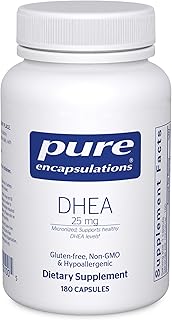
Affiliate disclosure: As an Amazon Associate, this site earns from qualifying purchases linked in this article.
Navigating midlife and menopause often brings questions about various supplements, including dehydroepiandrosterone (DHEA). As a naturally occurring steroid hormone, DHEA is a precursor to other hormones like androgens and estrogens. Some women consider DHEA supplementation, often hoping it might support their well-being during these transitional years.
When considering any supplement for an extended period, understanding its long-term safety profile is paramount. This article aims to provide an evidence-based overview of what is currently known about DHEA long term safety for women, drawing specifically from available research to help inform your decisions.
Understanding DHEA and Its Role
DHEA is the most abundant circulating steroid hormone in the human body. It is produced primarily by the adrenal glands, with smaller amounts made in the brain and gonads. DHEA levels naturally peak in early adulthood and decline progressively with age [1]. This age-related decline often prompts interest in DHEA supplementation, particularly among women in midlife and menopause.
DHEA serves as a precursor hormone, meaning it can be converted into other hormones, including androgens (like testosterone) and estrogens, within various tissues. This characteristic is why DHEA is sometimes referred to as a ‘parent hormone’ [2].
General Safety Considerations for DHEA Supplementation
The safety of DHEA supplementation, especially over extended periods, is a complex area with ongoing research. While DHEA is available as an over-the-counter supplement, this does not imply a lack of potential effects or risks. Hormonal substances, even those naturally occurring, can influence various bodily systems.

It’s important to recognize that the body’s conversion of DHEA into other hormones can vary among individuals. This variability can make it challenging to predict the exact hormonal impact of DHEA supplementation on any given woman [3].
DHEA and Cardiovascular Health Markers
Concerns about hormonal therapies and cardiovascular health are common, especially for women in menopause [4]. Research on DHEA’s long-term effects on cardiovascular markers has yielded mixed results.
A systematic review and dose-response meta-analysis of randomized controlled trials investigated the effects of DHEA supplementation on the lipid profile. This analysis found that DHEA supplementation did not significantly affect total cholesterol, LDL-cholesterol, or triglyceride levels. However, it did show a significant reduction in HDL-cholesterol levels with DHEA supplementation, particularly in studies of women [5]. This finding suggests a potential impact on one aspect of lipid metabolism, which warrants careful consideration.

DHEA and Hormonal Balance: Potential Side Effects
Because DHEA can convert into androgens and estrogens, there is a potential for androgenic side effects. These can include oily skin, acne, and unwanted hair growth (hirsutism) [2]. The likelihood and severity of these effects can depend on the dosage and individual metabolic responses.

While some studies on compounded bioidentical hormone therapy (cBHT), which can include DHEA, have assessed safety, the specific long-term safety profile of DHEA alone, particularly regarding hormonal balance and side effects in women, requires further dedicated research [6].
Long-Term Studies and Evidence Strength
The overall evidence strength for DHEA long term safety in women is considered moderate. While a significant body of research exists on DHEA, long-term, large-scale studies specifically designed to assess safety outcomes in women over many years are still emerging. Many studies are shorter in duration or involve specific populations [7].
A systematic review and meta-analysis on cBHT, which often includes DHEA, noted that while some studies indicated positive effects on quality of life, the evidence regarding long-term safety, especially concerning cardiovascular and cancer risks, was limited or inconclusive [6]. A prospective cohort study of compounded transdermal hormone therapy (which can include DHEA) followed women for 36 months and reported no adverse change in net prothrombotic potential and no associated adverse events, although antithrombin III levels were significantly lower at 36 months [8]. However, this was a relatively small cohort study, so it cannot establish long-term safety.

References
- Dehydroepiandrosterone sulfate and postmenopausal women. Current opinion in endocrinology, diabetes, and obesity, 2011
- Dehydroepiandrosterone to enhance physical performance: myth and reality. Endocrinology and metabolism clinics of North America, 2010
- The use of androgens in menopause. Clinical obstetrics and gynecology, 1999
- Postmenopausal hormone therapy: cardiovascular risks. Prescrire international, 2003
- Effects of dehydroepiandrosterone (DHEA) supplementation on the lipid profile: A systematic review and dose-response meta-analysis of randomized controlled trials. Nutrition, metabolism, and cardiovascular diseases : NMCD, 2020
- Safety and efficacy of compounded bioidentical hormone therapy (cBHT) in perimenopausal and postmenopausal women: a systematic review and meta-analysis of randomized controlled trials. Menopause (New York, N.Y.), 2022
- Emerging hormonal treatments for menopausal symptoms. Expert opinion on emerging drugs, 2015
- The effects of compounded bioidentical transdermal hormone therapy on hemostatic, inflammatory, immune factors; cardiovascular biomarkers; quality-of-life measures; and health outcomes in perimenopausal and postmenopausal women. International journal of pharmaceutical compounding, 2013
These statements have not been evaluated by the Food and Drug Administration. This information is not intended to diagnose, treat, cure, or prevent any disease. Content is for informational purposes only and is not medical advice; consult a qualified healthcare provider before starting any supplement. As an Amazon Associate we earn from qualifying purchases.