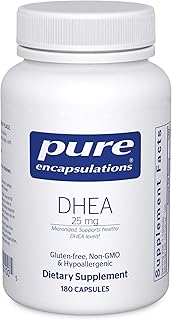
Affiliate disclosure: As an Amazon Associate, this site earns from qualifying purchases linked in this article.
As women navigate midlife and menopause, changes in hormone levels can influence various aspects of health, including skin appearance. The skin undergoes natural aging processes characterized by histological, physiological, and pathological changes over time [1]. Factors like cellular senescence also contribute to skin aging [2].
Dehydroepiandrosterone (DHEA) is a hormone produced by the adrenal glands, and its levels naturally decline with age [3]. This has led to interest in whether DHEA supplementation might play a role in mitigating some age-related changes, including those affecting the skin. This article explores the current understanding of DHEA’s potential impact on skin aging, focusing on evidence-based insights.
Understanding Skin Aging
Skin aging is a complex process influenced by both intrinsic (internal) and extrinsic (external) factors. Intrinsic aging is a genetically determined process that leads to thinning skin, fine wrinkles, and dryness [1]. Extrinsic aging, often driven by environmental exposures like UV radiation, can result in deeper wrinkles, pigmentary changes, and a rougher texture [4].
At a cellular level, skin aging involves phenomena such as cellular senescence, where cells stop dividing but remain metabolically active, potentially contributing to tissue dysfunction [2]. The structural components of the skin, such as collagen and elastin, also undergo degradation, leading to a loss of elasticity and firmness [1].
Common anti-aging strategies often target these cellular and structural changes. For example, retinoids like retinol are recognized for their anti-aging properties, influencing skin cell turnover and collagen production [5].
DHEA: A Brief Overview and Its Role in the Body
DHEA is a steroid hormone that serves as a precursor to other hormones, including estrogens and androgens [3]. It is the most abundant steroid hormone in the human body, with its sulfate form, DHEAS, also circulating in high concentrations [6]. Production of DHEA peaks in early adulthood and then gradually declines with age [3].
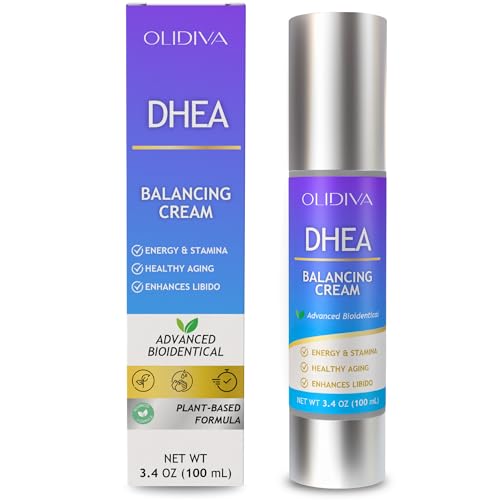
Due to its widespread presence and role as a precursor, DHEA has been the subject of research concerning various age-related conditions. Its potential influence extends to areas such as cognitive function [6] and overall mortality, though the nature of this association is still being explored [7]. The decline in DHEA levels with age has led to the popular, though perhaps oversimplified, moniker of ‘youth hormone’ [8].


DHEA and Skin Health: What the Evidence Suggests
The moderate strength of evidence regarding DHEA and skin aging suggests that there is some research exploring this connection, but more comprehensive studies are often needed to draw definitive conclusions. Some studies have investigated whether DHEA supplementation might influence skin parameters that change with age. For instance, research has looked into its potential effects on skin hydration, elasticity, and the appearance of wrinkles.
The proposed mechanisms by which DHEA might influence skin aging often relate to its conversion into other steroid hormones, which can affect skin cell function, collagen synthesis, and sebum production. However, the exact pathways and the extent of DHEA’s impact on human skin remain areas of ongoing investigation.
It’s important to note that many studies in this area are relatively small, and results can sometimes be mixed. While some research points towards potential benefits in certain skin parameters, these findings need to be interpreted cautiously within the broader context of skin aging and individual variability.
Considerations for Women in Midlife and Menopause
During midlife and menopause, women experience significant hormonal shifts, particularly a decline in estrogen levels, which can profoundly impact skin health. These changes can contribute to increased skin dryness, reduced elasticity, and a more pronounced appearance of wrinkles [1].
Given that DHEA levels also decline with age, and DHEA can be converted into estrogens, there’s a theoretical basis for exploring whether DHEA supplementation could help mitigate some of these skin changes in menopausal women. However, the direct evidence specifically linking DHEA supplementation to significant improvements in skin aging parameters for this population is still developing and often comes from studies with limited scope.

Women considering DHEA for skin aging should be aware that while some studies might show modest improvements, these findings are not universally consistent or dramatic. The overall evidence strength for DHEA’s role in skin aging is moderate, indicating that while there is some support, it is not robust enough to suggest it as a primary or standalone solution for complex skin aging concerns.
Safety and Potential Side Effects
While DHEA is available as a supplement, it is a hormone, and its use is not without potential considerations. As a precursor hormone, DHEA can influence the levels of other hormones, including estrogens and androgens. This means it could potentially lead to hormonal side effects, such as acne, oily skin, or hair changes, especially at higher doses.

Long-term safety data for DHEA supplementation, particularly concerning its impact on hormone-sensitive tissues, is still being accumulated. For example, research continues to explore the relationship between DHEA and conditions like breast cancer [9]. It is also important to consider potential interactions with other medications or existing health conditions.
DHEA is sometimes misused in sports due to its anabolic properties, highlighting its hormonal activity [10]. This underscores the importance of medical supervision when considering DHEA, as it is not a benign supplement and can have physiological effects.
References
- Aging skin: histology, physiology, and pathology. Facial plastic surgery clinics of North America, 2011
- Skin Aging, Cellular Senescence and Natural Polyphenols. International journal of molecular sciences, 2021
- Dehydroepiandrosterone (DHEA): Pharmacological Effects and Potential Therapeutic Application. Mini reviews in medicinal chemistry, 2023
- [Skin aging: Pathophysiology and innovative therapies]. Medecine sciences : M/S, 2020
- Human Skin Aging and the Anti-Aging Properties of Retinol. Biomolecules, 2023
- Dehydroepiandrosterone (DHEA) and its Sulphate (DHEAS) in Alzheimer’s Disease. Current Alzheimer research, 2020
- DHEA and mortality: what is the nature of the association?. The Journal of steroid biochemistry and molecular biology, 2015
- [Dehydroepiandrosterone (DHEA)–youth hormone?]. Wiadomosci lekarskie (Warsaw, Poland : 1960), 2001
- Dehydroepiandrosterone (DHEA) in relation to breast cancer. Vitamins and hormones, 2025
- DHEA, physical exercise and doping. The Journal of steroid biochemistry and molecular biology, 2015
These statements have not been evaluated by the Food and Drug Administration. This information is not intended to diagnose, treat, cure, or prevent any disease. Content is for informational purposes only and is not medical advice; consult a qualified healthcare provider before starting any supplement. As an Amazon Associate we earn from qualifying purchases.