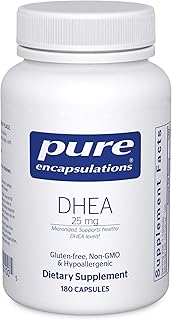
Affiliate disclosure: As an Amazon Associate, this site earns from qualifying purchases linked in this article.
DHEA is generally considered safe for most healthy adults when taken at appropriate doses for short periods, but it is a hormone precursor that carries real side effect risks and is not appropriate for everyone. Your safety with DHEA depends heavily on your health status, any medications you take, and whether you are using a quality product at a sensible dose.
What the research says
DHEA (dehydroepiandrosterone) is a hormone produced naturally by your adrenal glands. It declines with age, which is one reason supplementation has attracted research interest for fertility support, menopause symptoms, cognitive function, and general aging. Because it is sold over the counter in the United States (and is a prescription item in several other countries), many people treat it as casually as a multivitamin. The research suggests more caution is warranted.
Common side effects
Because DHEA converts in the body to both estrogen and testosterone, its side effects tend to be androgenic or estrogenic in nature. Commonly reported effects include:
- Acne and oily skin
- Hair thinning or increased facial hair in women
- Mood changes, irritability, or agitation
- Disrupted sleep
- Elevated heart rate or feelings of overstimulation
- Menstrual irregularity
These effects are generally dose-dependent. They tend to appear more often at doses above 25 mg per day, though sensitive individuals can react to lower amounts.
Dosing and quality concerns
Doses used in clinical research for fertility (particularly diminished ovarian reserve) typically range from 25 mg to 75 mg daily, often taken for 60 to 90 days before an IVF cycle. For menopause-related symptoms, lower doses are more common. There is no universally established “safe” dose because individual response varies based on baseline hormone levels, age, and body composition. Getting your DHEA-S levels tested before starting is advisable.
Quality is a genuine concern. As an unregulated supplement in the US, DHEA products vary widely in actual content and purity[1][2]. Third-party tested products from brands with USP or NSF certification offer more assurance. Contamination with unlisted hormonal compounds has been documented in the supplement industry broadly.
Who should avoid it or use with care
DHEA should be avoided or used only under medical supervision in several situations:
- Pregnancy and breastfeeding: Safety has not been established and hormonal interference is a real concern.
- Hormone-sensitive cancers: Breast, ovarian, uterine, and prostate cancers may be sensitive to the estrogen or testosterone that DHEA converts into.
- PCOS: Many people with PCOS already have elevated androgens and elevated DHEA-S. Adding more can worsen symptoms significantly.
- People on anticoagulants, insulin, or psychiatric medications: Interactions have been observed and warrant clinical review.
- Liver disease: DHEA is metabolized hepatically and may stress an already compromised liver.
Community Insights
Limited DataAggregated from 6 self-reported experiences collected from public Reddit discussions. Not medical advice.

This reflects self-reported user experiences from public forums, not clinical data. Individual results vary. Consult a healthcare professional.
What real users report
The Reddit discussions below represent real community experiences across forums including r/IVF, r/Menopause, r/PCOS, r/eggfreezing, and others. They paint a picture that is more nuanced than either “DHEA is totally safe” or “DHEA is dangerous.”

Theme 1: Fertility users report meaningful subjective benefits, but rarely in isolation
Across communities like r/IVF and r/eggfreezing, users with diminished ovarian reserve or low AMH frequently mention DHEA as part of a broader supplement protocol taken for two to three months before egg retrieval. One r/IVF poster, age 37, described retrieving 21 eggs and achieving 11 PGT-normal blastocysts after two months on DHEA alongside CoQ10, vitamin E, vitamin C, and vitamin D, contrasting this sharply with a prior cycle at age 33 with no supplements and only four normal blasts. A 40-year-old user in r/whatworkedforme described a similar protocol after 15 aneuploid embryos across four IVF rounds, crediting the supplement regimen with a course correction. Importantly, these are personal reports involving multiple variables simultaneously, not controlled trials. Users themselves often acknowledge they cannot isolate DHEA’s contribution.
Theme 2: PCOS users report problematic androgen elevation
This is one of the clearest cautionary themes across the data. An r/Skinpicking user with PCOS reported that her DHEA-S level had more than doubled, reaching 873 (well above the typical range), describing significant hormonal disruption. An r/PCOS user struggling with weight despite careful diet and exercise listed supplements she was taking and noted that bloodwork was not pointing her doctors toward any intervention. For people with PCOS who already tend toward androgen excess, adding exogenous DHEA carries a real risk of pushing levels further out of range and worsening acne, hair issues, and metabolic symptoms. This is a population where DHEA is often contraindicated rather than helpful.
Theme 3: Menopause users describe benefit but note the complexity of access and conversion
In r/Menopause, users describe DHEA as a useful option for symptoms including brain fog and vaginal atrophy, with one commenter noting that it can convert to testosterone or estrogen depending on individual physiology. The same commenter pointed out that prescription DHEA products like Intrarosa exist for specific indications but that OTC DHEA “does many of the same things.” Another r/Menopause user reported that 10 mg of DHEA alongside 7-Keto-DHEA (a related compound that does not convert to sex hormones) helped significantly with cognitive symptoms. The takeaway from these discussions is that lower doses and testing before and during use appear to be the more careful approach in this group.
Theme 4: Overstimulation and discomfort at higher doses
An r/AmanitaMuscaria commenter directly compared taking too much DHEA to the uncomfortable overstimulation of excess tyrosine, describing “just pure discomfort and no benefit.” An r/raypeat user advised using DHEA “very, very little” as part of a thyroid-supportive protocol, signaling that even communities inclined toward hormonal self-experimentation treat DHEA as something requiring restraint. These reports align with the known side effect profile: too much DHEA can produce an unpleasant, jittery, or anxious state, particularly in people whose baseline levels are already adequate.

Theme 5: Some users integrate DHEA under functional medicine supervision with positive lab outcomes
An r/Supplements user described working with a functional medicine doctor who prescribed DHEA based on lab results, alongside other targeted interventions. This user reported meaningfully improved labs and subjective wellbeing. This thread reflects a pattern seen across several communities: users who test first, work with a clinician, and monitor results tend to report more consistently positive experiences than those self-dosing without baseline data.
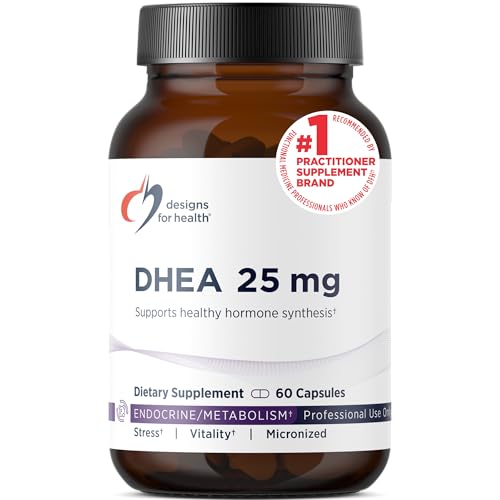

Who should be cautious
- Anyone with a history of hormone-sensitive cancer or a family history that elevates personal risk
- People with PCOS or already-elevated androgen levels
- Pregnant or breastfeeding individuals
- People taking blood thinners, diabetes medications, or antidepressants without first checking with their prescriber
- Teenagers and young adults, whose bodies already produce peak DHEA and do not need supplementation
- Anyone with known liver disease or impaired liver function
- People sourcing DHEA from uncertified or unverified supplement brands
FAQ
Is DHEA safe to take every day long-term?
Most research on DHEA has studied short-term use, typically three to six months. Long-term daily use is less well studied, and the hormonal effects of sustained supplementation are not fully understood. If you use DHEA regularly, periodic lab monitoring of your DHEA-S, estrogen, and testosterone levels is a reasonable safeguard. Talk to a clinician before committing to open-ended use.
Can DHEA cause hormonal imbalance?
Yes, it can. Because DHEA converts into estrogen and testosterone, taking it when your levels are already normal or elevated can push those hormones out of range. This is particularly relevant for people with PCOS, younger individuals, and anyone sensitive to androgenic effects. Getting a baseline hormone panel before starting is the most practical way to reduce this risk.
Is OTC DHEA the same as prescription DHEA?
Prescription DHEA products like Intrarosa (prasterone) are formulated and dosed for specific clinical indications and are subject to pharmaceutical manufacturing standards. OTC supplements are not subject to the same oversight, meaning actual hormone content and purity can vary. If you are using OTC DHEA, choosing a third-party tested product from a reputable manufacturer reduces but does not eliminate this concern.
What dose of DHEA is considered safe?
There is no single universally safe dose because the right amount depends on your current hormone levels, age, sex, and health goals. Clinical studies for fertility support have commonly used 25 mg to 75 mg daily. For menopause symptoms and general wellbeing, doses of 10 mg to 25 mg are more typical. Starting low and testing hormone levels after four to six weeks is a reasonable approach. Do not adjust dosing based on how you feel alone; work with a clinician who can interpret your labs in context.
This article is for informational purposes only and does not constitute medical advice. Please consult a qualified healthcare provider before starting DHEA or any hormonal supplement, particularly if you have an existing health condition or take medications.

The user-experience section reflects themes synthesized from public discussions on Reddit communities (r/IVF, r/whatworkedforme, r/Menopause). Individual experiences vary and are not medical advice. Consult a healthcare professional before starting or stopping any supplement.
References
- Quality control of dehydroepiandrosterone dietary supplement products. JAMA, 1998
- Over-the-Counter “Adrenal Support” Supplements Contain Thyroid and Steroid-Based Adrenal Hormones. Mayo Clin Proc, 2018
These statements have not been evaluated by the Food and Drug Administration. This information is not intended to diagnose, treat, cure, or prevent any disease. Content is for informational purposes only and is not medical advice; consult a qualified healthcare provider before starting any supplement. As an Amazon Associate we earn from qualifying purchases.