Affiliate disclosure: As an Amazon Associate, this site earns from qualifying purchases linked in this article.
As women navigate the changes that come with midlife and menopause, various options are often discussed for supporting well-being. Among these, DHEA and wild yam cream sometimes come up in conversation. It’s important to understand that despite some common misconceptions, these two are distinct and operate very differently within the body.
This article aims to clarify the differences between DHEA and wild yam cream, providing evidence-based information to help you understand why they are not interchangeable and what each might offer, or not offer, for women seeking support during this life stage.
What is DHEA?
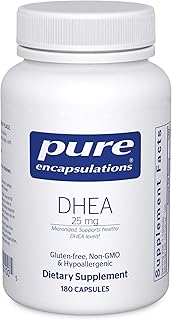
DHEA, or dehydroepiandrosterone, is a hormone naturally produced by the adrenal glands, gonads, and brain. It serves as a precursor hormone, meaning the body can convert it into other hormones, including androgens (like testosterone) and estrogens. DHEA levels naturally peak in early adulthood and then decline with age. The pattern across the menopausal transition itself is less straightforward than a steady decline. In a longitudinal analysis of midlife women, mean circulating DHEA sulfate showed an upward inflection beginning in early perimenopause and continuing through early postmenopause, returning to early perimenopausal levels by late postmenopause[1].
Because DHEA can be converted into other hormones, it has been studied for its potential role in various bodily functions. The effects of DHEA supplementation are a direct result of its hormonal activity within the body. When DHEA is taken, it directly introduces a hormone that the body can then utilize as a building block for other steroidal hormones. That supplemental DHEA measurably raises circulating hormone levels is well documented. In a two-year randomized, double-blind, placebo-controlled trial, women taking DHEA raised their plasma DHEA sulfate by a median of 3.8 micrograms per millilitre relative to placebo. That same trial found no physiologically relevant benefit for body composition, physical performance, insulin sensitivity or quality of life, so a measurable shift in hormone levels should not by itself be read as a clinical benefit[2].

What is Wild Yam Cream?
Wild yam cream is a topical product typically derived from the root of the wild yam plant (Dioscorea villosa). The plant contains compounds called diosgenin and other saponins. Historically, wild yam has been used in traditional medicine for various purposes. In the context of midlife and menopause, wild yam cream is sometimes marketed with the idea that its plant compounds can be converted into human hormones by the body.


However, there is a crucial distinction: while diosgenin can be chemically synthesized in a laboratory to produce steroid hormones like progesterone or DHEA, the human body lacks the specific enzymes necessary to perform this conversion internally. Applying wild yam cream to the skin does not result in the body converting diosgenin into DHEA, progesterone, or any other human hormone. Therefore, wild yam cream does not provide the same hormonal effects as DHEA or other hormone-containing products. This has been tested directly rather than only inferred from biochemistry. In a double-blind, placebo-controlled crossover trial, 23 healthy menopausal women applied a wild yam cream and a matching placebo for three months each. The cream produced no change in estradiol, follicle stimulating hormone, or serum or salivary progesterone, and no statistically significant difference from placebo in menopausal symptom scores. No side effects were reported with either cream[3].
Key Differences: DHEA vs. Wild Yam Cream
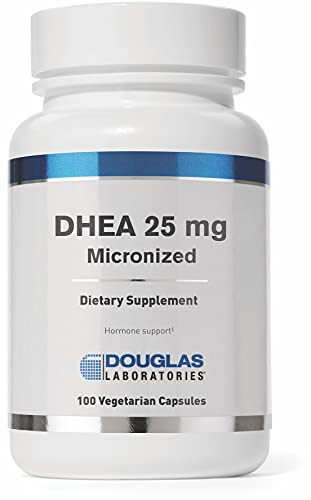
The fundamental difference between DHEA and wild yam cream lies in their chemical nature and how they interact with the human body. DHEA is a direct hormone precursor. When DHEA is introduced, the body has the enzymatic pathways to convert it into other active hormones, which can then exert physiological effects. This is why DHEA is considered a hormone supplement.
In contrast, wild yam cream contains plant compounds like diosgenin, which, despite their structural similarities to human hormones, are not directly converted into human hormones by the body’s metabolic processes. The claim that wild yam cream can increase DHEA or progesterone levels in the body is not supported by scientific understanding of human biochemistry. Essentially, wild yam cream acts as a botanical topical product, while DHEA acts as a hormonal precursor.
This distinction is critical for women considering options for midlife support. Expecting hormonal effects from wild yam cream that are similar to those from DHEA or other hormone therapies would be based on a misunderstanding of how these substances function within the body.
Why This Distinction Matters for Midlife Women
Understanding the difference between DHEA and wild yam cream is important for making informed personal choices. If a woman is seeking to influence her hormone levels, DHEA, as a hormone precursor, has the potential to do so, and its effects are therefore subject to careful consideration and discussion with a healthcare provider. The use of DHEA involves introducing a substance that directly participates in hormonal pathways.

Conversely, if a woman uses wild yam cream with the expectation of increasing her DHEA, estrogen, or progesterone levels, she may be disappointed, as the body does not convert the plant compounds into these human hormones. Its effects, if any, would be due to other, non-hormonal properties of the plant extract rather than to any hormonal action, and the controlled trial described above found no symptom benefit over placebo[3]. Therefore, wild yam cream should not be considered a substitute for DHEA or other hormone-modulating therapies.
For any woman navigating midlife and menopause, a clear understanding of what she is taking and what effects she can reasonably expect is paramount. This includes recognizing that ‘natural’ does not always mean ‘hormonal’ or ‘effective in the same way’ when comparing botanical products to direct hormone precursors.
References
- Menopausal transition stage-specific changes in circulating adrenal androgens. Menopause (New York, N.Y.), 2012
- DHEA in elderly women and DHEA or testosterone in elderly men. The New England Journal of Medicine, 2006
- Effects of wild yam extract on menopausal symptoms, lipids and sex hormones in healthy menopausal women. Climacteric, 2001
These statements have not been evaluated by the Food and Drug Administration. This information is not intended to diagnose, treat, cure, or prevent any disease. Content is for informational purposes only and is not medical advice; consult a qualified healthcare provider before starting any supplement. As an Amazon Associate we earn from qualifying purchases.