Affiliate disclosure: As an Amazon Associate, this site earns from qualifying purchases linked in this article.
Navigating perimenopause involves understanding various approaches to managing the changes that occur as hormone levels fluctuate. Among the options frequently discussed are DHEA (dehydroepiandrosterone) and HRT (Hormone Replacement Therapy). While both relate to hormone levels, they function differently and carry distinct considerations.
This article aims to provide an evidence-based overview of DHEA and HRT, highlighting their differences, mechanisms of action, and potential benefits during perimenopause. Understanding these distinctions can help women make informed choices in consultation with their healthcare providers.
What is DHEA?
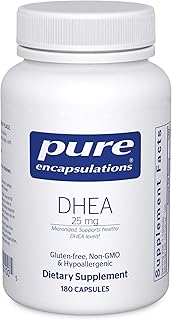
DHEA is a steroid hormone naturally produced by the adrenal glands, gonads, and brain. It serves as a precursor to other hormones, including androgens and estrogens. This means that DHEA itself is not a direct replacement for estrogen or progesterone, but rather a building block that the body can convert into these and other hormones as needed. The levels of DHEA in the body naturally decline with age, particularly after the age of 30.

What is HRT (Hormone Replacement Therapy)?
Hormone Replacement Therapy (HRT) involves supplementing the body with hormones that it no longer produces in sufficient quantities, primarily estrogen and often progesterone. HRT is designed to directly replace these hormones to address symptoms associated with their decline during perimenopause and menopause. Various regimens of HRT exist, and the specific hormones and their dosages can vary [1].

HRT can be administered in several forms, including pills, patches, gels, and creams. The specific type and dosage of hormones used in HRT are typically individualized based on a woman’s symptoms, medical history, and preferences. Some forms of HRT are referred to as ‘bioidentical hormone therapy,’ which involves hormones that are chemically identical to those produced by the body [2].
Key Differences: DHEA vs. HRT
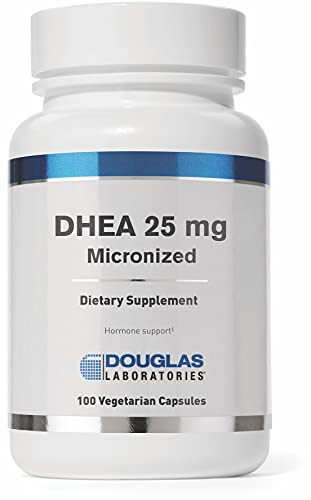
The fundamental difference between DHEA and HRT lies in their mechanism of action. HRT directly introduces specific hormones like estrogen and progesterone into the body to achieve physiological levels [1]. In contrast, DHEA is a precursor hormone. When DHEA is supplemented, the body converts it into various sex hormones, including estrogens and androgens, based on its own enzymatic pathways and needs.
This distinction means that DHEA’s effects may be more diffuse and dependent on individual metabolic processes, while HRT offers a more direct and targeted approach to raising specific hormone levels. Studies have shown that HRT can significantly impact circulating hormone levels, including estrogen and progesterone [3]. The impact of DHEA supplementation has been studied in various contexts, including elderly men where it showed a modest effect on androgen levels [4].

Potential Benefits and Considerations for Perimenopause
For women in perimenopause, both DHEA and HRT are considered for managing various symptoms and supporting well-being. HRT is well-established for addressing common perimenopausal symptoms such as hot flashes, night sweats, and vaginal dryness, by directly replenishing declining estrogen levels [5]. It can also have an impact on endothelial function in postmenopausal women with increased cardiovascular risk [6].
DHEA, as a precursor, may offer benefits by supporting the body’s natural hormone production. While research on DHEA’s specific benefits for perimenopausal symptoms is ongoing, its role in hormone synthesis suggests potential for broad systemic effects. However, it’s important to note that the direct impact of DHEA on specific perimenopausal symptoms may differ from the direct hormone replacement offered by HRT. For example, glucocorticoid replacement regimens are used for specific conditions like congenital adrenal hyperplasia, highlighting the precision required in hormone management [7].
References
- Circulating hormone levels in menopausal women receiving different hormone replacement therapy regimens. A comparison. The Journal of reproductive medicine, 1995
- Bioidentical hormone therapy: a review. Menopause (New York, N.Y.), 2004
- Comparison of hormone levels in nipple aspirate fluid of pre- and postmenopausal women: effect of oral contraceptives and hormone replacement. The Journal of clinical endocrinology and metabolism, 2005
- Dehydroepiandrosterone supplementation in elderly men: a meta-analysis study of placebo-controlled trials. The Journal of clinical endocrinology and metabolism, 2013
- Hypogonadism as a consequence of craniopharyngioma in female patients: comparison of childhood and adult onset and effects of estrogen replacement therapy. Endocrine, 2024
- Different effect of hormone replacement therapy, DHEAS and tibolone on endothelial function in postmenopausal women with increased cardiovascular risk. Maturitas, 2005
- Glucocorticoid replacement regimens for treating congenital adrenal hyperplasia. The Cochrane database of systematic reviews, 2020
These statements have not been evaluated by the Food and Drug Administration. This information is not intended to diagnose, treat, cure, or prevent any disease. Content is for informational purposes only and is not medical advice; consult a qualified healthcare provider before starting any supplement. As an Amazon Associate we earn from qualifying purchases.