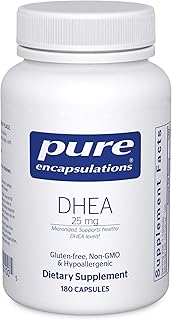
Affiliate disclosure: As an Amazon Associate, this site earns from qualifying purchases linked in this article.
For women navigating midlife and menopause, understanding hormonal changes is a key part of maintaining well-being. Dehydroepiandrosterone (DHEA) is a naturally occurring hormone that declines with age, and some women consider DHEA supplementation. When considering such supplementation, careful monitoring is essential.
This article will explore why regular DHEA blood tests are a vital component of a thoughtful approach to DHEA supplementation. These tests provide objective data, helping individuals and their healthcare providers make informed decisions about dosage and overall hormonal balance.
What are DHEA and DHEA-S?
DHEA (dehydroepiandrosterone) is a steroid hormone produced by the adrenal glands and, to a lesser extent, by the ovaries. It is a precursor to other hormones, including androgens and estrogens [1]. DHEA levels naturally decline with age, a process that begins in early adulthood [2].
DHEA-S (dehydroepiandrosterone sulfate) is the sulfated form of DHEA. It is the most abundant circulating steroid hormone in women and is often measured in blood tests because its levels are more stable throughout the day compared to DHEA [1]. Both DHEA and DHEA-S play roles in various physiological processes, and their levels can be influenced by factors such as stress [3][4][5].
Why DHEA Blood Tests are Important for Supplementation
When considering DHEA supplementation, regular blood tests are important for several reasons. Firstly, they help establish a baseline. Knowing your existing DHEA-S levels before starting a supplement provides a reference point to assess the impact of supplementation.

Secondly, DHEA blood tests allow for monitoring the effects of supplementation. DHEA is converted into other hormones in the body [1], and excessive levels could potentially lead to undesirable outcomes. Regular testing helps ensure that DHEA-S levels remain within an appropriate range, preventing levels from becoming too high [6]. This is particularly relevant because individual responses to DHEA supplementation can vary.
Finally, monitoring DHEA levels through blood tests can help in adjusting the dosage of the supplement. If levels are too low, a dosage increase might be considered, while if they are too high, a reduction could be appropriate. This personalized approach, guided by objective data, is a cornerstone of responsible supplementation.
What DHEA Blood Tests Measure
Typically, DHEA blood tests measure DHEA-S levels. As mentioned, DHEA-S is preferred for testing due to its stable concentrations in the blood [1]. These tests provide a snapshot of the current circulating levels of this hormone.

The results of DHEA-S blood tests are usually compared to established reference ranges, which can vary based on age and sex. These ranges help healthcare providers interpret whether an individual’s DHEA-S levels are considered within a typical range, lower than average, or higher than average for their demographic. It is important to note that what constitutes an ‘optimal’ level during supplementation is often determined in consultation with a healthcare professional based on individual circumstances and goals.
Frequency of DHEA Blood Tests
The frequency of DHEA blood tests when supplementing can vary depending on individual circumstances and the guidance of a healthcare provider. Initially, tests might be conducted before starting supplementation to establish a baseline. After beginning DHEA, follow-up tests are often recommended to assess the initial response and allow for dosage adjustments.

Once a stable and appropriate dosage is determined, less frequent monitoring may be sufficient, but regular checks remain important to ensure levels stay within the desired range over time. The specific schedule should always be discussed with a doctor, as they can provide personalized recommendations based on health history, current symptoms, and other medications or supplements being used.
Interpreting Your DHEA Blood Test Results
Interpreting DHEA blood test results requires careful consideration and the expertise of a healthcare professional. While the lab report will provide reference ranges, understanding what those numbers mean for your specific situation is key. For example, a level that is ‘normal’ for a younger individual might be considered high for an older woman, or vice versa, depending on the context of supplementation.
It’s also important to consider that DHEA levels can be influenced by various factors beyond supplementation, including stress [3][4][5]. Your healthcare provider will take your complete health profile into account when interpreting results and making recommendations. They can also assess for potential signs of androgen excess, which could occur if DHEA levels become too high [6], and adjust the supplementation plan accordingly.

References
- Androgens in women. The Journal of steroid biochemistry and molecular biology, 2003
- The ageing male. World journal of urology, 2002
- Job demands and DHEA-S levels: a study on healthcare workers. Occupational medicine (Oxford, England), 2024
- DHEA and DHEA-S levels in posttraumatic stress disorder: A meta-analytic review. Psychoneuroendocrinology, 2017
- Basal blood DHEA-S/cortisol levels predicts EMDR treatment response in adolescents with PTSD. Nordic journal of psychiatry, 2018
- Androgen Therapy in Women. Journal of women’s health (2002), 2020
These statements have not been evaluated by the Food and Drug Administration. This information is not intended to diagnose, treat, cure, or prevent any disease. Content is for informational purposes only and is not medical advice; consult a qualified healthcare provider before starting any supplement. As an Amazon Associate we earn from qualifying purchases.