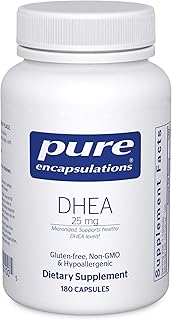
Affiliate disclosure: As an Amazon Associate, this site earns from qualifying purchases linked in this article.
As women navigate the hormonal shifts of perimenopause, many explore various supplements, including dehydroepiandrosterone (DHEA). DHEA is a steroid hormone produced naturally by the body, and its levels tend to decline with age. While DHEA is often discussed in relation to hormonal balance and well-being, it’s important to consider its potential interactions and effects on various organ systems, including the liver.
The liver plays a crucial role in metabolizing hormones and other substances in the body. Understanding the current scientific evidence regarding DHEA and liver health is essential for perimenopausal women considering DHEA supplementation. This article will review what is currently known about DHEA’s potential impact on the liver, based on available research.
Understanding DHEA and its Metabolism
DHEA is a precursor hormone, meaning it can be converted into other hormones, including estrogens and androgens. This conversion process involves various enzymes, some of which are located in the liver. The liver is a primary site for the metabolism and detoxification of many compounds, including hormones. For example, the liver contains enzymes like estrogen sulfatase, which plays a role in estrogen metabolism [1].
Because DHEA is metabolized in the body and can influence hormone levels, its journey through the liver is a key aspect of its overall effects. The liver’s metabolic capacity can be influenced by various factors, and in turn, substances processed by the liver can potentially affect its function.
Direct Effects of DHEA on Liver Cells: Insights from Research
Some research has explored the direct effects of DHEA on liver cells. For instance, one study investigated the potential of DHEA to ameliorate hepatotoxicity induced by copper oxide nanoparticles in albino Wistar rats [2]. This suggests that researchers are exploring DHEA’s potential influence on liver cell health in specific contexts. However, this finding is from an animal study and may not directly translate to human experience.

Conversely, other research indicates that DHEA, particularly at high concentrations, can inhibit complex I of the mitochondrial respiratory chain and has been shown to be neurotoxic in vitro and in vivo [3]. While this specific finding relates to neurotoxicity, it highlights the importance of concentration and dose when considering the effects of DHEA on cellular processes, including those within the liver.
DHEA and the Liver-Ovary Axis: A Newer Perspective
Emerging research points to a complex interplay between the liver and ovarian function, sometimes referred to as the liver-ovary axis. One study, for example, suggested that hepatic KLF9 deficiency might inhibit DHEA-induced polycystic ovary syndrome (PCOS) via this liver-ovary axis [4]. While this research focuses on PCOS and DHEA’s role in its development, it underscores the liver’s potential involvement in modulating the effects of DHEA on reproductive health.
This concept suggests that the liver is not just a passive site for DHEA metabolism but may actively participate in signaling pathways that influence DHEA’s broader physiological impact, including effects relevant to ovarian function. This area of research is still developing, but it highlights the interconnectedness of various bodily systems.
DHEA and Metabolic Health: Indirect Liver Considerations
The liver plays a central role in metabolic health, including glucose and lipid metabolism. DHEA has been investigated for its effects on conditions like diabetes mellitus and obesity [5]. While these studies primarily focus on systemic metabolic outcomes, improvements or changes in metabolic parameters could indirectly influence liver health.

For example, conditions like obesity are associated with liver fat accumulation and other liver-related issues [6]. If DHEA were to positively influence metabolic factors associated with obesity or diabetes, there could be an indirect benefit to liver health. However, the direct impact of DHEA on liver health in the context of metabolic changes in perimenopausal women requires more specific investigation.
Safety Considerations and Potential for Liver-Related Effects
It’s important to distinguish DHEA from other substances known to cause liver injury. For instance, certain medications like flutamide, used for hirsutism, have been associated with a risk of hepatotoxicity, even at low doses and with long-term treatment [7]. Similarly, drugs like moxifloxacin have been shown to induce liver injury in a dose- and time-dependent manner [8]. These examples illustrate that various substances can impact liver function.
While the published literature does not directly link DHEA supplementation in typical dosages for perimenopausal women to significant liver toxicity, the general principle that substances metabolized by the liver can have effects remains. The research on high concentrations of DHEA inhibiting mitochondrial function [3] suggests that dose is a critical factor in understanding potential cellular impacts. Therefore, careful consideration of dosage is always important when using DHEA or any supplement.

References
- Estrogen sulfatase. Methods in enzymology, 2005
- Potential of dehydroepiandrosterone and quercetin to ameliorate copper oxide nanoparticles induced hepatotoxicity in albino wistar rats. Journal of molecular histology, 2024
- Dehydroepiandrosterone inhibits complex I of the mitochondrial respiratory chain and is neurotoxic in vitro and in vivo at high concentrations. Toxicological sciences : an official journal of the Society of Toxicology, 2006
- Hepatic KLF9 Deficiency Inhibits Dehydroepiandrosterone (DHEA)-Induced Polycystic Ovary Syndrome via Liver-Ovary Axis. Advanced science (Weinheim, Baden-Wurttemberg, Germany), 2025
- Effect of Dehydroepiandrosterone (DHEA) on Diabetes Mellitus and Obesity. Vitamins and hormones, 2018
- Aldosterone in obesity. Endocrine research, 1998
- The risk of hepatotoxicity during long-term and low-dose flutamide treatment in hirsutism. Archives of gynecology and obstetrics, 2009
- Dose- and time-dependent manners of moxifloxacin induced liver injury by targeted metabolomics study. Frontiers in pharmacology, 2022
These statements have not been evaluated by the Food and Drug Administration. This information is not intended to diagnose, treat, cure, or prevent any disease. Content is for informational purposes only and is not medical advice; consult a qualified healthcare provider before starting any supplement. As an Amazon Associate we earn from qualifying purchases.