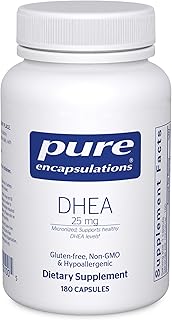
Affiliate disclosure: As an Amazon Associate, this site earns from qualifying purchases linked in this article.
Perimenopause is a transitional phase leading to menopause, marked by fluctuating hormone levels that can bring about various changes in a woman’s body. During this time, many women seek to understand their bodies better and explore different aspects of hormonal health.
One hormone that often comes up in discussions about midlife and menopause is dehydroepiandrosterone, or DHEA. This foundational guide aims to provide clear, evidence-based information about what DHEA is, its role in the body, and its relevance for women navigating perimenopause.
Understanding DHEA: The ‘Parent’ Hormone
DHEA is a steroid hormone produced primarily by the adrenal glands, with smaller amounts also made in the brain and skin. It serves as a precursor, meaning it can be converted into other hormones, including androgens (like testosterone) and estrogens (like estradiol). Because of its ability to be metabolized into these other sex hormones, DHEA is sometimes referred to as a ‘parent’ hormone. Its levels naturally peak in early adulthood and then gradually decline with age.
The conversion of DHEA into more potent hormones means that its presence in the body can influence a wide range of physiological processes. This characteristic makes DHEA a subject of interest, particularly during periods of significant hormonal shifts such as perimenopause and menopause.
DHEA and Hormonal Changes in Perimenopause
Perimenopause is characterized by a natural decline in ovarian function, leading to fluctuating and eventually lower levels of estrogen and progesterone. While DHEA is not directly produced by the ovaries in significant amounts, its role as a precursor to sex hormones means that its levels can indirectly influence the hormonal landscape during this transition. As women age, the natural decline in DHEA production may coincide with the perimenopausal and menopausal transition [1].

The hormonal changes experienced during perimenopause can manifest in various ways, affecting different body systems. Understanding the foundational hormones, including DHEA, can offer a more complete picture of the complex endocrine shifts occurring during this time.
DHEA and Vaginal Health in Midlife
One common concern for women in midlife and menopause is genitourinary syndrome of menopause (GSM), formerly known as vulvovaginal atrophy. This condition involves changes to the vulva, vagina, and lower urinary tract due to reduced estrogen levels, leading to symptoms like vaginal dryness, irritation, pain during intercourse, and urinary symptoms [2].

While estrogen therapy, both systemic and local, is a primary approach for addressing GSM, DHEA has also been explored in this context. Intravaginal DHEA has been shown to improve symptoms of vulvovaginal atrophy by increasing levels of estrogen and androgens within the vaginal tissue, thereby helping to restore vaginal health and function [3][4][5]. This localized approach allows DHEA to exert its effects directly where needed, with potentially less systemic absorption compared to oral DHEA [6].
DHEA and Body Composition in Perimenopause
Many women observe changes in their body composition during perimenopause and menopause, often experiencing an increase in abdominal fat and a shift in fat distribution [7][8]. Hormonal fluctuations, including changes in DHEA and its downstream hormones, may play a role in these shifts [9].

Research into the broader effects of DHEA on body composition and other systemic outcomes is ongoing. While some studies have explored the potential impact of DHEA supplementation on fat mass and muscle mass, the evidence for significant clinical benefits in healthy perimenopausal women is still developing. It is important to consider that body composition changes are multifactorial, involving diet, exercise, and genetics in addition to hormones.
Considerations for DHEA Use
For women considering DHEA, especially in supplement form, it is crucial to understand that DHEA is a hormone and should be approached with careful consideration. The North American Menopause Society (NAMS) provides guidance on hormone therapy, and while DHEA is a precursor, its use should be discussed with a healthcare provider [10].
The effects of DHEA can vary significantly among individuals due to differences in metabolism and baseline hormone levels. Therefore, a personalized approach, guided by a healthcare professional, is essential to determine if DHEA is appropriate and to monitor its use effectively.

References
- Androgen replacement in menopause. Current women’s health reports, 2001
- Hormonal Approach for Postmenopausal Vulvovaginal Atrophy. Frontiers in reproductive health, 2021
- Hormonal Treatments and Vaginal Moisturizers for Genitourinary Syndrome of Menopause : A Systematic Review. Annals of internal medicine, 2024
- Management of postmenopausal vulvovaginal atrophy: recommendations of the International Society for the Study of Vulvovaginal Disease. Gynecological endocrinology : the official journal of the International Society of Gynecological Endocrinology, 2021
- Nonestrogen Therapies for Treatment of Genitourinary Syndrome of Menopause: A Systematic Review. Obstetrics and gynecology, 2023
- State of the art in menopause: current best practice approaches from the IMS World Congress 2024, Melbourne. Climacteric : the journal of the International Menopause Society, 2025
- Perimenopausal obesity. Gynecological endocrinology : the official journal of the International Society of Gynecological Endocrinology, 1996
- Menopausal obesity–myth or fact?. Climacteric : the journal of the International Menopause Society, 2001
- Hormonal abnormalities in obesity. Acta medica Scandinavica. Supplementum, 1988
- The 2022 hormone therapy position statement of The North American Menopause Society. Menopause (New York, N.Y.), 2022
These statements have not been evaluated by the Food and Drug Administration. This information is not intended to diagnose, treat, cure, or prevent any disease. Content is for informational purposes only and is not medical advice; consult a qualified healthcare provider before starting any supplement. As an Amazon Associate we earn from qualifying purchases.