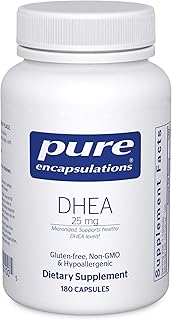
Affiliate disclosure: As an Amazon Associate, this site earns from qualifying purchases linked in this article.
Vaginal dryness is a common and often uncomfortable symptom experienced by many women during perimenopause and beyond. This dryness is frequently part of a broader set of changes known as Genitourinary Syndrome of Menopause (GSM), which can also include irritation, burning, and discomfort during sexual activity [1][2]. These symptoms arise from declining estrogen levels, which affect the tissues of the vulva, vagina, and lower urinary tract.
While systemic hormone therapy is one option for managing GSM, some women may seek localized solutions or alternatives. DHEA (dehydroepiandrosterone), specifically in a vaginal formulation, has emerged as a potential targeted approach for addressing vaginal dryness and other related symptoms. This article explores the current understanding of vaginal DHEA’s role in supporting vaginal health during perimenopause.
Understanding Genitourinary Syndrome of Menopause (GSM)
Genitourinary Syndrome of Menopause (GSM) is a chronic, progressive condition that results from the decline in estrogen levels during the menopausal transition [1][2]. The vaginal tissues, urethra, and bladder are all sensitive to estrogen, and its reduction leads to significant changes. These changes can include thinning of the vaginal lining, reduced elasticity, decreased lubrication, and an increase in vaginal pH. These physiological shifts contribute to symptoms such as vaginal dryness, itching, burning, pain during intercourse (dyspareunia), and even urinary symptoms like urgency or recurrent infections [1][2].
Many women experience these symptoms, and they can significantly impact quality of life and sexual function. It is important to recognize GSM as a medical condition that warrants attention and potential management strategies. While hormonal changes are central to GSM, understanding the various approaches to address its symptoms is crucial for women navigating perimenopause and postmenopause.
What is DHEA and How Does Vaginal DHEA Work?
Dehydroepiandrosterone (DHEA) is a naturally occurring steroid hormone produced by the adrenal glands, ovaries, and brain. It is a precursor hormone, meaning it can be converted into other hormones, including estrogens and androgens, within the body’s tissues [3]. The concept behind using DHEA for vaginal dryness is that when applied vaginally, it can be locally converted into small amounts of estrogen and androgens directly within the vaginal cells. This localized conversion aims to revitalize vaginal tissues without significantly increasing systemic hormone levels [3].

Unlike systemic estrogen therapy, which affects the entire body, vaginal DHEA is designed to provide a targeted effect where it is needed most. This localized action means that DHEA can help restore the health and function of the vaginal lining, potentially alleviating dryness, improving elasticity, and reducing discomfort [3]. This mechanism makes it an interesting option for women seeking relief from GSM symptoms, particularly those who may be hesitant about or not candidates for systemic hormone therapy.
Evidence for Vaginal DHEA and Vaginal Dryness
Research has explored the effectiveness of vaginal DHEA in addressing symptoms of GSM, including vaginal dryness. Multiple studies and reviews indicate that intravaginal DHEA can be beneficial for women experiencing these symptoms. A systematic review from 2022 highlighted the efficacy of hormonal and nonhormonal approaches, including vaginal DHEA, for vaginal atrophy and sexual dysfunctions in postmenopausal women [4]. Another review in 2011 specifically focused on vaginal DHEA to manage menopause-related atrophy, reviewing the existing evidence at that time [3].
More recent evidence continues to support these findings. A 2018 review noted the efficacy of intravaginal dehydroepiandrosterone (DHEA) for symptomatic women in the peri- or postmenopausal phase [5]. Furthermore, a 2022 review considered whether the evidence for intravaginal dehydroepiandrosterone for genitourinary symptoms of the menopause is sufficient, suggesting a growing body of support [6]. Studies have also indicated that vaginal DHEA can help with symptoms like dryness, dyspareunia, and overall vaginal health [7][8]. While the primary focus is often on postmenopausal women, perimenopausal women experiencing similar symptoms due to fluctuating hormones may also find it relevant.

Beyond dryness, some research suggests broader benefits. For example, a 2025 study explored the effects of vaginal DHEA on stress urinary incontinence in postmenopausal women with vulvovaginal atrophy [9]. This indicates that the benefits of vaginal DHEA may extend beyond just dryness to other genitourinary symptoms. The North American Menopause Society’s 2020 position statement on GSM also acknowledges various management options, further contextualizing the role of therapies like vaginal DHEA [1].
Safety and Considerations for Vaginal DHEA
When considering any health intervention, understanding its safety profile is paramount. Vaginal DHEA is generally considered to have a good safety profile due to its localized action. Because DHEA is converted into estrogens and androgens directly within the vaginal cells, the systemic absorption into the bloodstream is minimal, leading to little or no change in circulating hormone levels [3]. This localized effect is a key advantage for women who may be concerned about or have contraindications to systemic hormone therapy.
The Cochrane database of systematic reviews in 2015 published an assessment of dehydroepiandrosterone for women in the peri- or postmenopausal phase, providing a comprehensive look at the available evidence regarding its use and safety [10]. While generally well-tolerated, potential mild side effects, though uncommon, could include vaginal discharge or irritation. As with any medication, individual responses can vary. It is always important to discuss any potential side effects or concerns with a healthcare provider.

References
- The 2020 genitourinary syndrome of menopause position statement of The North American Menopause Society. Menopause (New York, N.Y.), 2020
- Female Pelvic Conditions: Genitourinary Syndrome of Menopause. FP essentials, 2022
- Vaginal DHEA to treat menopause related atrophy: a review of the evidence. Maturitas, 2011
- Efficacy of Hormonal and Nonhormonal Approaches to Vaginal Atrophy and Sexual Dysfunctions in Postmenopausal Women: A Systematic Review. Revista brasileira de ginecologia e obstetricia : revista da Federacao Brasileira das Sociedades de Ginecologia e Obstetricia, 2022
- Efficacy of intravaginal dehydroepiandrosterone (DHEA) for symptomatic women in the peri- or postmenopausal phase. Maturitas, 2018
- Intravaginal dehydroepiandrosterone for genitourinary symptoms of the menopause: Is the evidence sufficient?. Post reproductive health, 2022
- New Innovations for the Treatment of Vulvovaginal Atrophy: An Up-to-Date Review. Medicina (Kaunas, Lithuania), 2022
- Nonestrogen Therapies for Treatment of Genitourinary Syndrome of Menopause: A Systematic Review. Obstetrics and gynecology, 2023
- Effects of vaginal DHEA on stress urinary incontinence in postmenopausal women with vulvovaginal atrophy. Maturitas, 2025
- Dehydroepiandrosterone for women in the peri- or postmenopausal phase. The Cochrane database of systematic reviews, 2015
These statements have not been evaluated by the Food and Drug Administration. This information is not intended to diagnose, treat, cure, or prevent any disease. Content is for informational purposes only and is not medical advice; consult a qualified healthcare provider before starting any supplement. As an Amazon Associate we earn from qualifying purchases.