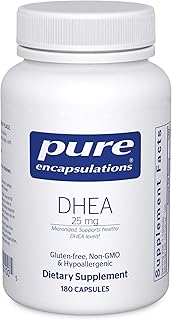
Affiliate disclosure: As an Amazon Associate, this site earns from qualifying purchases linked in this article.
Dehydroepiandrosterone sulfate, or DHEA-S, is a steroid hormone produced primarily by the adrenal glands. It is the most abundant steroid hormone in the human body and serves as a precursor to other hormones, including androgens and estrogens. DHEA-S levels naturally fluctuate throughout a woman’s life, peaking in young adulthood and gradually declining with age.
For women in midlife and during the menopause transition, understanding DHEA sulfate levels can provide valuable insights into their hormonal landscape. While DHEA-S itself is not typically considered a primary sex hormone, its role as a precursor means that its levels can influence the production of other hormones that impact various bodily functions. Therefore, testing DHEA sulfate levels can be a step in understanding overall hormonal balance.
What are DHEA-Sulfate Levels?
DHEA-S is a sulfated form of dehydroepiandrosterone (DHEA). This sulfated form is more stable and has a longer half-life in the bloodstream, making it a reliable indicator of adrenal androgen production. The adrenal glands are the primary source of DHEA-S, though smaller amounts are also produced in the gonads and brain.
As a precursor hormone, DHEA-S can be converted into other hormones, including androgens like testosterone and estrogens. This conversion happens in various tissues throughout the body, not just in the adrenal glands. The availability of DHEA-S can therefore influence the levels of these downstream hormones, which play significant roles in numerous physiological processes.
Levels of DHEA-S naturally decline with age. This decline is part of the normal aging process and begins in early adulthood, continuing through midlife and beyond. This age-related decrease in DHEA-S has led to interest in its potential implications for health and well-being, particularly for women experiencing hormonal shifts during menopause.
Why DHEA Sulfate Levels Matter for Women in Midlife
For women navigating midlife and menopause, DHEA sulfate levels can be relevant due to their influence on other hormones. The decline in ovarian hormone production during menopause means that other sources of hormones, such as the adrenal glands, may play a more prominent role. DHEA-S contributes to the pool of hormones available for conversion into estrogens and androgens in peripheral tissues.
Changes in hormone levels during midlife can be associated with various experiences. For instance, imbalances in androgen levels can sometimes contribute to conditions like hirsutism, which is characterized by excessive hair growth [1]. Conversely, some women may experience hyperandrogenism after menopause, which can be linked to elevated androgen levels [2]. While these conditions involve androgens, DHEA-S is a precursor, and its levels can be part of the broader hormonal picture.


DHEA-S levels have also been explored in relation to mood. Some research has examined the association between DHEA-S levels and depressive symptoms in women in their late reproductive years [3]. Understanding the individual hormonal profile, including DHEA sulfate levels, can provide a more comprehensive view of a woman’s health during this transitional period.
When to Consider Testing DHEA Sulfate Levels
Testing DHEA sulfate levels can be considered for various reasons, often as part of a broader hormonal assessment. A healthcare provider might suggest DHEA-S testing if there are concerns about adrenal function or if a woman is experiencing symptoms that could be related to hormonal imbalances. For example, conditions like adrenal insufficiency can be associated with low DHEA-S levels [4].
Conversely, elevated DHEA-S levels can sometimes be observed in conditions like polycystic ovary syndrome (PCOS), although DHEA-S is not the primary diagnostic marker for PCOS [5]. Hirsutism, characterized by excessive hair growth, can also be associated with elevated androgen levels, and DHEA-S is an androgen precursor [1]. In cases of postmenopausal hyperandrogenism, where women experience symptoms related to high androgen levels after menopause, DHEA-S levels may be evaluated [2].
It’s important to note that DHEA-S levels are just one piece of the puzzle. A healthcare provider will consider a woman’s overall health, symptoms, and other laboratory tests to determine the significance of DHEA-S levels and to develop an appropriate plan.
Interpreting Your DHEA-Sulfate Test Results
Interpreting DHEA sulfate test results requires careful consideration by a healthcare professional. Normal ranges for DHEA-S vary depending on age, sex, and the specific laboratory performing the test. What might be considered a ‘normal’ level for a woman in her 20s will be different from a ‘normal’ level for a woman in her 50s.

Low DHEA-S levels can sometimes be observed in conditions affecting the adrenal glands, such as adrenal insufficiency [4]. High DHEA-S levels, on the other hand, might point towards adrenal hyperplasia or certain types of adrenal tumors, or sometimes be associated with conditions like PCOS or postmenopausal hyperandrogenism [5][2]. However, DHEA-S levels alone are not diagnostic for these conditions, and further investigation is typically needed.

It’s crucial not to self-diagnose based on DHEA-S results. A healthcare provider will evaluate your DHEA-S levels in the context of your overall medical history, physical examination, and any other relevant tests. They can explain what your results mean for your individual health situation and discuss any potential implications or next steps.
The Role of DHEA-Sulfate in Overall Well-being
Beyond its direct hormonal actions, DHEA-S has been studied for its potential broader effects on the body. It is known to interact with neuroendocrine and immune systems [6]. The potential impact of DHEA-S on various systems underscores why understanding its levels can be part of a holistic approach to health.
While research continues to explore the full extent of DHEA-S’s influence, it is recognized as an important neurosteroid. Its presence in the brain suggests potential roles in cognitive function and mood, although more research is needed to fully understand these complex interactions. For example, some studies have explored the correlates of white matter features in relation to hormones in older adults [7].
The use of DHEA therapy in clinical practice is a complex topic, and its suitability depends on individual circumstances and careful medical evaluation [8]. For women in midlife, especially during the menopause transition, understanding DHEA sulfate levels contributes to a more complete picture of their hormonal health and can inform discussions with their healthcare provider about their overall well-being.

References
- Hirsutism. Dermatologic clinics, 1987
- Postmenopausal hyperandrogenism. Climacteric : the journal of the International Menopause Society, 2022
- DHEA-S levels and depressive symptoms in a cohort of African American and Caucasian women in the late reproductive years. Biological psychiatry, 2001
- Adrenal Insufficiency in Adults: A Review. JAMA, 2025
- Effects of a ketogenic diet in overweight women with polycystic ovary syndrome. Journal of translational medicine, 2020
- Neuroendocrine, immunologic, and microvascular systems interactions in rheumatoid arthritis: physiopathogenetic and therapeutic perspectives. Seminars in arthritis and rheumatism, 1999
- Do correlates of white matter features differ between older men and women living with human immunodeficiency virus?. Menopause (New York, N.Y.), 2023
- The use of dehydroepiandrosterone therapy in clinical practice. Treatments in endocrinology, 2005
These statements have not been evaluated by the Food and Drug Administration. This information is not intended to diagnose, treat, cure, or prevent any disease. Content is for informational purposes only and is not medical advice; consult a qualified healthcare provider before starting any supplement. As an Amazon Associate we earn from qualifying purchases.