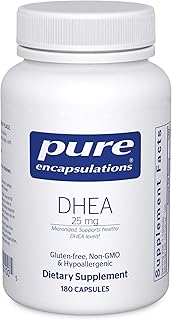
Affiliate disclosure: As an Amazon Associate, this site earns from qualifying purchases linked in this article.
As women navigate midlife and menopause, they often seek information about various approaches to support their well-being. Dehydroepiandrosterone (DHEA) is a naturally occurring steroid hormone that the body produces, and its levels tend to decline with age.
When considering DHEA supplementation, understanding how different formulations are absorbed by the body is important. This article will focus on why micronized DHEA may offer better absorption compared to standard DHEA formulations.
What is DHEA and Its Role in the Body?
DHEA is a precursor hormone, meaning it can be converted into other hormones, including androgens and estrogens, within the body. It is produced primarily by the adrenal glands, and also in smaller amounts by the ovaries and brain. DHEA levels typically peak in early adulthood and then gradually decline with age, a trend often observed as women approach and experience menopause.
The decline in DHEA levels is a natural part of the aging process. While DHEA has been studied for various potential roles, it’s important to remember that its impact is complex and still being researched. For example, studies have observed that DHEA administration can influence factors such as free insulin-like growth factor-I and high-density lipoprotein in postmenopausal women [1]. Other research has noted that DHEA can enhance T-lymphocyte insulin binding in postmenopausal women [2].
It’s also worth noting that circulating androgen levels can be influenced by postmenopausal estrogen replacement [3], highlighting the intricate balance of hormones in the body.

The Challenge of Oral Hormone Absorption
When any substance, including hormones, is taken orally, it must navigate the digestive system. This process can significantly impact how much of the substance actually enters the bloodstream and becomes available for the body to use. This is known as bioavailability.
Standard, non-micronized DHEA taken orally can face challenges in absorption. The particles may be too large to be efficiently absorbed through the intestinal wall, or they may be broken down too quickly by digestive enzymes or the liver before they can exert their intended effects. This can lead to inconsistent or suboptimal levels of DHEA reaching the systemic circulation.
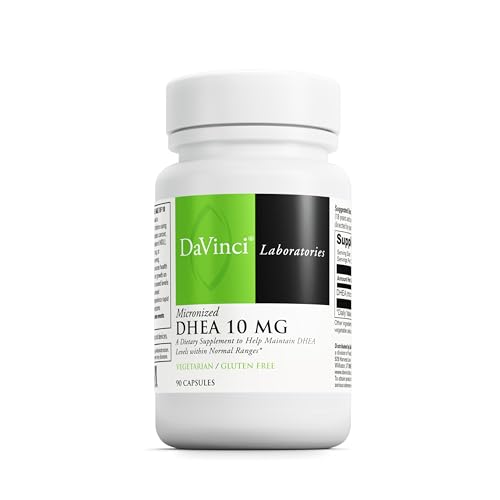
For women considering DHEA supplementation, understanding these absorption challenges is key to evaluating different product formulations and their potential effectiveness.
What is Micronization and How Does it Improve Absorption?
Micronization is a process that involves reducing the particle size of a substance to a very fine powder. For DHEA, this means the DHEA molecules are ground down to a much smaller size than in standard formulations. This process is critical for improving the oral bioavailability of certain compounds.

The primary benefit of micronization for DHEA lies in its ability to increase the surface area of the DHEA particles. When particles are smaller, there is a greater total surface area exposed to the digestive fluids and the intestinal lining. This enhanced surface area allows for more efficient and consistent absorption into the bloodstream.
Research has specifically investigated the oral bioavailability of micronized DHEA. Preliminary studies have shown that micronized dehydroepiandrosterone, when administered orally, demonstrates bioavailability and dose proportionality in postmenopausal women [4]. This suggests that micronization is a significant factor in how effectively DHEA is absorbed and utilized by the body after oral intake.
Micronized DHEA vs. Standard DHEA: A Comparison
When comparing micronized DHEA to standard, non-micronized DHEA formulations, the key differentiator is absorption efficiency. Standard DHEA, with its larger particle size, may lead to less predictable and potentially lower systemic levels due to poor absorption and first-pass metabolism in the liver.

In contrast, micronized DHEA is designed to bypass some of these absorption hurdles. The smaller particle size allows for more rapid and complete absorption from the gut into the bloodstream. This means that a given dose of micronized DHEA is more likely to result in consistent and measurable levels of DHEA in the body compared to an equivalent dose of a non-micronized product.
The improved absorption of micronized DHEA can contribute to more predictable effects, as more of the administered hormone is available to the body. This is a crucial consideration for women seeking to support their hormone balance during midlife and menopause.
Implications for Women in Midlife and Menopause
For women considering DHEA supplementation, the choice of formulation can be important. The improved absorption offered by micronized DHEA means that it may be a more effective way to introduce DHEA into the body orally. Studies on micronized DHEA have explored its impact on various markers in postmenopausal women, including free insulin-like growth factor-I and high-density lipoprotein [1], and T-lymphocyte insulin binding [2].
While the available evidence on micronized DHEA absorption is moderate, the preliminary findings regarding its oral bioavailability and dose proportionality [4] suggest a potential advantage. This enhanced absorption can be a key factor in how the body responds to DHEA supplementation.
It’s important to remember that individual responses can vary, and the overall impact of DHEA supplementation is a complex area of ongoing research. Discussing any supplement choice with a healthcare provider is always recommended.

References
- Postmenopausal dehydroepiandrosterone administration increases free insulin-like growth factor-I and decreases high-density lipoprotein: a six-month trial. Fertility and sterility, 1998
- Replacement of dehydroepiandrosterone enhances T-lymphocyte insulin binding in postmenopausal women. Fertility and sterility, 1995
- Effect of postmenopausal estrogen replacement on circulating androgens. Obstetrics and gynecology, 1997
- Postmenopausal steroid replacement with micronized dehydroepiandrosterone: preliminary oral bioavailability and dose proportionality studies. American journal of obstetrics and gynecology, 1992
These statements have not been evaluated by the Food and Drug Administration. This information is not intended to diagnose, treat, cure, or prevent any disease. Content is for informational purposes only and is not medical advice; consult a qualified healthcare provider before starting any supplement. As an Amazon Associate we earn from qualifying purchases.