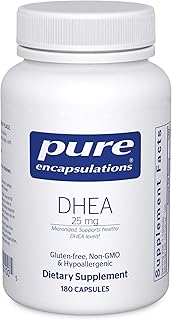
Affiliate disclosure: As an Amazon Associate, this site earns from qualifying purchases linked in this article.
Navigating perimenopause often involves exploring various options to support well-being. DHEA (dehydroepiandrosterone) is one such compound that some women consider. However, for many, questions naturally arise regarding its potential impact on breast health, particularly concerning breast cancer risk.
This article aims to provide an evidence-based overview of DHEA and breast health safety concerns, drawing solely from available research. Our goal is to offer clear, non-hyped information to help you understand the current scientific perspective on this important topic.
Understanding Endogenous Hormones and Breast Health
To understand DHEA’s potential role, it’s helpful to first consider the broader context of endogenous (naturally produced) hormones and breast health. Research has long explored the relationship between various sex steroids and breast cancer risk. For instance, studies have investigated circulating sex steroids and their connection to breast cancer risk in both premenopausal [1] and postmenopausal women [2].
The intricate balance of hormones within the body is a significant area of research when it comes to breast cancer risk factors. Elevated levels of certain endogenous hormones have been identified as potential contributors to increased risk [3]. This includes investigations into serum sex hormones and breast cancer risk in postmenopausal women, with body mass index also being a factor [4].
DHEA as a Precursor Hormone
DHEA is a steroid hormone produced by the adrenal glands. It serves as a precursor to other hormones, including androgens and estrogens. This means that DHEA itself is not directly estrogen or testosterone, but it can be converted into these more active hormones within the body’s tissues. The body’s ability to convert DHEA can vary among individuals and tissues, making its overall impact complex.

Because DHEA can be metabolized into estrogens, concerns sometimes arise regarding its use and potential effects on breast tissue. The underlying question is whether increasing DHEA levels through supplementation could lead to an increase in estrogen levels in a way that might influence breast cancer risk, similar to the observations made with endogenous hormones.
DHEA and Breast Cancer Risk: What the Evidence Suggests
When evaluating DHEA’s breast health safety, it’s crucial to look at research that specifically addresses its impact on breast cancer risk. The available research primarily focuses on endogenous hormone levels and general risk factors rather than direct DHEA supplementation studies in perimenopausal women. For example, previous research has consistently shown associations between endogenous hormones and breast cancer risk [3]. Studies reanalyzing prospective data have also examined endogenous sex hormones and breast cancer in postmenopausal women [2].
It’s important to note that this research highlights general associations between endogenous sex steroids and breast cancer risk in both premenopausal [1] and postmenopausal women [4]. These studies primarily investigate naturally occurring hormone levels. The specific implications of DHEA supplementation on these risk profiles in perimenopausal women are not directly addressed by the studies cited above, which focus more broadly on the relationship between endogenous hormones and breast cancer.
DHEA and Breast Cancer Survivors
A separate, but related, area of discussion involves the use of DHEA in women who have a history of breast cancer. For example, DHEA has been explored in the management of genitourinary syndrome of menopause (GSM) in breast cancer survivors [5]. This particular application typically involves local, vaginal DHEA rather than systemic oral supplementation. The decision to use DHEA in breast cancer survivors is highly individualized and made in consultation with healthcare professionals, given their specific medical history.

The considerations for breast cancer survivors are often distinct from those for women without a history of the condition. While local DHEA for GSM has been studied in this population [5], this does not directly translate to the safety profile of systemic DHEA supplementation for breast health in perimenopausal women in general.
Other Factors Influencing Breast Health
It’s worth remembering that breast health and breast cancer risk are influenced by a multitude of factors, not just hormone levels. Lifestyle choices play a significant role. For instance, alcohol consumption has been linked to breast cancer risk, as observed in studies among Asian-American women [6].
Other factors such as body mass index also contribute to breast cancer risk, particularly in postmenopausal women, where it has been studied in conjunction with serum sex hormones [4]. A comprehensive approach to breast health involves considering diet, exercise, family history, and regular screenings, in addition to any hormonal considerations.

References
- Circulating sex steroids and breast cancer risk in premenopausal women. Hormones & cancer, 2010
- Endogenous sex hormones and breast cancer in postmenopausal women: reanalysis of nine prospective studies. Journal of the National Cancer Institute, 2002
- Endogenous hormones and breast cancer risk. Epidemiologic reviews, 1993
- Body mass index, serum sex hormones, and breast cancer risk in postmenopausal women. Journal of the National Cancer Institute, 2003
- Management of genitourinary syndrome of menopause in breast cancer survivors: An update. World journal of clinical oncology, 2022
- Alcohol and breast cancer risk among Asian-American women in Los Angeles County. Breast cancer research : BCR, 2012
These statements have not been evaluated by the Food and Drug Administration. This information is not intended to diagnose, treat, cure, or prevent any disease. Content is for informational purposes only and is not medical advice; consult a qualified healthcare provider before starting any supplement. As an Amazon Associate we earn from qualifying purchases.