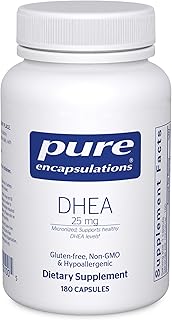
Affiliate disclosure: As an Amazon Associate, this site earns from qualifying purchases linked in this article.
Bioavailability, how much of a dose actually reaches circulation and does something, is a genuine variable with oral DHEA, driven by its lipophilic (fat-soluble) structure and first-pass metabolism in the liver[1]. Understanding what actually moves the needle on absorption is more useful than chasing a specific brand claim.
Why Oral Absorption Is Inherently Variable
DHEA taken by mouth passes through the gut and liver before reaching general circulation, and a meaningful portion is converted to other metabolites, including DHEA-sulfate, androstenedione, and downstream sex steroids, during that first pass[2]. That’s not a flaw so much as how oral steroid precursors generally behave, but it does mean two people taking an identical dose can end up with different circulating levels depending on liver metabolism and gut factors.
What the Pharmacokinetic Data Actually Shows
In controlled dosing of postmenopausal women, a 50 mg oral capsule produced a rapid rise in serum DHEA, peaking around one hour after ingestion before declining over the following several hours[2]. That fast peak-and-decline pattern is a direct consequence of oral, first-pass absorption, and it’s part of why some formulations and delivery routes exist that try to flatten or delay that curve.
Micronization Can Help Consistency
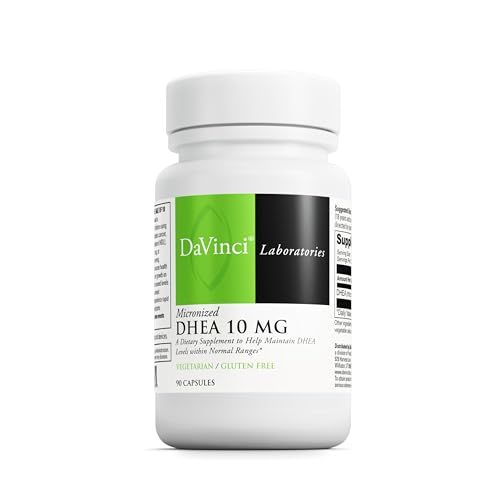
Because DHEA is poorly water-soluble, particle size affects how readily it dissolves and gets absorbed in the gut. Micronized DHEA, ground to a much finer particle size than standard powder, is formulated specifically to improve dissolution and absorption consistency compared to non-micronized products, which is why many reputable capsule products list “micronized” on the label[1].
Timing and Food
The postmenopausal-women pharmacokinetic study dosed DHEA before breakfast, a common protocol in DHEA research, though it doesn’t by itself prove that fasted dosing outperforms taking DHEA with food[2]. What’s better established is that consistency, taking the same dose at a similar time relative to meals each day, makes it easier to interpret both symptoms and follow-up lab work, since erratic timing adds a variable that’s hard to separate from the dose itself.

Product Quality Matters as Much as Formulation
Independent of absorption physiology, there’s a documented reliability problem in the DHEA supplement market: not every product reliably contains what its label claims[1]. A well-designed delivery format can’t compensate for a product that’s under-dosed or mislabeled to begin with, which is why third-party testing matters at least as much as the capsule-versus-powder-versus-liquid question.


What Absorption Looks Like Over Months, Not Hours
Peak-and-decline curves make oral DHEA look inefficient, but the outcome that matters clinically is the steady-state DHEA-S pool rather than the single-dose peak. On that measure ordinary oral capsules perform perfectly well. A year of 50 mg daily oral dosing restored youthful DHEA-S concentrations in healthy adults aged 60 to 79[3], and a two-year trial recorded DHEA-S rising by a median of roughly 3.4 micrograms per millilitre in men and 3.8 in women relative to placebo[4].
That is worth holding onto when reading formulation marketing. The absorption problem that specialty delivery formats promise to solve is largely a problem of the first few hours after a dose, and the clinically studied endpoints were reached without solving it.
What Genuinely Varies Between People
The variability that actually matters is between people rather than between formulations. Downstream conversion to androgens and estrogens happens in peripheral tissue and depends on which enzymes are present and how active they are, which differs by sex, age and individual physiology. Two people can absorb the same amount and end up with meaningfully different levels of the hormones DHEA converts into.
This is the strongest argument for treating bloodwork as part of the dosing decision rather than an optional extra. No amount of formulation optimisation tells you what your own conversion is doing; a DHEA-S measurement before and after a stable dose does.
A Practical Order of Operations
Ranked by how much they actually change the outcome, the levers here are: take the dose consistently, verify the product is what it claims to be, keep the relationship to food consistent, and only then worry about micronisation or delivery format. That order is close to the reverse of how these factors are usually marketed.
For most people the practical version is short. Pick a reputable third-party-tested product, take it at the same time each day with a meal that contains some fat, hold that for six to eight weeks, and retest. If the number has not moved, the problem is far more likely to be the dose or the product than the capsule technology.
References
- What are the side effects of DHEA supplements?. SiPhox Health
- Bioavailability and metabolism of oral and percutaneous dehydroepiandrosterone in postmenopausal women. The Journal of Steroid Biochemistry and Molecular Biology, 2007
- Dehydroepiandrosterone (DHEA), DHEA sulfate, and aging: contribution of the DHEAge Study to a sociobiomedical issue. Proceedings of the National Academy of Sciences, 2000
- DHEA in elderly women and DHEA or testosterone in elderly men. The New England Journal of Medicine, 2006
These statements have not been evaluated by the Food and Drug Administration. This information is not intended to diagnose, treat, cure, or prevent any disease. Content is for informational purposes only and is not medical advice; consult a qualified healthcare provider before starting any supplement. As an Amazon Associate we earn from qualifying purchases.