Affiliate disclosure: As an Amazon Associate, this site earns from qualifying purchases linked in this article.
Wild yam is the most common answer people are given when they ask where DHEA comes from naturally, and it is the reason the question gets asked at all. The short version is that DHEA is not a nutrient the body absorbs from food; it is a hormone manufactured internally from cholesterol. The longer and more useful version is about diosgenin, the compound in wild yam that makes the claim sound plausible, and what happened when researchers actually tested whether it does anything in a human being.
The Wild Yam Myth
Wild yam (Dioscorea villosa) is frequently marketed as a natural DHEA source because it contains diosgenin, a steroidal compound structurally related to DHEA. Diosgenin is genuinely used as a starting material for laboratory synthesis of DHEA and other steroid hormones on an industrial scale. The catch: the human body lacks the specific enzymes needed to perform that same conversion internally. Eating wild yam, or taking a wild yam supplement, does not directly turn diosgenin into DHEA inside the body.
What the Research Actually Shows
The evidence on whether dioscorea intake indirectly influences the body’s own DHEA production is mixed and largely comes from animal studies. One rat study found that acute diosgenin or dioscorea administration significantly increased serum DHEA levels within two hours, alongside a drop in blood glucose, and proposed this happened through stimulation of muscular steroidogenesis rather than direct chemical conversion[1]. A human trial in older adults aged 65 to 82, however, found that three weeks of dioscorea supplementation had no effect on serum DHEA-S levels, in contrast to direct DHEA supplementation, which raised DHEA levels by over 100% in the same study[2]. A more recent 8-week trial in athletes found that Dioscorea esculenta combined with resistance training did increase serum DHEA alongside free testosterone and DHT, but the design makes it impossible to separate the effect of the yam extract from the effect of the training itself[3].
So What Does Influence DHEA Naturally?
The clearest, best-supported lever over endogenous DHEA levels isn’t a specific food but rather age, since production declines steadily after the mid-20s in both sexes. Chronic stress and the associated elevation in cortisol is also frequently discussed in the research literature as being inversely related to DHEA, given the shared steroidogenic pathway the two hormones come from, though this relationship is complex and not fully mapped by diet alone.


Where That Leaves Diet as a Lever
If the goal is to influence circulating DHEA specifically, dietary sources and wild yam extracts are not a reliable path based on current evidence, and direct DHEA supplementation (where legal and appropriate) is the only intervention consistently shown to raise levels in human trials. Anyone considering this route should talk to a healthcare provider first, given DHEA’s downstream conversion into sex hormones.
Why the Conversion Cannot Happen in the Body
The reason wild yam does not work is worth stating in mechanistic detail, because the marketing claim is built on a genuine fact that stops one step short of the conclusion drawn from it. Converting diosgenin into DHEA requires a specific sequence of chemical steps that industrial synthesis performs with reagents and conditions that do not exist inside a human being. Human cells have no enzyme that catalyses that transformation.
This is a different situation from a precursor the body genuinely can use. DHEA itself is made from cholesterol through pregnenolone, a pathway humans do possess. Diosgenin sits outside that pathway entirely. The structural resemblance that makes it a convenient industrial starting material is chemistry that happens in a factory, not biology that happens after swallowing it.
What the Human Trial Actually Ruled Out
The 1996 trial in adults aged 65 to 82 is the most decisive piece of evidence here, and its design is the reason. It ran dioscorea supplementation and direct DHEA supplementation in the same study, so the comparison is internal rather than across studies with different populations and assays. Three weeks of dioscorea produced no change in serum DHEA-S; direct DHEA in the same study raised DHEA levels by over 100 percent.
That built-in positive control is what makes the null meaningful. A trial finding no effect might simply have been too short or too small to detect anything, but this one demonstrably could detect a change, because it detected one in the other arm. For the specific question of whether yam-derived supplements raise DHEA-S in older adults, that is close to a direct answer.
How to Read a Wild Yam Product Label
The practical difficulty is that wild yam products are not usually labelled in a way that makes the distinction obvious. A few useful checks: a product listing DHEA in milligrams on its supplement facts panel contains DHEA, whatever plant it was synthesised from, while one listing wild yam root or Dioscorea extract contains plant material and no DHEA. Phrases like natural DHEA precursor or plant-based DHEA generally signal the second category.
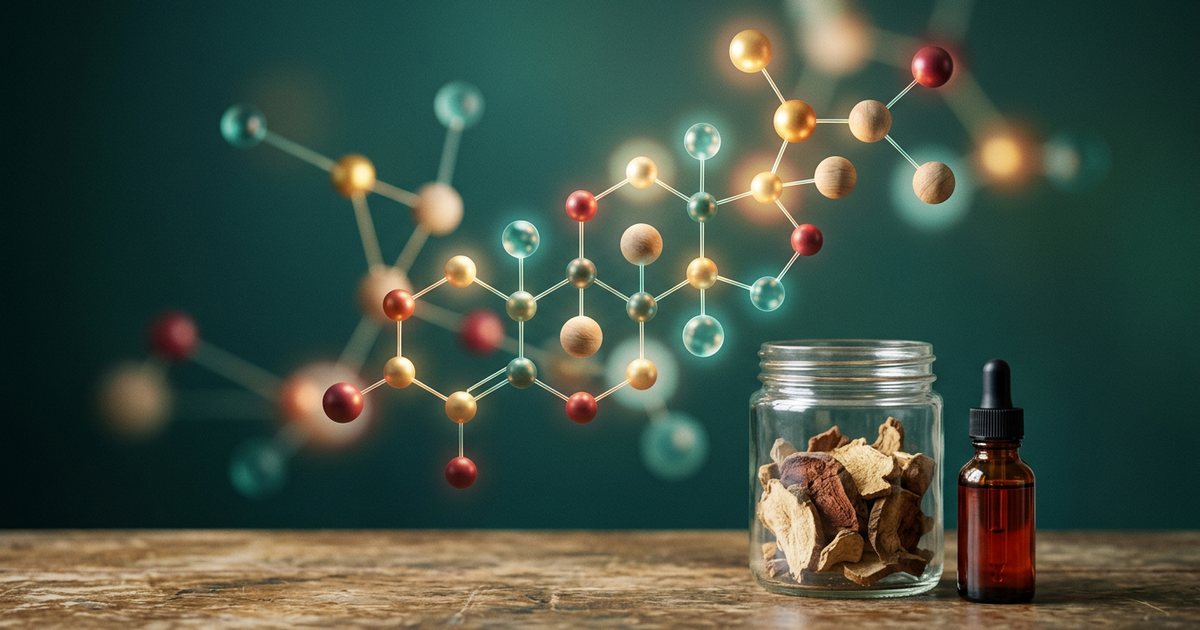
This also cuts the other way, and it is the part people find surprising. Most commercial DHEA is manufactured from diosgenin, so a DHEA capsule described as derived from wild yam is accurately labelled and does contain real DHEA. The phrase describes the raw material of the synthesis, not the contents of the bottle. What matters is whether the panel lists a DHEA amount.
If the Goal Is Higher DHEA
For anyone whose actual objective is a higher circulating level rather than a plant source specifically, the comparison is stark. A year of 50 mg daily oral DHEA restored a youthful DHEA-S concentration in healthy adults aged 60 to 79 in the DHEAge study[4], while three weeks of dioscorea moved nothing. That gap is not a matter of dose or duration; it is the difference between taking the hormone and taking a plant that a factory can turn into the hormone.
That does not make DHEA supplementation automatically appropriate, and it carries its own considerations given the downstream conversion into androgens and estrogens. It does mean that choosing wild yam in order to get DHEA more gently is choosing something that, on the available evidence, does not deliver DHEA at all.
References
- Acute administration of diosgenin or dioscorea improves hyperglycemia with increases muscular steroidogenesis in STZ-induced type 1 diabetic rats. The Journal of steroid biochemistry and molecular biology, 2014
- Antioxidant activity of dioscorea and dehydroepiandrosterone (DHEA) in older humans. Life sciences, 1996
- Effects of Dioscorea esculenta intake with resistance training on muscle hypertrophy and strength in sprint athletes. Journal of clinical biochemistry and nutrition, 2020
- Dehydroepiandrosterone (DHEA), DHEA sulfate, and aging: contribution of the DHEAge Study to a sociobiomedical issue. Proceedings of the National Academy of Sciences, 2000
These statements have not been evaluated by the Food and Drug Administration. This information is not intended to diagnose, treat, cure, or prevent any disease. Content is for informational purposes only and is not medical advice; consult a qualified healthcare provider before starting any supplement. As an Amazon Associate we earn from qualifying purchases.