Affiliate disclosure: As an Amazon Associate, this site earns from qualifying purchases linked in this article.
Dehydroepiandrosterone (DHEA) is often described as a “master hormone,” but that label can obscure what is actually known about how it works. DHEA itself has weak biological activity. Its importance comes largely from what the body does with it after it is made.
Where DHEA Comes From
DHEA is synthesized primarily in the adrenal cortex, with smaller amounts produced in the gonads and brain. Production starts with cholesterol, which is converted to pregnenolone and then to DHEA through a series of enzymatic steps in the steroidogenesis pathway[1]. Most circulating DHEA is rapidly sulfated to DHEA-S, its more stable, longer-lived storage form, which is then converted back to free DHEA in peripheral tissues as needed.

DHEA as a Prohormone
The defining feature of DHEA is that it functions as a prohormone rather than a hormone with a single, well-defined receptor. Peripheral tissues, including skin, fat, muscle, and bone, contain the enzymes needed to convert DHEA into androstenedione and, from there, into testosterone and estradiol locally — a process researchers call intracrinology[2]. This means DHEA’s effects can vary considerably by tissue, depending on which converting enzymes are present and how active they are in that location.
Beyond Sex Steroid Conversion
DHEA also appears to have effects that are independent of its conversion to androgens or estrogens. Research has identified direct actions on immune cells and vascular endothelial cells, along with modulation of neurotransmitter receptors such as GABA-A, NMDA, and sigma-1 receptors, which is why DHEA is sometimes classified as a neurosteroid[3]. A specific, dedicated DHEA receptor has not been definitively characterized, which is part of why its full mechanism remains an active area of research rather than settled science.
Why Levels Decline With Age
Circulating DHEA and DHEA-S levels peak in the mid-20s and then decline steadily with age, a pattern sometimes called adrenopause. This decline is distinct from menopause and happens in both men and women, though the rate and clinical significance of the drop are still debated among researchers.
What This Means in Practice
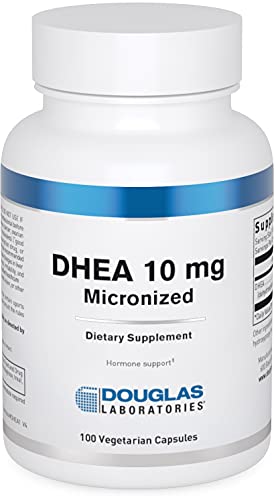
Because DHEA’s effects depend heavily on local, tissue-specific conversion into other hormones, its impact is not uniform across the body and can differ from person to person based on individual enzyme activity, sex, and age. Anyone considering DHEA supplementation should discuss it with a healthcare provider, particularly because of its downstream conversion into androgens and estrogens, which carries its own considerations for hormone-sensitive conditions.

Why the Mechanism Predicts Modest, Uneven Effects
The intracrine picture above has a direct consequence that is easy to miss: if DHEA’s effects depend on local conversion, then a single oral dose cannot produce a uniform systemic result, and the clinical trial record reflects exactly that. The DHEAge study gave 50 mg daily for a year to 280 healthy adults aged 60 to 79 and found effects that were real but tissue-specific and largely confined to women: improved bone turnover in those over 70, increases in several libido measures, and changes in skin hydration, epidermal thickness and sebum production[4].
A two-year trial in adults with low DHEA-S went further and found no physiologically relevant effect on body composition, physical performance, insulin sensitivity or quality of life, with an isolated increase in bone mineral density at the ultradistal radius in women[5]. Both results are what the mechanism predicts. A precursor acting through variable local enzyme activity should produce scattered, tissue-level findings rather than a broad systemic effect, and that is what turned up.
Why Sex and Age Change the Answer
The consistent pattern across these trials is that effects show up more often in women than in men, and that is mechanistically coherent. Women produce far less testosterone from the gonads, so adrenal DHEA represents a proportionally larger share of their total androgen supply, and adding to it changes the total more. In men, whose testes already supply the bulk of circulating testosterone, the same added precursor is a much smaller relative contribution.
Age works the same way. Circulating DHEA-S peaks in the mid-twenties and declines steadily, so the same dose represents a larger relative change in a 70-year-old than in a 40-year-old. This is why trial populations are usually older adults with documented low DHEA-S, and why results from those trials do not transfer cleanly to someone with normal levels for their age.
What This Means for Reading DHEA Claims
The absence of a dedicated DHEA receptor is the single most useful fact to carry into any marketing claim. A compound with a specific receptor and a specific downstream pathway can be reasoned about; a precursor that becomes several different hormones at different rates in different tissues cannot support the same kind of confident, one-size prediction.
In practice that means broad claims about energy, mood or vitality should be treated as unproven by default, while narrower claims tied to a specific tissue and a specific measured outcome deserve to be checked against the trial that supposedly supports them. The mechanism itself is the reason the narrow claims have held up better than the broad ones.

References
- Overview of dehydroepiandrosterone biosynthesis. Seminars in reproductive medicine, 2004
- Dehydroepiandrosterone (DHEA) and Its Sulfate (DHEA-S) in Mammalian Reproduction: Known Roles and Novel Paradigms. Vitamins and hormones, 2018
- Dehydroepiandrosterone (DHEA): Pharmacological Effects and Potential Therapeutic Application. Mini reviews in medicinal chemistry, 2023
- Dehydroepiandrosterone (DHEA), DHEA sulfate, and aging: contribution of the DHEAge Study to a sociobiomedical issue. Proceedings of the National Academy of Sciences, 2000
- DHEA in elderly women and DHEA or testosterone in elderly men. The New England Journal of Medicine, 2006
These statements have not been evaluated by the Food and Drug Administration. This information is not intended to diagnose, treat, cure, or prevent any disease. Content is for informational purposes only and is not medical advice; consult a qualified healthcare provider before starting any supplement. As an Amazon Associate we earn from qualifying purchases.