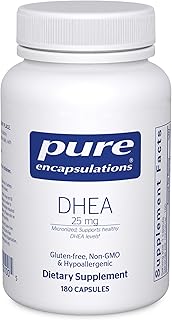
Affiliate disclosure: As an Amazon Associate, this site earns from qualifying purchases linked in this article.
For women navigating midlife and menopause, understanding how DHEA supplements work and how to potentially optimize their absorption can be a key part of informed self-care. DHEA, or dehydroepiandrosterone, is a steroid hormone produced naturally by the adrenal glands. As we age, DHEA levels tend to decline.
When considering DHEA supplementation, a common question arises: how can one best ensure the body utilizes the DHEA effectively? This article explores factors that may influence DHEA absorption and offers practical considerations for maximizing supplement effectiveness, based on current evidence.
Understanding Different DHEA Forms and Absorption Routes
DHEA can be administered through various routes, each with different absorption characteristics. Oral DHEA is commonly available, but its journey through the digestive system can influence how much reaches the bloodstream. After oral ingestion, DHEA undergoes significant metabolism in the liver, a process known as first-pass metabolism [1]. This means a substantial portion of the DHEA may be converted into other steroids before it circulates throughout the body.
Other forms, such as intravaginal DHEA (prasterone), are designed to deliver DHEA locally. Intravaginal application can lead to DHEA and its metabolites being detected in the serum, indicating systemic absorption, although the primary intent is local action [2]. Topical applications, like creams or patches, are also being explored. Research indicates that transdermal patches can facilitate the controlled release of DHEA [3], and nano-encapsulation technologies may enhance the cutaneous bioavailability of DHEA [4]. Each form offers different absorption profiles and potential benefits, depending on the desired effect.

Considering Timing with Meals and Dietary Fats
While specific studies directly on DHEA absorption with food are limited, many fat-soluble compounds benefit from being taken with meals containing some dietary fat. DHEA is a steroid hormone, which are generally lipophilic. Therefore, taking oral DHEA supplements with a meal that includes healthy fats might theoretically aid in its dissolution and absorption through the digestive tract. However, this is an area where more targeted research on DHEA specifically would be beneficial.
The presence of food in the stomach can influence gastric emptying and intestinal transit time, which in turn can affect the window available for absorption. Further research is needed to definitively establish the optimal timing of DHEA supplementation relative to meals to optimize DHEA absorption.
Impact of Lifestyle Factors on DHEA Metabolism
Lifestyle choices can indirectly influence hormone balance and potentially the metabolism of DHEA. For example, alcohol intake has been linked to changes in endogenous sex hormones in women [5]. While this doesn’t directly address DHEA absorption, it highlights how systemic factors can modulate hormone levels. Stress, sleep patterns, and overall metabolic health can also play a role in the body’s endocrine system, which includes DHEA production and utilization.
The body’s internal clock, or circadian rhythm, also plays a role in hormone synthesis. For instance, disruptions in peripheral circadian genes have been observed to alter the peripheral conversion of androgens in conditions like polycystic ovary syndrome [6]. While this specific study is not about DHEA absorption from supplements, it underscores the complex interplay between systemic biological rhythms and hormone metabolism. Maintaining a healthy lifestyle, including adequate sleep and stress management, supports overall endocrine function, which could indirectly contribute to the effectiveness of hormone-related supplements.
Importance of Consistent Dosing and Professional Guidance
Consistency in DHEA supplementation is often emphasized because it takes time for the body to adapt and for potential effects to become noticeable. DHEA is a precursor hormone, meaning it is converted into other hormones like androgens and estrogens in various tissues throughout the body [7]. This conversion process is not instantaneous and can vary from person to person.

The effectiveness of DHEA supplementation can also depend on the individual’s baseline DHEA levels and their specific metabolic pathways. Studies have explored DHEA supplementation in elderly populations, noting varying effects on hormone levels and other markers [8]. Given the individual variability and the potential for DHEA to influence multiple hormone pathways, working with a healthcare provider is crucial. They can help determine an appropriate starting dose, monitor hormone levels, and adjust the regimen as needed to help optimize DHEA absorption and its intended benefits while prioritizing safety.
Potential Role of Transport Proteins
The movement of hormones and other substances within the body, including across cell membranes, is often facilitated by specific transport proteins. For instance, members of the OATP1B family, such as LST-3TM12, are functional transporters that play a role in the uptake of various compounds [9]. While this particular study does not directly focus on DHEA, it illustrates the complex mechanisms by which the body absorbs and distributes steroid hormones and their precursors.
Understanding these transport mechanisms could potentially lead to future strategies for optimizing DHEA absorption and distribution within the body. However, for now, the practical implications for supplement users are limited, and current advice focuses on more general strategies. The intricate system of hormone transport and metabolism highlights why a ‘one-size-fits-all’ approach to DHEA supplementation may not be optimal, and individual responses can vary significantly.
References
- Prasterone. American journal of health-system pharmacy : AJHP : official journal of the American Society of Health-System Pharmacists, 2006
- Effect of intravaginal DHEA on serum DHEA and eleven of its metabolites in postmenopausal women. The Journal of steroid biochemistry and molecular biology, 2008
- Development of patches for the controlled release of dehydroepiandrosterone. Drug development and industrial pharmacy, 2001
- Enhanced cutaneous bioavailability of dehydroepiandrosterone mediated by nano-encapsulation. Journal of controlled release : official journal of the Controlled Release Society, 2014
- Alcohol intake and endogenous sex hormones in women: Meta-analysis of cohort studies and Mendelian randomization. Cancer, 2024
- Derailed peripheral circadian genes in polycystic ovary syndrome patients alters peripheral conversion of androgens synthesis. Human reproduction (Oxford, England), 2022
- Androgens and antiandrogens. Annals of the New York Academy of Sciences, 2003
- DHEA in elderly women and DHEA or testosterone in elderly men. The New England journal of medicine, 2006
- LST-3TM12 is a member of the OATP1B family and a functional transporter. Biochemical pharmacology, 2018
These statements have not been evaluated by the Food and Drug Administration. This information is not intended to diagnose, treat, cure, or prevent any disease. Content is for informational purposes only and is not medical advice; consult a qualified healthcare provider before starting any supplement. As an Amazon Associate we earn from qualifying purchases.