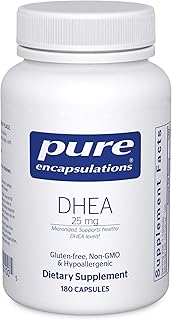
Affiliate disclosure: As an Amazon Associate, this site earns from qualifying purchases linked in this article.
Navigating health decisions in midlife and menopause often involves considering various supplements and medications. Dehydroepiandrosterone (DHEA), a hormone produced naturally by the body, is sometimes used as a supplement. However, understanding how DHEA might interact with other medications is a crucial aspect of responsible health management.
This article provides an evidence-based overview of potential DHEA drug interactions. It’s important to approach this information carefully and always discuss any supplements, including DHEA, with a healthcare professional to ensure your safety and well-being.
What is DHEA and Why Consider Drug Interactions?
DHEA is an endogenous steroid hormone produced by the adrenal glands, gonads, and brain [1]. It serves as a precursor to other hormones, including androgens and estrogens [2]. As the body ages, DHEA levels typically decline, which is one reason some individuals consider DHEA supplementation [1].
When introducing any substance that can influence the body’s hormonal balance, such as DHEA, it’s essential to consider its potential interactions with other medications. Drug interactions can alter the effectiveness of medications, increase the risk of side effects, or change how DHEA itself is processed by the body. This is why a careful approach to DHEA drug interactions is warranted.
Medications That May Be Affected by DHEA
Given DHEA’s role as a precursor to sex hormones, it’s plausible that it could interact with medications that influence hormone levels or are metabolized through similar pathways. For example, medications that affect androgen or estrogen levels might have their effects modified if DHEA supplementation is also being used. This includes hormone therapies, such as estrogen or testosterone [2].
Additionally, DHEA has been noted to be metabolized by certain cytochrome P450 enzymes, particularly CYP3A [3]. Medications that are also metabolized by these enzymes could potentially have altered concentrations in the body if DHEA is co-administered. This complex enzymatic process highlights the need for caution when combining DHEA with other drugs.

Medications That May Affect DHEA Levels or Activity
Just as DHEA can potentially influence other medications, some drugs may affect the body’s DHEA levels or its metabolism. For instance, certain medications can impact adrenal function, which in turn could influence endogenous DHEA production [1].
The metabolism of DHEA is a complex process involving various enzymes and transporters. For example, DHEA is a substrate for certain ATP-binding cassette (ABC) transporters, such as ABCC10, ABCC11, and ABCC12 [4]. Medications that inhibit or induce these transporters could potentially alter the bioavailability or excretion of DHEA. Understanding these pathways is crucial for predicting potential interactions, although specific clinical data on such interactions with DHEA can be limited.
Specific Drug Classes and Potential Interactions
Anticoagulants: There is some concern that DHEA could potentially affect blood clotting, although robust clinical evidence demonstrating significant interactions with anticoagulants is limited [5]. Given the potential for DHEA to influence various physiological processes, it is prudent to exercise caution when combining it with blood-thinning medications. Monitoring by a healthcare provider is advisable.
Hormonal Therapies: Since DHEA is a precursor to sex hormones, it may interact with hormone replacement therapies (HRT) or oral contraceptives [2]. Co-administration could potentially lead to altered levels of estrogens or androgens, which might impact the effectiveness or side effect profile of these hormonal medications. Individuals using hormonal therapies should consult their doctor before considering DHEA.

Medications for Diabetes: DHEA has been explored in relation to metabolic function. For example, endocrine aspects of metabolic dysfunction-associated steatotic liver disease (MASLD) involve complex interactions, and DHEA’s role in metabolic pathways could theoretically interact with medications used for conditions like diabetes [6]. While direct clinical evidence of significant interactions with specific diabetes medications is not extensively documented, individuals managing blood sugar should proceed with caution and medical guidance.
Psychiatric Medications: Some research has explored DHEA’s potential impact on mood and cognitive function. However, specific, well-established DHEA drug interactions with psychiatric medications are not widely reported in the published literature. Nevertheless, any substance that can influence brain chemistry should be discussed with a healthcare provider if combined with medications for mental health conditions.
DHEA and Conditions Associated with Hormone Imbalance
Polycystic Ovary Syndrome (PCOS): Conditions like PCOS are characterized by androgen excess and metabolic disturbances [7]. DHEA can be converted into androgens, and therefore, individuals with PCOS or similar conditions should be particularly cautious about DHEA supplementation, as it could potentially exacerbate existing hormonal imbalances or interact with medications aimed at managing these conditions [8]. Close medical supervision is essential.
Liver Conditions: The liver plays a critical role in hormone metabolism, including DHEA [6]. Individuals with liver conditions should be especially careful when considering DHEA supplementation, as it could potentially impact liver function or interact with medications used to manage liver disease. The complex metabolic pathways in the liver underscore the importance of medical consultation.

References
- Dehydroepiandrosterone Research: Past, Current, and Future. Vitamins and hormones, 2018
- Prasterone. American journal of health-system pharmacy : AJHP : official journal of the American Society of Health-System Pharmacists, 2006
- UHPLC-MS/MS bioanalysis of urinary DHEA, cortisone and their hydroxylated metabolites as potential biomarkers for CYP3A-mediated drug-drug interactions. Bioanalysis, 2016
- ABCC10, ABCC11, and ABCC12. Pflugers Archiv : European journal of physiology, 2007
- DHEA: dehydroepiandrosterone. American journal of health-system pharmacy : AJHP : official journal of the American Society of Health-System Pharmacists, 2000
- Endocrine aspects of metabolic dysfunction-associated steatotic liver disease (MASLD): Beyond insulin resistance. Journal of hepatology, 2023
- Effects of Androgen Excess-Related Metabolic Disturbances on Granulosa Cell Function and Follicular Development. Frontiers in endocrinology, 2022
- Proteome-wide Mendelian randomization and functional studies uncover therapeutic targets for polycystic ovarian syndrome. American journal of human genetics, 2024
These statements have not been evaluated by the Food and Drug Administration. This information is not intended to diagnose, treat, cure, or prevent any disease. Content is for informational purposes only and is not medical advice; consult a qualified healthcare provider before starting any supplement. As an Amazon Associate we earn from qualifying purchases.